Unlock Your Learning Potential with A Mind for Numbers by Barbara Oakley Ph D Exploring the Power of Focused and Diffuse Thinking

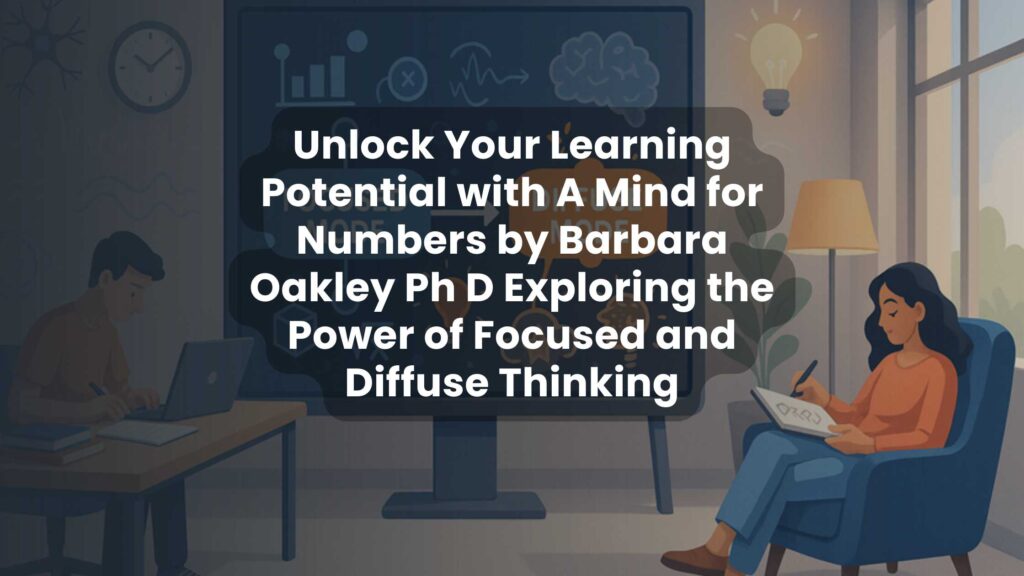
Imagine unlocking the true potential of your mind by simply understanding how it thinks. Learning isn’t just about grinding through facts or memorizing formulas; it’s about engaging with your brain’s natural rhythms and modes of operation. In this exploration, we dive into two powerful ways your brain processes information: focused and diffuse thinking. Focused thinking is like a laser beam, zeroing in on details and allowing you to tackle complex problems with precision. On the other hand, diffuse thinking is the relaxed, open state where creativity blossoms and seemingly unrelated ideas come together in surprising ways. By learning to alternate between these two modes, you can deepen your understanding, spark innovative ideas, and overcome those frustrating moments when progress stalls. Incorporating strategies such as timed focus sessions and mindful breaks can help you harness this balance, making your study time more effective and your problem-solving more intuitive. Whether you’re a student, educator, or lifelong learner, embracing this dance between concentration and relaxation can transform the way you approach challenges and fuel your intellectual growth.
Focused and Diffuse Modes: Harnessing Precision and Creativity for Effective Learning
Focused mode is the powerhouse of precision in learning. When you concentrate intensely on a specific task, such as solving a complex math problem or analyzing detailed data, your brain switches into this mode. It works like a laser beam, narrowing attention to the finer points and enabling you to process information methodically. This mode is essential for mastering new skills or understanding intricate concepts because it demands sustained attention and active engagement. For example, students preparing for exams often enter focused mode to memorize formulas or practice specific problems, sharpening their accuracy and retention.
In contrast, diffuse mode thrives in moments of relaxation and mental wandering. This mode activates when you step back from detailed work and let your mind roam freely, often during activities like taking a walk, showering, or daydreaming. Diffuse thinking fosters creativity by allowing your brain to connect seemingly unrelated ideas and form new patterns of understanding. For instance, many writers and inventors report their best ideas come when they are not actively concentrating, highlighting how diffuse mode fuels imagination and innovation. This realm of relaxed thought is crucial for breaking through mental blocks and discovering novel solutions.
The true power of learning emerges when focused and diffuse modes work in harmony. Alternating between intense concentration and relaxed reflection creates a balance that enhances both precision and creativity. This dynamic interplay deepens comprehension and sparks innovative insights, especially in challenging fields like mathematics or science. For example, a student might spend focused time solving equations, then switch to diffuse mode by taking a break or engaging in a casual activity, allowing subconscious connections to form. This cycle nurtures a more flexible and profound understanding than relying on one mode alone.
One practical way to harness the benefits of both modes is through the Pomodoro Technique. This method structures study sessions into focused intervals—typically 25 minutes of concentrated work—followed by a 5-minute break for diffuse thinking. By intentionally alternating between these modes, learners can maintain high productivity without burnout. Research shows that breaks enhance memory consolidation and problem-solving, making this technique effective for sustained learning. Implementing Pomodoro helps balance precision with creativity, ensuring your brain stays sharp and refreshed.
Educators play a critical role in fostering this balance between focused and diffuse modes in the classroom. Effective teaching strategies integrate periods of concentrated study with activities encouraging creative thinking, such as group discussions, brainstorming sessions, or arts integration. This approach helps students engage actively with material and develop flexible cognitive skills. For example, a science teacher might combine textbook learning with hands-on experiments and reflective journaling, promoting both analytical precision and imaginative insight. Such curricula prepare learners to navigate complex problems with both rigor and originality.
On a personal level, learners can develop strategies to blend focused and diffuse modes for optimal studying. Incorporating creative outlets like journaling, drawing, or even light exercise between intense study sessions can stimulate diffuse thinking and refresh the mind. Tailoring your routine in this way helps avoid mental fatigue and encourages deeper learning. For instance, after a focused hour of reading, spending a few minutes sketching ideas or writing freeform reflections can unlock new perspectives and solidify understanding. These small shifts make learning more engaging and effective.
When facing common learning challenges, embracing diffuse mode can be especially valuable. If you feel stuck or overwhelmed, stepping away from focused efforts allows your brain to relax and approach the problem from a fresh angle. This mental break often leads to breakthroughs and fosters resilience amid difficulty. For example, students struggling with a tough concept might benefit from a walk or a creative hobby, returning to the task with renewed clarity. Cultivating this balance nurtures patience and creativity, essential traits for lifelong learning and problem-solving.
Diffuse Mode: Unlocking Creativity Through Relaxed Thinking
Diffuse mode is a mental state that promotes relaxed thinking, allowing your brain to make broad connections and generate creative ideas. Unlike focused mode, which zeroes in on specific details, diffuse mode encourages a gentle wandering of the mind. This state often occurs during moments of rest, such as daydreaming or taking a walk, when your thoughts flow freely without pressure. For example, many inventors and artists report breakthroughs during these quiet periods, demonstrating how stepping back can unlock fresh perspectives.
This relaxed thinking process taps into the brain’s natural ability to link seemingly unrelated concepts. When the mind is not fixated on one problem, it can explore alternative pathways and synthesize new solutions. Consider the way a writer might struggle with a plot twist during intense work sessions but suddenly find clarity after stepping away from the desk. This exemplifies how diffuse mode nurtures innovation by allowing subconscious connections to surface, often leading to unexpected insights that focused mode alone may miss.
Balancing focused and diffuse modes is essential for effective creativity and learning. Focused mode provides precision and depth, ideal for detailed tasks like analyzing data or practicing a skill. Meanwhile, diffuse mode offers a mental break where ideas can incubate and evolve. Techniques such as the Pomodoro method help maintain this balance by structuring focused intervals followed by short, relaxing breaks. During these breaks, engaging in light activities like stretching or listening to music can activate diffuse mode, enhancing both productivity and creativity.
To harness diffuse mode deliberately, try integrating specific strategies into your routine. Engage in activities that encourage relaxed thinking, such as journaling, sketching, or casual conversations. These practices create mental space for ideas to percolate without forcing immediate solutions. Additionally, when facing a challenging problem, intentionally shift your focus by taking a short walk or practicing mindfulness. This pause can refresh your mind and uncover innovative approaches that focused thinking alone might overlook.
Educators and learners alike benefit from understanding and applying the harmony between focused and diffuse modes. Teachers can design lessons that alternate between concentrated study and creative, low-pressure activities to foster deeper comprehension and innovation. Students who embrace this balance often find themselves more resilient when encountering difficult subjects, as diffuse mode helps them relax and approach problems with renewed flexibility. By unlocking creativity through relaxed thinking, diffuse mode transforms how we learn and solve problems, making it a powerful tool in both academic and professional settings.
Balancing Focused and Diffuse Modes for Deeper Understanding
Focused mode is the power of precision. It operates like a laser beam zeroing in on specific details, ideal for tasks that demand careful analysis and concentration. When you solve complex math problems or dissect intricate data sets, focused thinking helps you break down information step-by-step. This mode strengthens your ability to work through challenging problems by limiting distractions and sharpening your mental clarity. For example, a scientist analyzing experimental results uses focused mode to ensure accuracy and rigor in their conclusions.
Diffuse mode, on the other hand, opens the realm of imagination. It activates when you allow your mind to wander freely, often during moments of rest or low-intensity activities. This relaxed state fosters creativity by connecting seemingly unrelated ideas and sparking new insights. Consider how writers or artists come up with fresh concepts during a walk or while daydreaming—these moments engage diffuse thinking. It plays a crucial role in synthesizing knowledge, enabling you to see the bigger picture beyond isolated facts.
The harmony of focused and diffuse modes creates a powerful synergy for deeper understanding. Mastery comes from alternating between intense, focused learning and relaxed, diffuse thinking. This balance helps your brain solidify new information while simultaneously encouraging innovation. For instance, students studying math can benefit by spending time practicing problems (focused mode) and then taking breaks or engaging in unrelated creative activities to let their mind integrate and reorganize concepts (diffuse mode). This interplay enhances retention and problem-solving skills.
Implementing the Pomodoro Technique is a practical way to balance these thinking modes effectively. By working with focused intensity for 25 minutes and then taking a 5-minute break to relax, you give your brain a chance to switch from concentrated effort to diffuse processing. This rhythm not only boosts productivity but also improves learning outcomes by preventing mental fatigue. Many professionals and students report increased efficiency and creativity when using this time management method.
Educators play a vital role in fostering a balance between focused and diffuse thinking in the classroom. Designing curricula that alternate between structured study sessions and activities that encourage exploration—like group discussions, creative projects, or mindfulness exercises—helps students engage both modes. This approach promotes active learning and innovation, equipping learners with tools to tackle complex problems in diverse ways. Schools that incorporate such strategies often see improved student motivation and deeper comprehension.
Personal strategies for balancing focused and diffuse modes include blending study sessions with creative outlets tailored to your preferences. Journaling, sketching, or even light physical exercise can activate diffuse thinking after periods of concentrated work. Experimenting with different activities helps you discover what best supports your mental transitions. Setting a routine that respects both focus and relaxation ensures sustained progress and reduces burnout during intense learning phases.
Overcoming common learning challenges often requires embracing the diffuse mode when you feel stuck. Instead of pushing harder during frustration, stepping back to relax allows your brain to uncover alternative solutions and build resilience. Techniques like mindfulness meditation or simply taking a break outdoors can refresh your perspective. This mindset encourages creativity and persistence, transforming obstacles into opportunities for growth and deeper understanding.
Using the Pomodoro Technique to Enhance Study Efficiency
Using the Pomodoro Technique to enhance study efficiency begins with understanding how to enter a focused mode. This method encourages intense concentration on one task for 25 minutes, creating a laser-like focus that helps you dive deeply into complex subjects, like solving math problems or dissecting detailed readings. By dedicating short, uninterrupted periods to focused thinking, you limit distractions and enhance precision, making it easier to retain information and complete challenging tasks more quickly.
After each focused session, the Pomodoro Technique recommends a 5-minute break, which taps into what is known as the diffuse mode. During this time, your mind relaxes and wanders, allowing creative connections and new ideas to emerge naturally. This mental shift from intense focus to relaxed reflection is crucial because it helps solidify learning, encourages problem-solving from different angles, and prevents burnout. For example, stepping away from a difficult concept and engaging in light activities like stretching or doodling can stimulate fresh insights that pure focus alone might not achieve.
The true power of the Pomodoro Technique lies in harmonizing these focused and diffuse modes. Alternating between periods of concentrated study and brief relaxation not only boosts productivity but also deepens understanding. This balance mirrors how the brain naturally processes information—intensive analysis followed by subconscious integration. Students who adopt this rhythm often report improved creativity and retention, especially in subjects requiring both logic and innovation, such as science or writing. The technique’s structured cycles help maintain energy and motivation throughout study sessions, making learning more sustainable.
Educators play a critical role in helping students implement this balance by incorporating varied activities that foster both thinking modes. For instance, lessons can alternate between direct instruction and creative exercises, like brainstorming or group discussions, to support focused study and imaginative thinking. Encouraging students to use the Pomodoro Technique within such curricula can cultivate discipline while promoting flexible thinking strategies, equipping learners to tackle complex material more effectively.
On a personal level, students can customize the Pomodoro Technique to fit their unique learning styles by blending focused intervals with creative pursuits. Journaling reflections during breaks or sketching concepts can enhance engagement and reinforce material in novel ways. Additionally, adjusting the length of study and rest periods based on individual attention spans can maximize efficiency. For example, some may find 20 minutes of focus followed by a 7-minute break more productive. Experimenting with these variations ensures the technique remains adaptable and effective.
When facing common learning challenges, such as mental blocks or fatigue, embracing the diffuse mode during Pomodoro breaks becomes particularly valuable. Allowing the mind to relax can unveil unexpected solutions and reduce frustration. Instead of forcing progress during moments of struggle, stepping back with a brief pause helps refresh cognitive resources and fosters resilience. This approach nurtures a growth mindset, turning obstacles into opportunities for creative problem-solving and long-term improvement.
To apply the Pomodoro Technique effectively, start by setting a clear goal for each focused session. Use a timer to maintain the 25-minute intervals and commit to avoiding distractions like phones or social media. During breaks, engage in light activities that encourage diffuse thinking, such as walking or breathing exercises. Track your sessions to identify patterns in productivity and adjust intervals as needed. By following these practical steps, you can harness the Pomodoro Technique’s power to improve study efficiency, enhance focus, and unlock creative potential in your learning process.
How Educators Foster Focus-Diffuse Thinking Integration
Focused thinking is akin to a laser concentrating on the intricacies of a subject, perfect for solving equations or analyzing data with meticulous attention. In the classroom, educators play a pivotal role in guiding students to harness this focused mode effectively. By introducing structured lessons that emphasize critical thinking and detailed problem-solving, teachers can help students dive deep into complex topics. For example, in a math class, an educator might present a challenging problem that requires step-by-step analysis, encouraging students to engage their focused thinking. This precision helps them build foundational skills necessary for advanced learning.
Conversely, when students relax and allow their minds to wander, they engage in the diffuse mode of thinking. This mode fosters creativity and enables learners to connect diverse ideas intuitively. Educators can create opportunities for this type of thinking by incorporating activities that encourage exploration and imagination. For instance, after a focused lesson on mathematical concepts, a teacher might invite students to brainstorm real-world applications of these ideas. This blend of structured learning followed by open-ended inquiry allows students to explore concepts creatively, enhancing their overall understanding and engagement.
The mastery of learning occurs through the harmony of focused and diffuse modes. Alternating between these two thinking styles enables deep understanding and innovative insights, especially in subjects like math. Educators should structure their curricula to reflect this balance, incorporating both focused study sessions and activities that promote diffuse thinking. For example, a lesson might begin with a concentrated review of formulas, followed by a creative project where students apply these formulas in a fun context, such as designing a budget for a school event. This approach not only reinforces learning but also allows students to see the relevance of their studies in practical scenarios.
To help students achieve this balance, educators can implement strategies like the Pomodoro Technique. By encouraging students to focus intensely for 25 minutes followed by a 5-minute break, teachers can promote sustained attention while also allowing for moments of relaxation. During breaks, students can stretch, chat, or engage in a brief creative activity, which rejuvenates their minds and enhances overall productivity. This structured approach not only aids in managing energy levels but also reinforces the importance of alternating between concentrated efforts and restorative downtime.
Furthermore, educators can share personal strategies for balancing thinking modes that students can adopt in their own study habits. For instance, blending focused study sessions with creative activities like journaling or art can significantly enhance learning. Students might be encouraged to keep a journal where they reflect on their mathematical challenges and solutions or sketch concepts they are learning. These practices allow students to leverage both focused and diffuse thinking effectively, promoting a rich, multifaceted approach to learning.
It’s also essential for educators to help students overcome common learning challenges by embracing diffuse thinking. When students feel stuck on a problem, encouraging them to take a step back and relax can lead to new insights. Educators can teach techniques for relaxation, such as mindfulness exercises or brief physical activities, which can help students regain their focus and creativity. This not only fosters resilience but also empowers students to approach problem-solving with a fresh perspective, nurturing a growth mindset that is critical for lifelong learning.
Personalized Strategies to Blend Focused and Diffuse Learning
Personalized strategies to blend focused and diffuse learning begin with understanding the distinctive roles each mode plays in cognitive processing. Focused mode, often described as the power of precision, is your brain’s way of zeroing in on specific details, perfect for tackling complex problems or absorbing new information with clarity. For example, when studying algebra, focused thinking helps you meticulously follow each step of an equation. By contrast, diffuse mode thrives when you allow your mind to relax and wander, tapping into creativity and making unexpected connections between ideas. This mode becomes especially valuable during activities like brainstorming or reflecting on a challenging concept from multiple angles, facilitating breakthroughs that focused thinking alone might miss.
The harmony of focused and diffuse modes is essential for mastering any subject or skill. Alternating between intense concentration and relaxed mental states helps reinforce learning and deepen understanding. Consider using the Pomodoro Technique as a practical method to balance these modes: dedicate 25 minutes to focused study on a target topic, then take a 5-minute break to step away and engage in a more diffuse mental state. During this break, simple activities such as stretching, walking, or doodling can stimulate diffuse mode, allowing your brain to rest and incubate new ideas. This rhythm not only boosts productivity but also enhances the retention of information, making your study sessions more effective.
Incorporating personalized strategies means tailoring your learning habits to suit your interests and cognitive rhythms. For instance, blending focused sessions with creative outlets like journaling or sketching can help maintain engagement while leveraging the strengths of both modes. A student struggling with a science concept might spend time focusing intensely on textbook material, then switch to drawing diagrams or writing a narrative that explains the concept in their own words, activating diffuse thinking. This approach encourages active engagement and helps solidify connections between facts and ideas, fostering a richer understanding that goes beyond rote memorization.
Educators also play a pivotal role in fostering a balanced approach to learning by integrating activities that encourage both focused and diffuse modes. Curriculum designs that alternate between direct instruction and collaborative projects or open-ended exploration allow students to practice precision alongside creativity. For example, a math teacher might combine problem-solving drills with group discussions where students brainstorm multiple methods to approach a problem, nurturing both analytical skills and innovative thinking. By modeling this balance, educators prepare students to adapt their learning strategies to different challenges, enhancing resilience and creativity.
Overcoming common learning challenges often involves knowing when to shift from focused to diffuse thinking. When stuck on a difficult problem, forcing more focused effort can lead to frustration. Instead, stepping back and allowing the mind to relax through activities like meditation, light exercise, or listening to music can stimulate diffuse mode, leading to fresh insights. Embracing this strategy builds resilience by transforming obstacles into opportunities for creative problem-solving. By recognizing the signs of mental fatigue and intentionally alternating between focused and diffuse modes, learners can maintain motivation and improve their ability to tackle complex problems effectively.
Personalized Strategies to Blend Focused and Diffuse Learning
Personalized strategies to blend focused and diffuse learning begin with understanding the unique strengths of each mode. Focused mode is the power of precision, where your mind zeroes in on details, making it ideal for tasks like solving math problems or analyzing complex data. This type of concentration resembles a laser beam, cutting through distractions to tackle specific challenges. For example, when studying for an exam, dedicated focused sessions help you absorb essential facts and formulas deeply. Recognizing when to engage this mode allows you to harness its efficiency for mastering difficult concepts.
In contrast, diffuse mode operates in the realm of imagination, triggered when you relax and let your mind wander freely. This mode encourages creativity and intuitive connections between seemingly unrelated ideas. After a period of intense focus, stepping back and taking a break activates diffuse thinking, which can lead to innovative solutions or fresh perspectives. For instance, a writer overwhelmed by a plot problem might find breakthroughs during a walk or while engaging in a different creative activity. Incorporating time for diffuse thinking into your routine enriches your learning by allowing diverse ideas to merge organically.
The harmony of focused and diffuse modes is where true mastery takes place. Alternating between these modes enables both deep understanding and creative insight, especially in challenging subjects like math or science. Implementing techniques such as the Pomodoro method—working in focused 25-minute intervals followed by 5-minute breaks—helps maintain this balance. During breaks, your brain shifts to diffuse mode, rejuvenating your mental energy and fostering problem-solving abilities. This cycle not only enhances productivity but also supports long-term retention and innovation by leveraging the strengths of both thinking styles.
Educators play a vital role in fostering this balance by designing curricula that integrate focused study with activities promoting diffuse thinking. For example, a teacher might combine rigorous problem-solving exercises with creative projects or reflective journaling. This approach encourages students to engage actively with material while also nurturing their imagination and resilience. By creating an environment where both modes are valued, educators help learners develop versatile cognitive skills that extend beyond the classroom.
To personalize your approach, blend focused sessions with creative outlets like drawing, journaling, or brainstorming. Tailor your study habits to cycle between precision and relaxation, such as setting specific goals for focused work and scheduling regular breaks for diffuse activities. When stuck on a problem, consciously step away and allow your mind to wander, embracing diffuse thinking as a tool to overcome obstacles. This strategy not only improves problem-solving but also builds mental flexibility and reduces frustration, making learning more effective and enjoyable.
Mastering Thinking Modes to Unlock Your Full Learning Potential
Focused mode is the cornerstone of precise and detailed learning. When you engage this thinking mode, your mind zeroes in on specific problems, such as solving complex equations or analyzing intricate data sets. This mode operates like a laser beam, cutting through distractions to concentrate on the task at hand. For example, a student working through a challenging math problem relies heavily on focused thinking to break down each step methodically. Research shows that this mode enhances short-term memory retention and problem-solving accuracy, making it essential for mastering technical subjects and skills that demand precision.
In contrast, diffuse mode thrives in moments of relaxation and mental wandering. This thinking mode activates when you step back from intense concentration and let your mind drift freely. It fosters creativity by allowing the brain to form new connections between seemingly unrelated ideas. Consider how many inventors and writers report breakthroughs during a walk or while daydreaming. Such diffuse thinking is vital for generating innovative solutions and understanding broad concepts. For instance, an artist sketching ideas without strict rules taps into diffuse mode to discover fresh perspectives and novel approaches.
The true power lies in harmonizing focused and diffuse modes to unlock deep learning and creativity. Alternating between intense study and relaxed mental breaks helps you absorb information more effectively and sparks innovative thinking. A great example is in learning math, where focused mode helps grasp formulas while diffuse mode aids in seeing the bigger picture and applying concepts creatively. Balancing these modes enhances cognitive flexibility, allowing learners to switch fluidly between detail-oriented tasks and big-picture thinking. This interplay nurtures both analytical skills and imaginative insight, strengthening overall understanding.
One practical method to balance focused and diffuse thinking is the Pomodoro Technique. This time-management strategy involves working intently for 25 minutes, followed by a 5-minute break to rest and let your mind wander. These short breaks activate diffuse mode, helping to refresh your brain and improve long-term retention. For example, a language learner might spend 25 minutes memorizing vocabulary, then use the 5-minute pause to relax or reflect, promoting creative associations between words. Implementing the Pomodoro Technique can boost productivity and make learning sessions more sustainable and enjoyable.
Educators play a crucial role in fostering the balance between thinking modes within the classroom. By designing curricula that mix focused study periods with activities encouraging diffuse thinking, teachers can help students develop more holistic learning skills. For instance, after a focused math lesson, students might engage in brainstorming or creative storytelling related to the topic. This approach not only reinforces knowledge but also cultivates innovation and engagement. Schools adopting such mixed methods report higher student motivation and improved problem-solving abilities, showcasing the benefits of integrating both modes in education.
Personal strategies can further enhance the balance between focused and diffuse modes outside of formal settings. Incorporating creative practices like journaling, drawing, or free writing alongside structured study sessions helps activate diffuse thinking. Tailoring your routine to switch between these activities maximizes your learning potential. For example, after a focused hour of reading, spending time sketching related concepts or reflecting in a journal can deepen understanding and inspire new ideas. Experiment with different combinations to find what best supports your individual learning style.
Learning challenges often arise when one thinking mode dominates too heavily. When stuck on a problem, shifting from focused to diffuse mode can unlock fresh solutions. Allowing yourself to relax and step away encourages your brain to process information subconsciously, often leading to unexpected insights. For instance, students struggling with a tough question might benefit from a walk or a change of scenery, activating diffuse thinking to overcome mental blocks. Embracing this balance builds resilience and creative problem-solving skills essential for lifelong learning.
Conclusion
Unlock Your Learning Potential with *A Mind for Numbers* by Barbara Oakley, Ph.D., reveals the transformative power of balancing focused and diffuse thinking. Focused mode sharpens your precision, allowing you to dive deeply into complex problems and details. In contrast, diffuse mode offers a restful mental state where creativity thrives and connections between ideas emerge naturally. By skillfully alternating between these modes, you can enhance understanding and spark innovative solutions.
Practical strategies such as the Pomodoro Technique provide a structured way to harness this balance, promoting productivity while preventing burnout. Whether you are a student, educator, or lifelong learner, integrating moments of focused study with periods of relaxed reflection can revolutionize how you approach challenges. Embracing both thinking styles helps you overcome obstacles and develop resilience, making learning not just effective but also enjoyable.
Take a moment to reflect on your own study habits. How might you incorporate periods of diffuse thinking alongside your focused efforts? Consider experimenting with the Pomodoro Technique or adding creative activities to your routine to stimulate your mind’s full potential. Dive deeper into Barbara Oakley’s insights and unlock new pathways to mastering even the most daunting subjects. Your journey to smarter learning and greater creativity starts now—why not begin today?
FAQ
Unlock Your Learning Potential with A Mind for Numbers by Barbara Oakley Ph D
Exploring the Power of Focused and Diffuse Thinking
Frequently Asked Questions
What is focused mode thinking and why is it important?
Focused mode thinking is like a laser beam that concentrates intensely on the details of a subject. It is essential for tasks that require precision, such as solving math problems, analyzing data, or mastering complex concepts. This mode enables you to pay close attention and work through problems step-by-step with clarity and accuracy.
How does diffuse mode thinking differ from focused mode?
Diffuse mode thinking occurs when you relax and allow your mind to wander freely. Unlike focused mode, it is less about direct concentration and more about creativity and intuition. This mode helps you make connections between seemingly unrelated ideas and is crucial for innovative problem-solving and big-picture understanding.
Why is balancing focused and diffuse modes important for learning?
Mastery of challenging subjects, especially in fields like math, happens when you alternate between focused concentration and diffuse relaxation. This balance allows you to deepen your understanding through careful study while also fostering creative insights. Switching between these modes prevents mental fatigue and encourages a more comprehensive grasp of material.
How can the Pomodoro Technique help manage these thinking modes?
The Pomodoro Technique supports the balance by structuring study time into focused intervals followed by short breaks. Typically, you focus intensely for 25 minutes and then take a 5-minute break to relax. This break activates diffuse mode, giving your brain a chance to rest and make new neural connections, which enhances learning and productivity.
What role can educators play in promoting balanced thinking?
Educators can design learning experiences that integrate both focused study and activities that encourage diffuse thinking, such as creative projects or reflective exercises. By doing so, they help students engage actively with content and develop the ability to innovate, making learning more dynamic and effective.
What are some personal strategies to balance focused and diffuse thinking?
Individuals can blend focused study sessions with creative or relaxing activities like journaling, drawing, or taking walks. Tailoring your routine to include both intense concentration and periods of mental rest leverages the strengths of both thinking modes, improving comprehension and retention.
How can diffuse thinking help overcome learning obstacles?
When you encounter a difficult problem or feel stuck, shifting into diffuse mode by relaxing or distracting yourself can lead to breakthroughs. This state allows your brain to work on problems subconsciously, often resulting in new solutions and fostering resilience and creativity in the face of challenges.
How does mastering these thinking modes transform learning?
By understanding and applying the balance between focused and diffuse thinking, you can unlock deeper learning and heightened creativity. This approach transforms your educational journey into a more adaptive, innovative, and enjoyable experience, enabling you to tackle complex subjects with greater confidence and success.