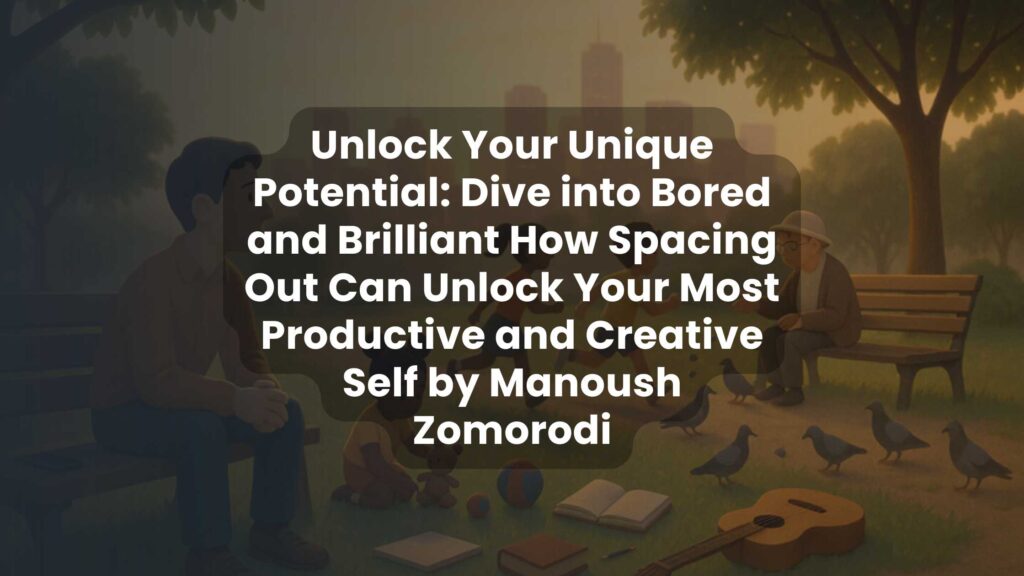
Unlock Your Unique Potential: Dive into Bored and Brilliant How Spacing Out Can Unlock Your Most Productive and Creative Self by Manoush Zomorodi

In today’s fast-paced, always-connected world, boredom is often seen as something to avoid at all costs. Yet, what if the moments when your mind wanders aimlessly are actually the key to unlocking your most creative and productive self? When you allow yourself to step away from the constant barrage of digital distractions and embrace the quiet space of boredom, you give your brain the chance to recharge, make unexpected connections, and spark innovative ideas. This isn’t just about killing time; it’s about cultivating a mental environment where creativity flourishes and problem-solving becomes sharper. By intentionally carving out technology-free moments and welcoming unstructured time, you tap into a hidden mental gym that not only reduces stress but also fuels your creative genius. It’s time to rethink boredom—not as a dull void, but as a powerful tool to discover untapped potential and bring your brightest ideas to life.
Embracing Boredom for Enhanced Creativity in a Digital Age
Boredom is often seen as a negative state to avoid, especially in today’s fast-paced digital landscape. However, the unexpected upside of embracing boredom lies in its unique ability to foster creativity. When the brain is not overwhelmed with constant notifications, messages, and media consumption, it enters a quiet mode where new and surprising connections form naturally. This mental downtime allows ideas to incubate and gives space for imaginative thinking to flourish. Studies have shown that periods of boredom can lead to more original thinking, as the brain seeks stimulation by generating novel thoughts and solutions.
To truly benefit from boredom in our digital world, it’s essential to set the stage by intentionally breaking free from technology’s grip. Creating technology-free zones at home or work, such as a no-phone dining table or a screen-free hour before bed, helps reduce digital distractions. Additionally, scheduling specific times for digital detoxes—whether a few minutes or a few hours daily—gives your mind a chance to wander freely. This deliberate stepping away from screens allows you to reconnect with your thoughts and enhances your brain’s ability to explore creative ideas without interference.
Boredom acts as a kind of hidden gym for the mind, offering psychological benefits beyond mere rest. When the brain experiences boredom, it shifts into a low-arousal state that reduces stress and encourages daydreaming. This mental state promotes relaxation and replenishes cognitive resources, making it easier to solve problems creatively once engagement resumes. For example, many innovators and artists report that their best ideas emerge during moments of quiet reflection or seemingly idle time. This suggests that boredom is not emptiness but a vital mental reset that prepares the brain for deeper creativity.
Throughout history, periods of unstructured time have been crucial to fueling innovation and breakthroughs. Inventors like Thomas Edison and writers such as Virginia Woolf often credited their creative successes to moments when they allowed their minds to drift without pressure or distraction. These mental playgrounds are where the brain experiments with ideas and explores new possibilities. In our digital age, reclaiming this unstructured time is even more valuable, as it combats the constant bombardment of information and encourages original thinking to thrive.
To make boredom work for you, consider adopting practical habits that invite this state into your daily routine. Schedule short breaks dedicated to doing nothing or engaging in simple, repetitive tasks like walking or doodling. Practicing mindfulness during these moments helps you remain present and aware of your thoughts without judgment. Focus on one activity at a time, avoiding multitasking, to deepen your engagement with your own creativity. Embracing emptiness without digital distractions empowers your mind to wander freely, sparking fresh ideas and innovative solutions.
Breaking free from the cycle of constant stimulation is a critical step toward unlocking creative potential. The urge to check devices or scroll through social media can be overwhelming, but resisting this pull creates valuable space for reflection. This mental breathing room sharpens problem-solving skills and allows deeper insights to emerge. For example, taking a walk without your phone or sitting quietly in a park can help refresh your thinking and inspire new perspectives that digital noise often drowns out.
By using boredom as a tool rather than viewing it as an annoyance, you can uncover untapped creative resources within yourself. This state invites exploration of ideas you might otherwise overlook when distracted by the digital world. Artists, entrepreneurs, and professionals alike can benefit from embracing boredom, as it nurtures innovation and personal growth. When you allow yourself to experience boredom fully, you open the door to discovering inspiration and creative energy you never knew you had.
Psychological Benefits of Boredom for Mental Recharge
Boredom is often seen as something to avoid, but it actually holds surprising psychological benefits for mental recharge. When your brain is not bombarded with constant stimuli, it enters a state where it can make unexpected connections. This downtime allows your mind to wander freely, sparking creativity and fresh ideas. For example, many artists and inventors report having their best insights during moments of quiet or rest. This unexpected upside of embracing boredom reveals that dull moments are not wasted time but essential for mental rejuvenation.
In today’s digital world, constant notifications and endless scrolling leave little room for boredom, but deliberately setting aside time without technology can restore your mental energy. Creating technology-free zones at home or scheduling specific digital detox periods encourages your brain to break free from overstimulation. These breaks let your mind explore its creative potential, enhancing problem-solving skills and reducing stress. For instance, a study found that people who regularly disconnect from screens during the day report feeling more refreshed and focused.
Boredom acts like a hidden gym for the mind, offering an opportunity for rest and mental recharge. When you allow yourself moments of unstructured time, your brain shifts into a more relaxed state, which can decrease anxiety and improve overall well-being. This mental pause encourages daydreaming, a valuable process that supports creativity and innovation. Psychologists suggest that these quiet periods help the brain process emotions and consolidate memories, which is vital for cognitive health.
Throughout history, many creative geniuses have credited unstructured time as a key element in fueling their breakthroughs. Without rigid schedules or distractions, their minds had the freedom to roam and generate novel ideas. This mental playground created by boredom often leads to innovation, as the brain links seemingly unrelated concepts in new ways. Thomas Edison and Albert Einstein, for example, valued moments of solitude and boredom, which they believed contributed to their most significant discoveries.
To harness the psychological benefits of boredom for mental recharge, you can take practical steps in your daily routine. Schedule regular breaks where you avoid multitasking and technology, allowing your mind to rest. Practicing mindfulness during these periods helps you stay present and observe your thoughts without judgment. Engaging in repetitive, low-effort tasks like walking or simple chores can also promote a relaxed mental state, encouraging creative thinking. Embracing these strategies encourages you to see boredom not as a void but as a valuable space for growth and innovation.
Breaking free from the cycle of constant stimulation is essential for mental clarity and creativity. When you resist the urge to fill every moment with digital activity, you create room for reflection and deeper thinking. This intentional pause sharpens your problem-solving abilities and boosts your creative output. For example, people who regularly practice digital detoxes often report improved mood and enhanced focus, proving that boredom can be a powerful tool for mental recharge.
Using boredom as an opportunity uncovers a hidden reservoir of creative potential within you. Instead of fearing empty moments, embracing them can lead to inspiration and innovative thinking you might never have accessed otherwise. By allowing yourself to experience boredom, you tap into a mental state where your brain can connect ideas in unique ways, fueling personal and professional growth. This mindset shift transforms boredom from a nuisance into a catalyst for creativity and self-discovery.
How Boredom Fuels Creative Genius and Innovation
Boredom is often misunderstood as a negative state to avoid, but it holds an unexpected upside when it comes to fueling creative genius and innovation. When the brain is not overwhelmed by constant stimuli, it has the freedom to wander and make unique connections between ideas. This mental space is where creativity thrives, allowing for fresh perspectives and original solutions to emerge. For example, many artists, writers, and inventors credit their moments of boredom as the spark that ignited their most groundbreaking work. This reveals boredom not as wasted time, but as a fertile ground for creativity that can lead to innovative breakthroughs.
In today’s digital world, embracing boredom requires intentional effort. Constant access to smartphones, social media, and endless content reduces opportunities for the mind to rest and explore freely. Setting the stage for creativity involves creating technology-free zones and scheduling specific periods for digital detox. By stepping away from screens and notifications, you allow your brain to enter a state of mental calmness, where new ideas can take root. This break from digital distractions mirrors the way successful innovators have historically carved out unstructured time to let their thoughts roam, proving that boredom can be a powerful tool in a hyper-connected age.
Beyond simply providing mental rest, boredom offers psychological benefits that enhance creative thinking. When the mind is bored, it often drifts into daydreaming, which activates different neural pathways involved in problem-solving and imagination. This mental gym strengthens your ability to think flexibly and generate novel ideas. Studies show that periods of boredom can reduce stress and improve concentration, helping you approach challenges with renewed energy and insight. Understanding boredom as a psychological reset empowers you to harness it effectively rather than resist it.
Historically, many creative geniuses have credited boredom as a catalyst for their innovations. Figures like Albert Einstein and Leonardo da Vinci valued unstructured time, where their minds could play freely without pressure or deadlines. These moments of mental freedom fostered deeper thinking and unexpected connections between ideas, fueling their groundbreaking discoveries. This illustrates how boredom acts as an incubator for innovation by providing a mental playground where creativity is not only encouraged but essential.
To harness the power of boredom in your own life, start with practical steps that encourage unstructured mental time. Schedule regular breaks throughout your day for activities that don’t demand intense focus, such as walking, simple chores, or mindful breathing. Practice mindfulness to become comfortable with moments of emptiness instead of filling them with distractions. Engaging in repetitive or single-focus tasks helps the mind relax and invite creative thoughts. Most importantly, resist the urge to immediately reach for your phone or computer during downtime to truly embrace boredom and unlock your creative potential.
Breaking free from the cycle of constant digital stimulation opens new opportunities for creativity to flourish. When you reduce the noise of endless notifications and media consumption, you create space for reflection and deeper thinking. This shift not only sharpens your problem-solving abilities but also nurtures original ideas that would otherwise be drowned out. By consciously limiting screen time, you give your brain the chance to rest and recharge, which is essential for innovation and creative breakthroughs.
Using boredom as a tool, you can uncover creative potential you might not have realized existed. Instead of viewing boredom as something to escape, treat it as an invitation to explore your inner thoughts and imagination. Allowing yourself to experience boredom fully can reveal hidden inspiration and fresh ideas, sparking innovation in both personal and professional pursuits. Embracing boredom is a simple yet powerful way to tap into the well of creativity within you and transform idle moments into opportunities for genius.
How Boredom Fuels Creative Genius and Innovation
Boredom is often seen as something to avoid, but it actually holds the unexpected upside of embracing boredom. When your mind is free from constant noise and distractions, it enters a state where creative connections can form naturally. This mental space allows ideas to simmer and link in surprising ways, fueling creative genius and innovation. For example, famous innovators like Steve Jobs and Albert Einstein often credited moments of quiet reflection and boredom as crucial to their breakthrough ideas. This shows that boredom isn’t just a dull pause—it’s a powerful tool for unlocking creativity.
In today’s digital world, setting the stage to embrace boredom is more important than ever. Our devices constantly demand attention, preventing the brain from experiencing the mental rest it needs. Creating technology-free zones or dedicating specific times for digital detox can help your mind wander freely without interruptions. By intentionally stepping away from screens, you give your brain the space to daydream and explore new ideas. This break from stimulation is essential, as research shows that unstructured time enhances problem-solving skills and sparks innovative thinking.
Boredom acts like the mind’s hidden gym, offering psychological benefits that improve creativity. When you allow yourself to feel bored, your brain isn’t just idle; it’s recharging and organizing thoughts beneath the surface. This downtime reduces stress and encourages mental clarity, which are critical for creative breakthroughs. For instance, many writers and artists report that some of their best ideas come during moments of quiet boredom, when their minds are free to roam without pressure. These psychological benefits highlight boredom as an active state that primes the brain for innovation.
Fueling innovation through boredom has deep roots in history. Many groundbreaking discoveries and inventions emerged during periods of unstructured time, where thinkers had the freedom to explore ideas without constraints. For example, the invention of the Post-it Note came from a scientist’s unplanned experiments during a slow period at work. This shows that boredom can create a mental playground where novel ideas take shape. By embracing these moments, you give yourself permission to experiment, fail, and ultimately innovate.
To harness the power of boredom, you can follow a practical action plan. Start by scheduling regular breaks for unstructured time, allowing your mind to drift without a specific goal. Practice mindfulness to stay present and fully experience these quiet moments. Engaging in repetitive tasks, like walking or simple chores, can also help your brain wander creatively. Focus on single activities rather than multitasking, and resist the urge to fill every moment with digital distractions. These steps help you embrace emptiness and unlock your creative potential.
Breaking free from the cycle of constant stimulation is key to letting boredom fuel your creativity. When you stop chasing every notification or new piece of information, you create space for deeper reflection. This pause sharpens your problem-solving abilities and encourages innovative thinking. For example, studies show that people who limit screen time and take regular breaks report higher creativity levels and better focus. By consciously choosing stillness, you invite new ideas and insights to surface naturally.
Uncovering your creative potential through boredom means seeing these quiet moments as opportunities rather than obstacles. When you embrace boredom, you tap into a deeper well of inspiration within yourself. This approach encourages you to explore thoughts and ideas that might otherwise remain hidden beneath constant activity. By welcoming boredom, you give your mind permission to dream, innovate, and discover fresh solutions, turning what feels like emptiness into a powerful source of creative energy.
Practical Tips to Incorporate Boredom into Your Routine
Boredom isn’t just a dull state; it’s a fertile ground for creativity, allowing your brain to make unexpected connections when it’s not bombarded with constant stimuli. When you embrace moments of boredom, you create a space where your mind can wander freely. This wandering can lead to innovative ideas and unique problem-solving approaches. For instance, famous thinkers like Albert Einstein often emphasized the importance of allowing the mind to drift. By letting go of external distractions, you invite a deeper level of thought that can stimulate creativity and generate fresh perspectives.
To effectively embrace boredom in our digital world, it’s essential to set the stage by creating technology-free zones and establishing specific times for digital detox. Consider designating areas in your home, such as a reading nook or a cozy corner in your garden, where devices are off-limits. Furthermore, scheduling “boredom breaks” in your daily routine can significantly enhance your creative potential. For example, a simple 15-minute pause from screens can transform your day, allowing your mind to engage in spontaneous thought processes that may have otherwise remained hidden under layers of digital noise.
The psychological benefits of boredom are profound. It offers a chance for mental rest and recharge, reducing stress while enhancing creativity and problem-solving skills. Research suggests that periods of boredom can lead to increased daydreaming, a phenomenon linked to improved cognitive function. Engaging in daydreaming can help you unlock new ideas or solutions that you might not have considered in a more stimulating environment. By consciously allowing yourself to experience boredom, you can cultivate a stronger, more resilient mind capable of tackling complex challenges.
Historically, unstructured time has been the secret ingredient for many creative breakthroughs. Many artists and innovators credit their moments of idleness as the birthplace of their most significant ideas. For instance, Steve Jobs famously took long walks to clear his mind and think deeply. This practice demonstrates how boredom can serve as a mental playground for innovative ideas to flourish. When you intentionally carve out time to do nothing, you empower yourself to explore various thoughts and concepts, leading to potential innovations in your work or personal projects.
To incorporate boredom into your routine effectively, consider scheduling breaks for unstructured time. This could mean blocking off 30 minutes in your calendar where you engage in no specific activity—just sit quietly or allow your thoughts to flow. Practicing mindfulness can also help, as it encourages you to focus on the present moment without the distraction of external stimuli. Engaging in repetitive tasks, such as knitting or gardening, can create a rhythm that fosters contemplation. Additionally, focusing on single activities rather than multitasking allows your mind to delve deeper into each task, enhancing creativity and engagement.
Breaking free from the cycle of constant stimulation can be liberating. By resisting the urge for digital engagement, you open up time for reflection that allows your creativity to grow and your problem-solving abilities to sharpen. This can be as simple as taking a stroll without your phone or allowing yourself to sit in silence for a few minutes each day. Over time, these small adjustments can significantly reshape your relationship with boredom, transforming it into a powerful tool for personal and professional growth.
Using boredom as an opportunity means tapping into a deeper well of creativity and innovation. You might discover inspiration you never knew existed within you through unstructured time. For example, journaling during moments of boredom can reveal thoughts and feelings that lead to new ideas or projects. Embrace the emptiness without digital distractions, and you may find that your most creative self emerges, ready to tackle challenges with renewed vigor and insight.
Breaking Free from Digital Stimulation Habits to Embrace Boredom
In today’s fast-paced digital world, breaking free from digital stimulation habits can feel like an uphill battle. Our devices constantly demand attention, filling every spare moment with notifications, videos, and endless scrolling. Yet, stepping away from these distractions offers a surprising and valuable opportunity: the unexpected upside of embracing boredom. When the brain isn’t overwhelmed with stimuli, it can wander freely, making new and unexpected connections. This mental space often sparks creativity, allowing fresh ideas to emerge that might never surface during constant digital engagement.
Creating an environment that supports boredom is essential for breaking free from digital stimulation habits to embrace boredom. One effective strategy is setting technology-free zones in your home or workplace, where no phones or screens are allowed. Additionally, scheduling specific times for a digital detox can help your mind detach from habitual scrolling. These deliberate breaks let your brain explore thoughts without interruption, laying the foundation for innovative thinking. For example, some companies have implemented “quiet hours” where employees refrain from checking emails, resulting in improved focus and creative output.
Boredom is more than just a lack of entertainment; it acts as the mind’s hidden gym, offering significant psychological benefits. When you allow yourself to be bored, your brain gets a chance to rest and recharge, reducing stress levels. This downtime encourages daydreaming, which has been linked to enhanced problem-solving skills and creative thinking. Research shows that individuals who regularly experience unstructured moments tend to perform better on tasks requiring innovation, highlighting how boredom fosters mental resilience and agility.
Historically, many creative geniuses have credited boredom and unstructured time as key drivers behind their breakthroughs. Without a rigid schedule or constant input, their minds had the freedom to roam and experiment with ideas. This mental playground of boredom fuels innovation by providing space for deep reflection and original thought. In modern times, entrepreneurs and artists alike have embraced periods of boredom to cultivate creativity, illustrating how stepping away from digital stimulation can unlock new levels of insight.
To embrace boredom effectively, consider an action plan that integrates practical steps into your daily routine. Schedule regular breaks for unstructured time where you resist reaching for your phone or digital device. Practice mindfulness to become comfortable with moments of stillness and quiet. Engaging in repetitive tasks, such as walking or simple household chores, can also help the mind drift into a more creative state. By focusing on single activities without multitasking, you cultivate deeper attention and allow the emptiness to inspire rather than frustrate. These habits empower you to break free from constant stimulation and tap into your creative potential.
Breaking free from the cycle of constant digital stimulation requires intentional effort but yields rich rewards. Resisting the urge to immediately check your phone or engage with digital content opens valuable time for reflection. This pause sharpens your problem-solving abilities and nurtures creativity by giving your mind the freedom to wander and explore ideas. Over time, this practice transforms boredom from a dreaded state into a powerful tool for growth and innovation.
Embracing boredom uncovers your hidden creative potential, revealing inspiration you may not have realized was within you. When you stop seeking constant digital input, you create mental space that invites new perspectives and original thinking. This deeper well of creativity supports innovation, problem-solving, and personal growth. By intentionally incorporating boredom into your life, you cultivate a richer, more fulfilling mental landscape that enhances both productivity and well-being.
Unlocking Your Hidden Creative Potential Through Boredom
Boredom is often seen as a negative state, but it holds an unexpected upside for unlocking your hidden creative potential. When your brain is not overwhelmed by constant stimulation, it enters a unique state where new connections and ideas can form. This mental pause allows your thoughts to wander freely, sparking creativity in ways that structured activities rarely do. For instance, many famous inventors and writers have credited moments of boredom as the catalyst for their most innovative ideas, showing how this seemingly dull experience can actually fuel original thinking.
In today’s digital world, embracing boredom requires intentional effort. Constant notifications and endless scrolling make it difficult to experience uninterrupted mental space. Setting the stage for creativity means breaking free from these distractions by creating technology-free zones or scheduling specific times for digital detox. By consciously limiting screen time, you allow your mind to rest and explore new ideas without external interruptions. Simple practices like turning off your phone during meals or taking walks without devices can create pockets of boredom that unlock creative insights.
Boredom acts as the mind’s hidden gym, providing psychological benefits that extend beyond simple rest. It reduces stress and encourages daydreaming, which enhances both creativity and problem-solving skills. When the brain has a chance to recharge, it becomes more flexible and ready to approach challenges with fresh perspectives. Research supports this, showing that people who experience brief moments of boredom tend to perform better on tasks requiring innovative thinking, confirming that boredom is a natural and valuable mental exercise.
Throughout history, unstructured time has been a key driver of creative genius. Many breakthroughs in art, science, and technology happened during periods when individuals allowed themselves mental downtime. This unstructured time serves as a mental playground where ideas can collide and evolve without pressure or deadlines. For example, renowned scientists like Albert Einstein valued solitude and boredom as essential to their creative process, proving that innovation often flourishes in moments of stillness.
To unlock your creative potential through boredom, it helps to follow a practical action plan. Schedule regular breaks for unstructured time, practice mindfulness to stay present, and engage in repetitive tasks like doodling or walking that encourage a relaxed mental state. Focus on one activity at a time and resist the urge to fill every spare moment with digital content. Embracing these habits creates space for your mind to wander, making it easier to discover new ideas and solutions.
Breaking free from the cycle of constant stimulation is crucial to nurturing creativity. When you resist the impulse to check your phone or multitask, you open up valuable time for reflection and deeper thinking. This shift enhances your ability to solve problems and sparks imaginative thought. By consciously slowing down and embracing boredom, you create a mental environment where creativity can grow naturally and thrive.
Using boredom as a tool, you can uncover a deeper well of creativity and innovation within yourself. Instead of fearing idle moments, view them as opportunities to connect with your inner inspiration. Whether it’s brainstorming, daydreaming, or simply allowing your mind to rest, boredom can reveal ideas and insights that remain hidden during busy, overstimulated periods. By making boredom a regular part of your routine, you tap into a powerful resource for unlocking your true creative potential.
Transforming Boredom into Productive Problem-Solving Time
Boredom often carries a negative reputation, but it holds an unexpected upside when embraced correctly. Instead of viewing boredom as a dull void, it can serve as fertile ground for creativity. When your brain is not overwhelmed with constant stimulation, it can make surprising connections between ideas. For example, during moments of stillness, your mind might link seemingly unrelated thoughts, sparking innovative solutions to problems that seemed unsolvable before. This natural mental wandering is crucial for transforming boredom into productive problem-solving time, turning what feels like wasted moments into opportunities for breakthrough thinking.
In today’s digital world, embracing boredom requires intentional effort. The constant presence of smartphones, social media, and endless notifications keeps our minds perpetually active, leaving little room for reflection or creativity. Setting the stage to embrace boredom means creating technology-free zones and scheduling specific times for digital detox. For instance, dedicating 15 to 30 minutes each day without screens allows your brain to wander freely. This deliberate break from digital distractions encourages your mind to explore new ideas and solve problems more effectively, as it’s no longer competing with a barrage of information.
Boredom also acts as a hidden gym for the mind, offering valuable psychological benefits. When you allow yourself moments of boredom, you give your brain a chance to rest and recharge, reducing stress levels and enhancing your creativity. Studies show that periods of daydreaming during boredom help improve problem-solving skills by letting the subconscious mind work through challenges. Engaging in repetitive or mundane tasks, such as walking or cleaning, can also promote this mental recharge, giving your brain space to incubate ideas that lead to creative breakthroughs.
Historically, many creative geniuses have credited unstructured time—often filled with boredom—as an essential factor in their innovations. Boredom fuels innovation by providing a mental playground where ideas can freely evolve without pressure or deadlines. For example, Thomas Edison’s numerous inventions and Albert Einstein’s revolutionary theories emerged from moments when their minds were allowed to drift and explore. By allowing boredom to drive your thinking processes, you create an environment where innovation can flourish naturally, providing fresh perspectives and novel solutions.
To transform boredom into productive problem-solving time, try incorporating some practical steps into your daily routine. Begin by scheduling regular breaks dedicated to unstructured time, free from digital devices. Practice mindfulness or meditation to improve your ability to sit with silence and observe your thoughts. Engage in single, repetitive tasks like drawing or sorting, which can help your mind focus and wander simultaneously. Most importantly, resist the urge to fill every idle moment with stimulation, and instead, embrace the emptiness as a creative opportunity. These strategies empower you to harness boredom’s potential and turn it into a powerful tool for problem-solving.
Breaking free from the cycle of constant stimulation is vital for unlocking the benefits of boredom. When you continuously seek digital distractions, your brain remains on high alert and misses the chance to reflect deeply. By resisting this urge, you open up valuable mental space for creativity to grow and sharpen your problem-solving skills. For example, taking a walk without your phone or sitting quietly without multitasking can help your brain reset. This conscious choice to disconnect lets ideas simmer and mature, ultimately enhancing your ability to address challenges with fresh insight.
Using boredom as a catalyst allows you to uncover your hidden creative potential. Instead of fearing idle moments, view boredom as an opportunity to access a deeper well of inspiration within yourself. Many people find that their most original ideas arise during times when they are doing nothing in particular. By welcoming these moments, you invite your mind to explore and innovate, discovering solutions and perspectives that you might never encounter in a busy, distraction-filled schedule. This shift in mindset encourages ongoing creativity and problem-solving growth throughout your daily life.
Conclusion
In Unlock Your Unique Potential: Dive into Bored and Brilliant, Manoush Zomorodi reveals how embracing boredom can be a powerful catalyst for creativity and productivity. Rather than seeing boredom as a dull or wasted moment, this book encourages us to recognize it as fertile ground where the brain can rest, recharge, and make surprising connections. By intentionally stepping away from digital distractions and carving out technology-free time, we give our minds the space to explore ideas, daydream, and innovate. The psychological benefits of boredom extend beyond relaxation—boredom sharpens problem-solving abilities and fuels the creative breakthroughs that have shaped history. With practical strategies for welcoming unstructured time and resisting the constant pull of stimulation, readers are invited to reclaim mental clarity and unlock their hidden creative potential.
If you’ve ever felt stuck or overwhelmed by the nonstop buzz of technology, this book offers a refreshing perspective and actionable guidance to transform those moments of boredom into opportunities for brilliance. Take a moment today to unplug, slow down, and allow your mind the freedom to wander—you might just discover the innovative ideas waiting within you. For anyone eager to fuel their creativity and productivity in a distracted world, diving into Bored and Brilliant is the next step on an inspiring journey of self-discovery.
FAQ
FAQ Section for Unlock Your Unique Potential: Dive into Bored and Brilliant How Spacing Out Can Unlock Your Most Productive and Creative Self by Manoush Zomorodi
What is the main idea behind embracing boredom according to the book?
The book explains that boredom is not simply a dull or negative state. Instead, it acts as fertile ground for creativity by allowing your brain to make unexpected connections when it is not overwhelmed by constant stimuli. Embracing boredom can unlock your most productive and creative self.
Why is boredom important in a world filled with digital distractions?
In today’s digital world, constant notifications and screen time keep our minds busy and distracted. The book suggests creating technology-free zones and setting specific times for digital detox. This helps your mind escape distractions and explore its creative potential through intentional periods of boredom.
How does boredom benefit mental health and creativity?
Boredom provides the mind with a chance to rest and recharge, reducing stress. It encourages daydreaming and reflection, which enhance creativity and problem-solving skills. Bored moments act like a hidden gym for the mind, strengthening its ability to innovate.
Can you give examples of how boredom has fueled innovation historically?
Many creative breakthroughs throughout history have come from unstructured time when people were free to let their minds wander. Boredom creates a mental playground where innovative ideas can flourish without pressure or distraction.
What practical steps can I take to embrace boredom in my daily life?
The book recommends scheduling breaks for unstructured time, practicing mindfulness, engaging in repetitive tasks, focusing on one activity at a time, and embracing moments of emptiness without digital interruptions. These habits can help you harness boredom as a source of creativity.
How does resisting constant stimulation improve creativity?
Constant digital stimulation can prevent reflection and deep thinking. By resisting the urge to always be entertained or connected, you open up space for your brain to reflect, leading to enhanced creativity and sharper problem-solving abilities.
How can boredom help me discover my creative potential?
Using boredom as an opportunity allows you to tap into a deeper well of creativity and innovation. When you give your mind space to wander and explore without distractions, you can uncover inspiration and ideas that may have been hidden beneath constant busyness.
Is it normal to feel uncomfortable with boredom at first?
Yes, it is common to feel uneasy or restless when you first start embracing boredom because our brains are used to constant engagement. However, the discomfort usually fades with practice as you learn to appreciate the mental space boredom provides.
How long should I spend in boredom to see benefits?
There is no fixed time, but even short periods of intentional boredom—such as a few minutes of spacing out or a technology-free break—can be beneficial. The key is consistency in allowing your brain to rest and wander regularly.
Can boredom be used as a tool for problem-solving?
Absolutely. When your mind is bored, it often shifts into a state of reflection and daydreaming, which can lead to novel solutions and fresh perspectives on problems you face. Embracing boredom can thus enhance your problem-solving abilities over time.