Unlocking the Second Half of Life: Spiritual Growth and Purpose in Falling Upward by Richard Rohr

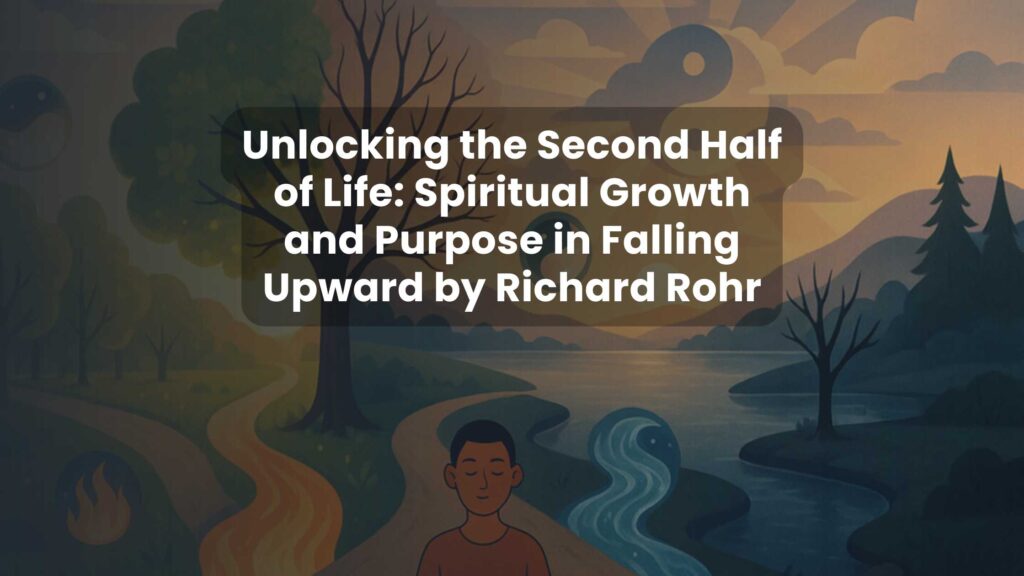
Life often unfolds in two distinct phases, each with its own challenges and opportunities for growth. In the first half, we focus on building our identity, striving for success, and seeking validation from the outside world. This period is crucial for establishing a sense of self, but it is only the beginning of a deeper journey. As we transition into the second half, a profound shift occurs—our priorities move inward, and spiritual growth takes center stage. This stage demands that we question the very foundations of who we thought we were, embracing uncertainty and letting go of ego-driven desires. According to Richard Rohr, this transformation is not just a natural progression but an essential path toward uncovering a more authentic, fulfilling existence. Through struggles, surrender, and community, we discover the power of letting go and find purpose beyond material achievements. This journey invites us to navigate life’s paradoxes with openness, ultimately unlocking the true potential that lies within the second half of life.
Understanding Richard Rohr’s Two Halves of Life Philosophy
Richard Rohr’s philosophy divides life into two distinct halves, each with unique focuses and challenges. The first half centers on building a solid identity, achieving success, and establishing a clear sense of self in the external world. During this phase, individuals often prioritize ambition, social status, and personal goals, shaping their identity based on external validation. The second half, however, shifts attention inward, encouraging a deeper exploration of meaning beyond material success. This stage invites people to question their established identities and confront the limitations of ego-driven desires. Rohr’s concept helps individuals understand that true fulfillment emerges not from external achievements but through spiritual growth and internal transformation.
Struggles and challenges play a crucial role in Richard Rohr’s philosophy, acting as catalysts for personal and spiritual growth. Rather than viewing difficulties as setbacks, Rohr argues that these obstacles are essential for breaking down false personas and uncovering authentic selves. For example, someone facing a career loss might initially experience confusion and doubt, but this upheaval can lead to profound self-reflection and new purpose. Embracing struggles as opportunities rather than threats allows individuals to peel back layers of ego and societal expectations, fostering resilience and deeper spiritual awareness.
The role of ego is pivotal in understanding Rohr’s two halves of life. In the first half, the ego serves as a necessary tool, helping shape identity and drive ambition. It fuels motivation and creates a framework for achieving goals. However, as individuals transition into the second half, Rohr stresses the importance of transcending the ego’s limitations. Recognizing that the ego is not our true essence opens the door to authentic living. For instance, letting go of the need for constant approval enables people to connect more genuinely with themselves and others, leading to a life grounded in true values rather than superficial accomplishments.
Letting go is one of the most challenging yet transformative steps in Rohr’s philosophy. It involves releasing control, fear, and attachment to external success, which often dominate the first half of life. This surrender creates space for spiritual breakthroughs and deeper awareness. By trusting the natural flow of life and embracing uncertainty, individuals can move beyond the confines of their ego. Practical ways to apply this include practicing mindfulness, meditation, or simply accepting situations without resistance. These actions help cultivate inner peace and openness to experiences that foster spiritual growth.
Suffering, according to Rohr, holds transformative power in the journey toward finding one’s true self. It strips away superficial layers and forces introspection, revealing vulnerabilities and hidden strengths. For example, someone enduring personal loss may find that their pain becomes a gateway to empathy, compassion, and a more profound understanding of life’s mysteries. Accepting suffering with grace rather than avoidance encourages growth and spiritual maturity, allowing individuals to embrace life more fully and authentically.
Community plays a vital role in supporting spiritual growth within Rohr’s framework. Spiritual development flourishes in environments where people share experiences, offer encouragement, and learn from one another. Being part of a community fosters a sense of belonging and accountability, which helps individuals embrace challenges and maintain their spiritual journey. For example, joining a meditation group or spiritual study circle can provide both guidance and motivation, making the often difficult transition from ego-based living to spiritual awareness more accessible and sustainable.
Rohr emphasizes the importance of embracing life’s paradoxes as a pathway to spiritual enlightenment. Life often presents contradictions—such as joy and pain or strength and vulnerability—that can seem confusing but hold deeper truths. Accepting these paradoxes encourages a more nuanced understanding of reality, moving beyond rigid dichotomies. This mindset fosters openness to complex spiritual insights and allows individuals to appreciate interconnectedness. By welcoming ambiguity rather than fearing it, people can develop a richer, more flexible spirituality that accommodates life’s complexities and mysteries.
Transcending Ego: Key to Authentic Personal Development
Transcending ego is often seen as the key to authentic personal development because it allows individuals to move beyond surface-level achievements and tap into deeper self-awareness. Richard Rohr’s philosophy divides life into two halves: the first focuses on building identity, success, and external validation, while the second invites us to question those constructed identities and seek inner fulfillment. This transition requires courage to confront uncertainties and let go of ego-driven motives. For example, a successful professional might realize that career accomplishments alone don’t bring lasting happiness, prompting a shift toward exploring purpose and meaning beyond societal expectations.
Struggles play a crucial role in this transformative process. Instead of viewing difficulties as mere obstacles, Rohr encourages embracing them as essential opportunities for growth. Challenges dismantle the false layers that ego builds around us, revealing our true selves beneath. Consider someone facing a personal crisis, such as loss or failure; this experience can catalyze profound self-exploration and spiritual awakening. By accepting struggles rather than avoiding them, individuals can break free from ego’s grip and move toward authentic personal development.
Understanding the ego’s role is vital in navigating this journey. In the first half of life, ego helps establish identity and ambition, driving motivation and success. However, as one matures, relying solely on ego becomes limiting. Recognizing that ego is a temporary construct—not the essence of who we are—opens pathways to genuine connection and fulfillment. For instance, a person who shifts focus from seeking approval to aligning with core values often experiences deeper satisfaction and meaning in life. This awareness encourages actions rooted in authenticity rather than external validation.
Letting go is another powerful step in transcending ego and fostering spiritual enlightenment. Releasing attachments to control, fear, and material goals creates space for true transformation. Rohr emphasizes surrendering to life’s flow, trusting in a wisdom beyond personal ego. For example, someone practicing mindfulness may learn to observe thoughts and fears without clinging to them, allowing inner peace to emerge. This process of letting go leads to greater openness and connection with the present moment, essential for authentic growth.
Suffering holds transformative power in revealing our true selves. By confronting pain and vulnerability, we strip away superficial layers and engage in deep introspection. Rohr suggests that suffering is not merely hardship but a gateway to spiritual maturity. A person who endures hardship with grace often discovers hidden strengths and insights, fostering resilience and self-awareness. Embracing suffering rather than resisting it unlocks profound personal and spiritual development.
Community also plays an indispensable role in transcending ego and cultivating spiritual growth. Sharing experiences within a supportive network encourages learning, wisdom exchange, and belonging. Rohr highlights that spiritual development flourishes in environments where individuals feel connected and supported. For example, group meditation or discussion circles provide safe spaces for vulnerability and exploration, helping members face struggles collectively. These connections nurture growth by reminding us that personal development is not a solitary journey.
Embracing life’s paradoxes is key to moving beyond ego’s simplistic views. Rohr teaches that accepting contradictions and ambiguity allows a richer, more nuanced understanding of reality. Instead of forcing binary thinking—right or wrong, success or failure—acknowledging complexity fosters spiritual enlightenment. For instance, recognizing that vulnerability can coexist with strength helps break ego’s rigid narratives. This openness cultivates empathy and broadens one’s perspective, essential for authentic personal development.
Letting Go: Pathway to Spiritual Enlightenment and Freedom
Letting go is a vital step on the pathway to spiritual enlightenment and freedom. This process involves releasing our grip on control, fear, and attachments that bind us to material success and external validation. According to Richard Rohr’s philosophy, true spiritual growth emerges when we move beyond the ego-driven desires that dominate the first half of life. By surrendering these attachments, we create space for genuine transformation, allowing ourselves to experience life more fully and authentically. This act of letting go is not about giving up but about embracing the unknown and trusting in a deeper wisdom that guides us beyond superficial concerns.
Understanding the two halves of life offers clarity on why letting go is necessary for spiritual awakening. The first half focuses on building identity, achieving goals, and establishing a sense of self through external accomplishments. However, the second half challenges us to question these identities and shift toward internal fulfillment. This transition requires courage, as it involves confronting uncertainties and dismantling ego constructs that once felt safe. By recognizing that our true essence lies beyond these temporary roles, we open the door to a more profound, soul-centered existence where freedom is found in acceptance rather than control.
Struggles play an essential role in this journey toward spiritual enlightenment. Rather than viewing adversity as a setback, Richard Rohr encourages embracing challenges as opportunities for growth. Difficult experiences expose the layers of ego and societal expectations, revealing our authentic selves underneath. For example, individuals who have faced significant loss or hardship often report a deepening of spiritual insight and connection to life’s mysteries. These transformative moments dismantle false attachments and invite a renewed perspective rooted in compassion and understanding.
Ego, while necessary for personal development in early life, becomes a barrier as we seek spiritual freedom. Letting go means recognizing the ego’s limitations and moving beyond its desires for control and validation. This shift allows us to align our actions with our true values, fostering meaningful connections and authentic experiences. Practical steps to navigate this include mindfulness practices that increase self-awareness and help identify ego-driven thoughts. By consistently observing these patterns, we gradually weaken ego’s hold and make room for spiritual growth.
The transformative power of suffering cannot be overstated in the context of letting go. Rohr highlights that pain and hardship strip away superficial layers, compelling deep introspection and spiritual maturity. When suffering is met with grace rather than resistance, it reveals hidden aspects of ourselves and opens pathways to healing. For instance, many spiritual teachers cite personal crises as turning points that catalyzed their enlightenment. Embracing suffering as a teacher rather than an enemy empowers us to move forward with resilience and wisdom.
Community plays a crucial role in supporting the process of letting go and spiritual awakening. Engaging with a nurturing community provides encouragement, shared wisdom, and a sense of belonging that sustains us through challenges. Spiritual growth flourishes in environments where vulnerability is met with acceptance and collective exploration is welcomed. Joining groups or circles focused on spiritual development can help individuals remain committed to letting go and deepen their understanding through shared experiences.
Embracing life’s paradoxes is another key aspect of the journey toward enlightenment and freedom. Life often presents contradictions that challenge our need for certainty and simple answers. Rohr teaches that accepting these paradoxes allows us to transcend binary thinking and appreciate the interconnectedness of all things. For example, recognizing that strength can coexist with vulnerability or that control is found through surrender enriches our spiritual perspective. This openness to complexity fosters deeper insight and paves the way for greater inner freedom.
Practical tips for letting go include daily meditation or journaling to observe and release limiting beliefs, actively practicing forgiveness to free oneself from past burdens, and setting intentions focused on presence rather than outcomes. Engaging regularly in community activities and reflecting on personal challenges as opportunities for learning can further strengthen this process. By taking these steps, readers can gradually unlock spiritual enlightenment and experience the freedom that comes from embracing life fully.
How Suffering Reveals Your True Self and Purpose
Suffering often acts as a mirror, reflecting back the core of who we truly are beneath the layers of social expectations and ego-driven identities. According to Richard Rohr’s philosophy, life is divided into two halves: the first focuses on building our identity and achieving external success, while the second invites us to evolve spiritually by seeking internal fulfillment. In times of hardship, the carefully constructed self begins to fracture, revealing vulnerabilities and truths that were previously hidden. For example, when someone loses a job or faces a personal crisis, the struggle forces a reevaluation of their identity beyond professional titles or societal roles, guiding them toward a more authentic sense of self.
Struggles are not merely obstacles but essential catalysts for growth, as Rohr emphasizes. When confronted with adversity, individuals are compelled to look inward and question the ego’s narratives, which often cling to control and certainty. This process strips away superficial layers, enabling a deeper understanding of personal values and purpose. Consider how people who endure serious illness or grief may discover new priorities, such as compassion or creativity, that were unnoticed in easier times. Embracing suffering as an opportunity for transformation rather than a setback allows one to navigate life’s second half with increased clarity and spiritual maturity.
The ego plays a crucial role in early life by helping us establish identity and ambition, but it becomes a barrier in the journey toward true self-awareness. Rohr teaches that transcending ego-driven desires is necessary for spiritual advancement. This means recognizing that the ego’s constructs are temporary masks rather than our essence. Letting go of attachments—whether to success, status, or control—opens the door to authentic experiences and meaningful connections. For instance, someone who learns to release their need for approval may find greater peace and alignment with their inner values, illuminating a purpose that is independent of external validation.
Letting go is more than surrender; it is an active choice that leads to spiritual enlightenment. By releasing fear, control, and attachment to material goals, we create space for growth and universal connection. Rohr advocates for trusting the unknown and embracing life’s flow, where true transformation occurs. Practically, this might involve mindfulness practices or journaling to acknowledge and release limiting beliefs. These steps help people move through suffering with grace, fostering resilience and unveiling a purpose rooted in deeper meaning rather than transient achievements.
Suffering’s transformative power lies in its ability to reveal hidden aspects of ourselves that only adversity can expose. It forces introspection and vulnerability, which are prerequisites for spiritual maturity. Accepting suffering with openness allows individuals to uncover strengths and insights otherwise inaccessible during times of comfort. For example, survivors of trauma often report a renewed sense of purpose and clarity after navigating their pain. By embracing suffering as a teacher, rather than an enemy, we embark on a journey toward a more profound understanding of our true self and the purpose that guides us forward.
Engaging with a supportive community enhances this process of discovery and growth. Rohr highlights the importance of connection and shared wisdom in spiritual development. When individuals face suffering within a nurturing environment, they gain encouragement and perspective that help them move through challenges more effectively. Support groups, spiritual circles, or trusted friendships provide safe spaces to explore vulnerabilities and receive feedback. This communal aspect reinforces the idea that suffering is not a solitary burden but a shared human experience that fosters belonging and collective growth.
Finally, embracing the paradoxes of life is essential to uncovering deeper truths about ourselves and our purpose. Rohr encourages accepting life’s complexities, such as joy emerging from pain or strength arising from vulnerability, as gateways to enlightenment. This mindset helps break down simplistic black-and-white thinking, allowing us to appreciate life’s nuances. For example, recognizing that success can coexist with failure expands our understanding of personal growth. By welcoming these contradictions, we open ourselves to richer experiences and a more authentic connection to our true selves, even amid suffering.
How Suffering Reveals Your True Self and Purpose
Suffering often serves as a catalyst for personal discovery, revealing the essence of who we truly are. Richard Rohr’s philosophy emphasizes the transformative power of pain and struggle, suggesting that these experiences encourage deep self-exploration. When faced with adversity, layers of superficial identity begin to peel away, exposing the core of our being. This process is not merely about enduring hardship; it is about using these challenges to confront our vulnerabilities and to uncover the authentic self that lies beneath societal expectations and ego-driven pursuits.
In the first half of life, individuals focus on building their identity and achieving success. However, as Rohr posits, true spiritual growth emerges in the second half, where the quest for external validation is replaced by an inward search for meaning and purpose. This shift can be daunting, requiring courage to challenge long-held beliefs and to embrace uncertainty. It is in this internal journey that suffering plays a critical role, urging us to question the constructs we have built around our identities. By confronting discomfort head-on, we can begin to discern our true values and align our actions with them.
Rohr highlights the importance of understanding the role of the ego in personal development. In the initial phase of life, the ego helps us establish goals and ambitions; however, maturity demands that we transcend these ego-driven desires. Recognizing that our ego is not our true essence allows us to engage in more authentic experiences. As we let go of the need for approval and material success, we open ourselves to deeper connections and insights that nurture the spirit. This process of releasing egoic attachments can be liberating, encouraging a journey toward a more meaningful existence.
Letting go is a fundamental aspect of spiritual enlightenment. It involves surrendering control and fear, which can often hold us captive to our material aspirations. Rohr encourages us to trust in a greater wisdom and to embrace life’s flow. This act of surrender can lead to unexpected spiritual breakthroughs, allowing us to connect with the mysteries of existence. By relinquishing our attachment to outcomes, we invite growth and transformation, revealing parts of ourselves that we may have overlooked in our pursuit of success.
Suffering, when embraced with grace, can be a profound teacher. It compels us to confront our innermost fears and insecurities, ultimately fostering personal and spiritual growth. As we navigate through pain, we gain insights that lead us to a richer understanding of ourselves and our purpose. This journey of introspection can unveil hidden strengths and resilience, allowing us to emerge from suffering with renewed clarity and a deeper sense of self.
Community also plays a vital role in our spiritual growth, as highlighted by Rohr. Engaging with others in a supportive environment enhances our capacity to share wisdom, receive encouragement, and learn from diverse experiences. By fostering a sense of belonging, community helps us navigate the challenges of life together. This collective experience can transform individual struggles into shared journeys, reinforcing the idea that we are not alone in our search for meaning.
Embracing the paradoxes of life is another key component of spiritual enlightenment. Rohr encourages us to accept the complexities and contradictions inherent in our experiences. By doing so, we open ourselves to a more nuanced understanding of reality, moving beyond simplistic dichotomies. This mindset fosters an appreciation for interconnectedness and allows us to explore new spiritual insights. Seeking understanding in life’s paradoxes can enrich our journey, guiding us toward greater wisdom and fulfillment.
In summary, Richard Rohr’s teachings illuminate how suffering can reveal our true selves and purposes. By embracing struggles, letting go of ego, and engaging with community, we can embark on a profound journey of spiritual growth. These concepts invite us to explore deeper connections with ourselves and the world around us, ultimately leading to a more fulfilling existence.
Embracing Life’s Paradoxes for Deeper Spiritual Insight
Embracing life’s paradoxes invites us to accept that seemingly opposing truths can coexist, offering a richer spiritual understanding. Instead of seeking clear-cut answers, we learn to hold space for complexity and ambiguity. For example, feeling both joy and sorrow simultaneously is a common human experience that challenges us to move beyond simplistic views of happiness. By recognizing that light and darkness often intertwine, we develop a deeper appreciation for life’s full spectrum. This acceptance nurtures spiritual insight by revealing that truth is often layered and multifaceted, not confined to absolute categories.
Richard Rohr’s philosophy highlights the importance of embracing paradoxes as a bridge between the two halves of life. During the first half, we focus on building identity and external success, driven largely by ego. However, the second half calls for a shift—letting go of rigid self-definitions and welcoming uncertainty. This transition naturally involves confronting paradoxes, such as strength found in vulnerability or freedom through surrender. For instance, a person may realize that releasing control over life’s outcomes actually fosters greater inner peace and resilience. Embracing these contradictions supports profound spiritual growth by helping us transcend ego limitations and discover authentic selfhood.
Struggles and suffering exemplify life’s paradoxes and play a crucial role in deepening spiritual insight. While pain often feels undesirable, Rohr teaches that it is essential for transformation. Challenges break down false identities and reveal hidden aspects of the self, allowing for renewal. Consider someone facing a personal loss who, through that experience, gains empathy and a more compassionate worldview. This paradox—growth emerging from hardship—encourages us to embrace difficulties rather than avoid them. Recognizing the spiritual value in suffering can inspire courage to face life’s complexities with openness and grace.
Letting go, another paradoxical practice, is fundamental to spiritual enlightenment. It requires releasing attachments to control, success, and ego-driven desires, which initially helped build our identity. Paradoxically, surrendering these attachments often leads to greater freedom and fulfillment. For example, an individual who stops chasing external validation may find a deeper sense of purpose and connection within. This act of releasing control invites trust in a larger wisdom and opens pathways to spiritual awakening. Embracing the unknown becomes not a source of fear but a gateway to profound insight and inner peace.
Community offers a practical way to navigate life’s paradoxes while fostering spiritual growth. Engaging with others provides a supportive environment to explore contradictions and complexities safely. Sharing struggles and insights within a community helps balance individual vulnerability with collective strength. For instance, spiritual groups or mindfulness circles often encourage members to embrace uncertainty and diverse perspectives, enhancing mutual understanding. Such communal experiences demonstrate that spiritual enlightenment is not a solitary journey but one enriched through connection and shared wisdom. This dynamic interplay between individuality and belonging deepens our appreciation of life’s paradoxes in practice.
Embracing Life’s Paradoxes for Deeper Spiritual Insight
Embracing life’s paradoxes invites us to hold seemingly opposite truths simultaneously, revealing layers of spiritual insight that linear thinking often misses. For example, we can experience strength in vulnerability or freedom through surrender. This acceptance of contradiction fosters a richer understanding of ourselves and the world, moving beyond black-and-white perspectives. By leaning into these tensions, we open doors to deeper meaning, recognizing that life’s complexities are not obstacles but gateways to spiritual growth.
Richard Rohr’s philosophy highlights how the two halves of life reflect this paradoxical journey. The first half focuses on building identity and external success, while the second half calls for letting go of that very identity to find authentic spiritual fulfillment. This shift can feel contradictory—relinquishing what we worked hard to achieve in order to gain a truer sense of self. Yet, embracing this paradox is essential. It encourages us to question our ego-driven desires and step into a more expansive awareness beyond material achievements.
Struggles play a vital role within these paradoxes, acting as catalysts for transformation rather than mere setbacks. Rohr points out that adversity challenges our constructed identities and forces us to confront uncomfortable truths. Instead of resisting hardships, viewing them as necessary growth opportunities helps us peel away superficial layers and fosters resilience. For instance, someone facing a career loss might discover a deeper purpose or renewed spiritual clarity through the experience, illustrating how suffering can illuminate hidden aspects of the self.
Navigating the role of ego further illustrates the paradox of spiritual development. The ego serves an important function in the first half of life by helping establish boundaries and ambition. However, true growth requires transcending ego’s limitations to embrace humility and interconnectedness. Recognizing that the ego is not our essence allows us to act more authentically and align with our core values. This balance between honoring the ego’s role and moving beyond it highlights the nuanced nature of spiritual evolution.
Letting go is another paradoxical practice central to deeper insight. Releasing control over outcomes and detaching from material possessions might seem like loss, but it actually creates space for spiritual breakthroughs. Rohr encourages surrendering to life’s unknowns, trusting in a wisdom greater than ourselves. This act of letting go transforms fear into openness, allowing us to connect with universal truths. Practical steps include mindful meditation or journaling about what we resist, helping to cultivate this surrender gradually.
Community also paradoxically strengthens individual spiritual growth by offering support while challenging us to expand beyond personal limits. Rohr emphasizes that spiritual journeys flourish in relationships where shared wisdom and vulnerability are embraced. Engaging with others who hold differing perspectives enriches our understanding of life’s complexities and paradoxes. Joining discussion groups or spiritual circles can provide this nurturing environment, fostering collective growth alongside personal insight.
By embracing life’s paradoxes, we cultivate a mindset that values ambiguity and complexity rather than clinging to certainty. This approach deepens spiritual insight by encouraging curiosity and compassion, opening us to new possibilities. As Rohr’s teachings suggest, learning to live with paradox is not about resolving contradictions but about appreciating their role in revealing a more interconnected and profound reality. Taking intentional steps to reflect on life’s contradictions can transform confusion into clarity and spiritual awakening.
Unlocking Fulfillment Beyond Ego and Material Success
Unlocking fulfillment beyond ego and material success begins with understanding the two halves of life, a concept central to Richard Rohr’s philosophy. The first half of life is dedicated to building identity, achieving goals, and accumulating external markers of success. This phase lays the foundation for who we are by defining ourselves through accomplishments and societal approval. However, true fulfillment emerges in the second half, where the focus shifts inward. This stage encourages questioning previous assumptions about identity and success, inviting a deeper exploration of meaning beyond material gains. By embracing this transition, individuals can move from seeking validation outside themselves to discovering authentic, lasting satisfaction within.
Struggles play a pivotal role in this journey toward fulfillment. Rather than viewing challenges as setbacks, Rohr highlights their essential function in spiritual growth. Adversity forces us to confront our own limitations and peel away superficial layers constructed by ego and societal expectations. For example, someone facing a career loss might initially see it as failure but later recognize it as an opportunity for self-reflection and realignment with personal values. These difficult experiences act as catalysts, encouraging deeper self-awareness and opening pathways to spiritual maturity that material success alone cannot provide.
The ego, while necessary in the early stages of life for building identity and ambition, becomes a barrier in the pursuit of genuine fulfillment. Rohr suggests that recognizing the ego’s temporary nature allows us to transcend its demands. Instead of being driven by pride, competition, or the need to impress others, mature spiritual development invites us to align our actions with what truly resonates within. This shift can be seen in leaders who move from seeking power to serving others, demonstrating how letting go of ego-driven desires fosters authentic connections and meaningful impact.
Letting go is a critical step in unlocking fulfillment beyond external achievements. Releasing attachment to control, fear, and material outcomes creates space for transformation. Rohr encourages surrendering to the flow of life, trusting that deeper wisdom guides the journey. Practicing mindfulness or meditation can help individuals cultivate this surrender, allowing them to embrace uncertainty rather than resist it. This openness often leads to unexpected insights and a sense of peace that transcends the temporary satisfaction of success or possessions.
Suffering, though often unwelcome, holds transformative power in revealing our true selves. Rohr teaches that pain strips away the facades we use to protect ego, exposing vulnerabilities essential for spiritual growth. For instance, someone recovering from loss might discover strengths and perspectives previously hidden by comfort and routine. Accepting suffering with grace not only deepens empathy but also fosters resilience and a richer understanding of life’s complexities, guiding us toward a more authentic and fulfilling existence.
Community plays an indispensable role in this process of spiritual growth and fulfillment. Rohr stresses that supportive relationships provide the encouragement needed to navigate struggles and explore deeper dimensions of self. Being part of a group where experiences and wisdom are shared creates a sense of belonging and connection essential for transformation. This communal support can take many forms, from spiritual groups to close friendships, reinforcing that fulfillment beyond ego is often found in authentic relationships rather than solitary pursuits.
Finally, embracing life’s paradoxes enriches our journey toward fulfillment. Life is filled with contradictions—strength and vulnerability, certainty and doubt, success and failure—and Rohr invites us to hold these tensions without forcing resolution. By accepting complexity and ambiguity, we open ourselves to a broader understanding of reality and spirituality. This mindset encourages curiosity and flexibility, allowing new insights to emerge and deepening our connection to the world beyond the limits of ego and material ambitions.
Practical steps to unlock fulfillment beyond ego and material success include:
– Reflect regularly on your motivations: Are they driven by external approval or inner values?
– Embrace challenges as opportunities for growth instead of obstacles to avoid.
– Practice mindfulness techniques to cultivate letting go and surrender.
– Seek out or build supportive communities to share your spiritual journey.
– Learn to hold contradictions without rushing to resolve them, allowing deeper understanding to develop.
By integrating these approaches, readers can begin transcending ego constraints and experience a more meaningful, spiritually enriched life.
Conclusion
In conclusion, Richard Rohr’s “Falling Upward” offers a profound framework for understanding the second half of life as a journey of spiritual growth and deeper purpose. By distinguishing between the two halves of life, Rohr invites us to move beyond the pursuit of external success toward inner fulfillment. Embracing struggles, transcending the ego, and learning to let go become essential steps on this transformative path. Moreover, recognizing the power of community and welcoming life’s paradoxes enrich the spiritual journey, fostering connection and insight. Rohr’s teachings encourage us to see suffering not as a setback but as a gateway to discovering our authentic selves and a more meaningful existence.
As you reflect on your own life, consider where you might be in this journey and how embracing Rohr’s wisdom could unlock new dimensions of growth and purpose. Take time to explore these ideas further, engage with supportive communities, and allow yourself to lean into the uncertainties that lead to spiritual awakening. The second half of life holds incredible potential—are you ready to embrace it?
FAQ
Frequently Asked Questions about Unlocking the Second Half of Life: Spiritual Growth and Purpose in Falling Upward by Richard Rohr
What does Richard Rohr mean by the two halves of life?
Richard Rohr divides life into two distinct phases. The first half is about establishing identity, achieving success, and building a sense of self based on external accomplishments and validation. The second half marks a shift toward spiritual growth, where one moves beyond ego-driven goals to seek deeper internal fulfillment and true purpose. This transition involves questioning previous identities and embracing uncertainty as a path to discovering authentic selfhood.
Why are struggles important in Rohr’s philosophy?
Struggles are seen not as obstacles to avoid but as essential catalysts for spiritual transformation. Facing hardships forces self-reflection and breaks down superficial layers built by ego and societal expectations. Rohr encourages embracing difficulties because they help peel away false identities and invite deeper spiritual insight and growth.
How does ego influence personal development according to Rohr?
In the first half of life, ego plays a crucial role in helping build identity, ambition, and social standing. However, Rohr highlights the importance of recognizing the ego’s limitations as one matures. True spiritual growth involves transcending ego-driven desires and realizing that ego constructs are temporary and not the core of who we are. This awareness allows for authentic living aligned with deeper values.
What is the significance of letting go in spiritual enlightenment?
Letting go involves releasing control, fear, and attachments to material success or rigid outcomes. Rohr teaches that surrendering to life’s flow creates space for genuine transformation and spiritual breakthroughs. Trusting in a wisdom greater than ourselves and embracing the unknown opens us to profound connections and universal truths.
How does suffering contribute to finding one’s true self?
Suffering serves as a powerful agent of transformation by stripping away superficial layers and prompting deep introspection. It forces confrontation with vulnerability and invites growth through acceptance and grace. Rohr believes that embracing suffering reveals hidden aspects of the self and fosters spiritual maturity and personal depth.
Why is community important for spiritual growth?
Community provides a supportive environment essential for spiritual development. Rohr emphasizes that sharing experiences, wisdom, and encouragement within a community promotes belonging, connection, and collective growth. Such support helps individuals face struggles and pursue spiritual paths with greater resilience and insight.
What does Rohr mean by embracing life’s paradoxes?
Life’s paradoxes are complex, seemingly contradictory truths that reveal deeper realities. Rohr encourages accepting ambiguity and complexity rather than seeking simple, black-and-white answers. Embracing paradoxes expands understanding, fosters interconnectedness, and opens the mind to new spiritual possibilities and enlightenment.
How can Rohr’s teachings help in the second half of life?
Rohr’s teachings guide individuals to move beyond ego and external success toward spiritual growth and authentic purpose. By embracing struggles, letting go of attachments, engaging with community, and accepting life’s mysteries, one can unlock deeper fulfillment and discover a true self that transcends material concerns.
Where can I start applying these concepts in my life?
Begin by reflecting on your current life phase and exploring areas where ego or external validation dominate your sense of self. Practice embracing challenges as growth opportunities, cultivate a habit of letting go of control, and seek connection with supportive communities. Opening yourself to life’s paradoxes and uncertainties can foster spiritual awakening and purpose in the second half of life.
What makes Falling Upward unique in discussions on aging and spirituality?
Falling Upward offers a fresh perspective that aging is not about decline but about potential for profound spiritual growth. Unlike typical narratives focused on physical or career milestones, Rohr’s work centers on inner transformation, showing how the challenges and losses of later life can lead to renewed purpose and deeper meaning. It invites readers to see the second half of life as an opportunity for falling upward into spiritual maturity.