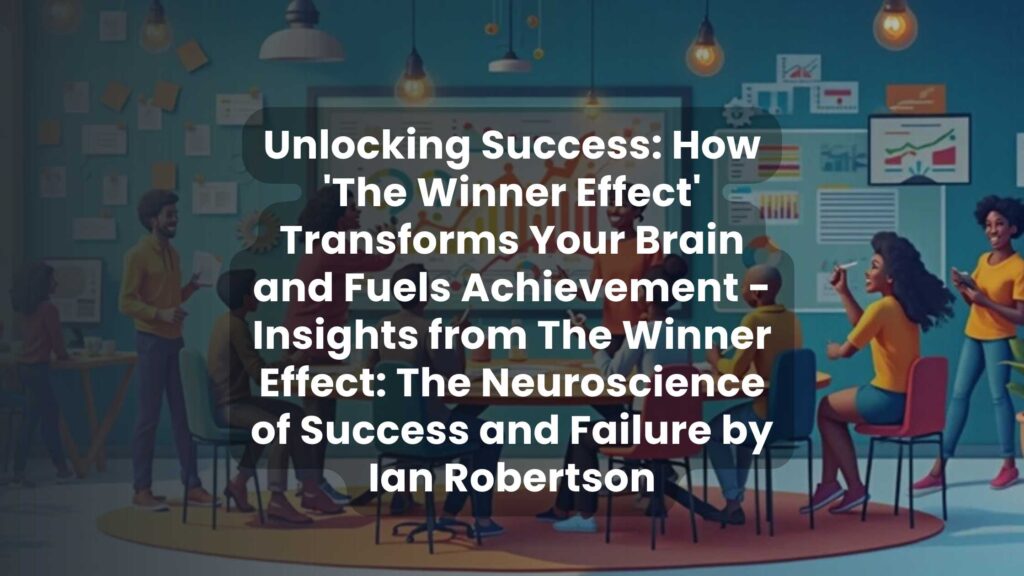
Unlocking Success: How ‘The Winner Effect’ Transforms Your Brain and Fuels Achievement – Insights from The Winner Effect: The Neuroscience of Success and Failure by Ian Robertson

Imagine a world where each victory not only elevates your spirits but also rewires your brain for even greater achievements. This is the essence of the Winner Effect—a powerful phenomenon that reveals the intricate dance between success, psychology, and biology. When we win, our brains are flooded with the feel-good chemicals dopamine and testosterone, igniting a surge of confidence and motivation. This captivating interplay not only boosts our drive but also enhances our cognitive abilities, creating a feedback loop that can propel us toward even more significant accomplishments.
Yet, the journey of success is not without its complexities. While the Winner Effect can be a powerful ally, it also carries the potential for overconfidence and the pitfalls of neglecting valuable feedback. The environment we cultivate plays a crucial role in determining whether we thrive or falter. Understanding the intricacies of this phenomenon can empower us to harness our victories, fostering a mindset that not only embraces competition but also values collaboration.
In his insightful exploration, Ian Robertson delves into the neuroscience behind this transformative dynamic, offering a roadmap for leveraging past successes to unlock future potential. As we navigate the landscape of achievement, we must learn to balance our competitive spirit with a growth-oriented approach, ensuring that each win becomes a stepping stone on our path to sustained excellence. Join us as we explore the Winner Effect and discover how it can redefine our understanding of success, guiding us toward a brighter, more ambitious future.
Understanding the Winner Effect: A Key to Unlocking Success
The Winner Effect is a fascinating phenomenon that captures the intricate interplay between success, psychology, and biology. This concept reveals that achieving a victory can set off a chain reaction, propelling an individual toward further accomplishments. At its core, the Winner Effect describes how winning alters brain chemistry, particularly through increased levels of dopamine and testosterone. These neurochemical changes not only elevate mood and energy levels but also enhance confidence and motivation, creating a fertile ground for tackling future challenges. For instance, athletes who win competitions often report feeling more confident and driven to compete again, fueling a cycle of success that can be immensely powerful.
A pivotal aspect of the Winner Effect is the role of testosterone in fostering competitive success. While typically associated with aggression, testosterone’s influence on confidence and risk-taking is equally significant. When individuals win, their testosterone levels rise, reinforcing their belief in their capabilities. This hormonal boost can lead to a greater willingness to embrace challenges, whether in sports or business environments. For example, a sales executive who closes a significant deal may feel emboldened to pursue even larger clients, driven by the confidence that success has instilled in them. This physiological response illustrates how a single victory can ripple through an individual’s future endeavors, magnifying their potential for success.
Beyond hormonal changes, the impact of winning extends to the brain’s neuroplasticity, the ability of the brain to adapt and reorganize itself. Each success creates new neural pathways that enhance learning and problem-solving skills, fundamentally reshaping how individuals think and act. For instance, a student who excels in a challenging subject may develop innovative study strategies that not only bolster their performance in that area but also enhance their overall academic approach. This ability to learn from success underscores the transformative power of the Winner Effect, allowing individuals to build upon their strengths and refine their skills over time.
However, the psychological impact of winning is not without its complexities. Victories can create a positive feedback loop, where increased self-esteem leads to greater effort and subsequent successes. Conversely, losses can undermine confidence and inhibit future performance, emphasizing the importance of understanding these psychological dynamics in both personal and professional contexts. Individuals who recognize the potential pitfalls of defeat can better navigate challenges, ensuring that setbacks do not derail their progress. This awareness is crucial for maintaining momentum and resilience in the face of adversity.
While the Winner Effect can be a powerful driver of success, it also harbors risks, particularly the danger of overconfidence. A string of victories may lead individuals to underestimate future challenges, causing them to overlook critical feedback or ignore potential pitfalls. This overconfidence can be detrimental, as it can result in complacency and a lack of preparedness for new obstacles. Thus, acknowledging these risks is essential for sustainable success, highlighting the importance of humility and self-awareness in one’s journey.
Balancing competition with cooperation is vital for fostering long-term achievement. Success is not solely defined by individual victories; collaborative efforts can amplify the benefits of the Winner Effect. Teams that integrate competitive drive with a spirit of cooperation often experience holistic growth and innovation, allowing for a more sustainable approach to success. This synergy can lead to breakthrough ideas and enhanced performance, illustrating that the path to achievement can be enriched through teamwork and shared goals.
Environmental factors also play a significant role in influencing the Winner Effect. Supportive settings that foster constructive feedback and growth-oriented mindsets can enhance an individual’s chances of thriving. In contrast, toxic environments can trigger cycles of failure and diminish motivation, stifling potential. Cultivating an atmosphere that promotes resilience and learning is critical for individuals seeking to maximize their successes and harness the full benefits of the Winner Effect.
Developing a growth mindset is essential for enhancing performance and navigating the complexities of success. Individuals who view failures as opportunities for growth are better equipped to rebound from setbacks and sustain their achievements over time. This mindset encourages adaptability and resilience, allowing individuals to embrace challenges and leverage their successes to propel them forward. By fostering a perspective that prioritizes learning and development, individuals can fully capitalize on the advantages offered by the Winner Effect.
Understanding the biological mechanisms behind success dynamics reveals why certain individuals consistently thrive. The interplay of brain chemistry, personal experiences, and psychological factors can empower individuals to recognize their strengths and weaknesses in their pursuit of success. This nuanced understanding can enable individuals to tailor their strategies, leveraging their unique attributes while addressing areas for improvement. Ultimately, grasping these dynamics can enhance one’s ability to navigate the complexities of achievement in various domains.
The principles of the Winner Effect extend beyond competitive sports and business into everyday life. By strategically applying these concepts, individuals can position themselves for repeated success and sustained growth. Simple yet effective strategies, such as fostering a growth-oriented environment, integrating competition with collaboration, and developing a resilient mindset, can help transform potential into reality. Embracing the insights offered by the Winner Effect can empower individuals to harness their past victories, paving the way for a future defined by continued achievements and personal development.
The Science of Testosterone: Fueling Competitive Drive
Examining the crucial role of testosterone in success, this header highlights the link between winning, increased hormone levels, and heightened confidence, driving individuals toward new achievements.
Testosterone, often dubbed the “hormone of competition,” plays a pivotal role in shaping not only individual drive but also the overall landscape of success. This powerful androgen is primarily associated with traits such as aggression and dominance, characteristics that often surface in competitive settings. As individuals face challenges and emerge victorious, their testosterone levels can spike, creating a biochemical environment that fosters enhanced confidence, motivation, and a willingness to take risks. This surge in hormone levels is not merely a biological response; it is a driving force that propels individuals toward greater achievements, whether in sports, business, or personal endeavors.
The concept of the “Winner Effect” further elucidates how the interplay between testosterone and success generates a cycle of increased performance. Winning, in itself, is a catalyst for raising testosterone levels, which in turn boosts self-assurance and fortifies the resolve to tackle subsequent challenges. Research indicates that athletes and business leaders who experience repeated success often do so because their brain chemistry shifts in favor of confidence-enhancing hormones. For instance, a study showed that competitive athletes who won tournaments exhibited not only heightened testosterone levels but also improved performance metrics in subsequent competitions. This biological feedback loop illustrates how victories can amplify one’s competitive edge.
Neuroplasticity, the brain’s remarkable ability to reorganize and adapt, also plays a crucial role in the dynamics of success. When individuals succeed, their brains form new neural pathways that enhance cognitive flexibility and problem-solving skills. This transformation allows winners to approach future challenges with a more strategic mindset, capitalizing on previous experiences to navigate obstacles effectively. For example, elite performers often reflect on their past successes, leveraging the neural adaptations gained from those experiences to outmaneuver competitors in high-stakes situations. Such cognitive shifts are essential for sustaining a competitive advantage over time.
However, the psychological impact of winning is not without its complexities. Victories can create a positive feedback loop, fostering self-esteem and encouraging individuals to invest further effort into their pursuits. Conversely, the weight of losses can be detrimental, undermining confidence and creating a cycle of self-doubt that hinders future performance. Understanding these psychological ramifications is vital for individuals navigating the highs and lows of competitive arenas. By recognizing the effects of both winning and losing, one can better manage their mindset and maintain resilience in the face of challenges.
Yet, there is a darker side to the winner effect, where a string of successes can lead to overconfidence. This overestimation of one’s abilities may result in underestimating challenges and disregarding constructive feedback, both of which can jeopardize long-term success. Acknowledging the potential risks associated with a winning streak is crucial for maintaining a balanced perspective. Successful individuals must cultivate humility and remain receptive to learning, ensuring that they do not fall prey to the pitfalls of complacency.
In addition to individual factors, environmental influences play a significant role in amplifying the winner effect. Supportive environments, characterized by constructive feedback and a focus on growth, can enhance the benefits of winning. Conversely, toxic or competitive settings may lead to cycles of failure that undermine motivation and achievement. Creating an atmosphere conducive to success is essential for individuals and organizations alike, as it nurtures resilience and encourages a collaborative spirit.
Ultimately, developing a growth mindset is key to harnessing the full potential of the winner effect. Embracing a perspective that views challenges as opportunities for growth enables individuals to rebound from setbacks and leverage past successes for future triumphs. This mindset encourages continuous learning, fostering an environment where individuals can thrive and achieve sustained excellence across various domains.
Understanding the biological mechanisms that underlie success dynamics further illuminates why some individuals consistently excel while others struggle. The intricate interplay between brain chemistry and personal experiences can empower individuals to recognize their strengths and address their weaknesses. By leveraging insights from neuroscience, one can cultivate the traits necessary for achieving success, effectively transforming the way challenges are approached and tackled.
The principles of the winner effect find practical applications across diverse fields, from athletics to business and personal development. By strategically employing these concepts, individuals can position themselves for repeated successes and sustained growth. This multifaceted approach not only enhances individual performance but also contributes to collective achievements within teams and organizations, highlighting the importance of synergy between competition and collaboration for optimal results.
Neuroplasticity and Winning: Rewiring Your Brain for Triumph
Neuroplasticity, the brain’s remarkable ability to reorganize itself by forming new neural connections throughout life, plays a crucial role in the pursuit of success. When individuals experience accomplishments, their brains respond by creating and strengthening pathways associated with positive outcomes and learning. This transformative process not only enhances cognitive functions but also improves emotional resilience. For instance, studies have shown that people who engage in regular learning and skill development can significantly increase gray matter volume in brain regions tied to memory and emotional regulation. Such changes highlight the brain’s capacity to adapt, making neuroplasticity a fundamental element in the journey toward personal and professional triumph.
Success does not merely alter brain structure; it also catalyzes significant biochemical changes that amplify the potential for further achievements. The “Winner Effect,” which describes how victories can lead to greater successes, is closely intertwined with neuroplasticity. When individuals succeed, their bodies release hormones like testosterone and dopamine, which enhance motivation and confidence. This hormonal boost can create a self-reinforcing cycle, where each win paves the way for new opportunities. For example, athletes often report feeling more driven and focused following a significant victory, which can lead to improved performance in subsequent competitions. By understanding this interplay between success, neuroplasticity, and the Winner Effect, individuals can harness their past achievements to fuel future endeavors.
The psychological implications of winning are profound, as victories can create a positive feedback loop that enhances self-esteem and encourages ongoing effort. Conversely, the experience of losing can have the opposite effect, often leading to diminished confidence and a reluctance to take risks. Research indicates that the emotional aftermath of wins and losses can significantly influence future performance; individuals who learn to view setbacks as opportunities for growth are better equipped to navigate challenges. This understanding emphasizes the importance of fostering a supportive environment that encourages resilience and celebrates both successes and failures as integral parts of the learning process.
However, navigating the landscape of success is not without its challenges. A string of victories can lead to overconfidence, causing individuals to underestimate future challenges or dismiss constructive feedback. This phenomenon risks creating a disconnect between perceived and actual capabilities, potentially leading to failures that could have been avoided. Recognizing these dangers is crucial for anyone striving for sustained success, as humility and a willingness to learn from every experience are vital in maintaining a balanced perspective. By being aware of the psychological traps that can accompany success, individuals can make informed decisions that keep them grounded in reality.
Equally important is the recognition that success does not exist in isolation; the environment plays a pivotal role in shaping outcomes. Supportive settings, characterized by positive reinforcement and collaborative opportunities, can significantly amplify the Winner Effect. In contrast, toxic environments may lead to cycles of failure and despair. By cultivating atmospheres that prioritize constructive feedback and growth, individuals can maximize the benefits of their successes. This approach not only nurtures individual achievements but also fosters a culture of collaboration that can drive innovation and collective success.
To truly capitalize on the principles of neuroplasticity and the Winner Effect, developing a growth mindset is essential. Embracing challenges and viewing failures as stepping stones rather than obstacles can dramatically enhance performance. Individuals who adopt this mindset are often more resilient and better equipped to learn from their experiences. They are likely to engage in lifelong learning, which not only expands their skill sets but also promotes adaptability in a rapidly changing world. The combination of neuroplasticity and a growth mindset creates a powerful framework for ongoing personal and professional development.
In practical terms, the concepts surrounding the Winner Effect can be applied across various domains, from sports and business to personal relationships. By strategically leveraging past successes, individuals can create a pathway to repeated achievements. This does not merely entail repeating previous strategies but rather involves a thoughtful reassessment of goals and methodologies, integrating lessons learned from both victories and failures. As individuals become more adept at applying these principles, they are likely to find themselves in a dynamic cycle of continuous improvement, where each success builds upon the last, ultimately leading to a more fulfilling and triumphant life.
The Psychological Effects of Winning vs. Losing
Focusing on the emotional impacts of victories and defeats, this header addresses the importance of understanding how these experiences influence self-esteem and future performance.
Victories and defeats exert powerful emotional impacts that significantly shape an individual’s self-esteem and future performance. Winning often instills a surge of confidence, as evidenced by the Winner Effect, where success catalyzes further achievements. For example, athletes frequently report feeling invincible after a significant win, which can lead to enhanced motivation and a willingness to take risks. This phenomenon is rooted in biological changes, such as increased testosterone and dopamine levels, which not only elevate mood but also enhance cognitive functioning. Conversely, experiencing defeat can have the opposite effect, leading to diminished self-worth and a reluctance to engage in future challenges. Studies illustrate that individuals who encounter repeated failures may develop a fear of taking risks, which can inhibit their growth and limit potential opportunities.
Understanding these psychological effects is crucial in various contexts, from competitive sports to the corporate world. In sports, a victorious athlete may be more inclined to push their limits, driven by the positive reinforcement of their previous success. On the other hand, a string of losses can create a cycle of self-doubt, where athletes question their abilities and hesitate to compete. This emotional rollercoaster underscores the importance of fostering resilience and a growth mindset, which encourages viewing setbacks as learning opportunities rather than definitive failures. In the business realm, employees who achieve recognition and success are often more willing to collaborate and innovate, while those who face setbacks may become disengaged or resistant to change, ultimately affecting team dynamics and productivity.
Moreover, the interplay of neuroplasticity in response to winning and losing deepens our understanding of how experiences shape our capabilities. When individuals experience success, their brains adapt by creating new neural pathways that enhance learning and problem-solving skills. This adaptive response is critical for personal development, as it equips individuals with the tools necessary to navigate future challenges more effectively. In contrast, repeated losses can hinder this process, leading to a rigid mindset that stifles creativity and adaptability. Thus, recognizing how victories and defeats influence not only emotional states but also cognitive functioning is essential for fostering long-term success and resilience in various aspects of life.
Overcoming the Dark Side of Success: The Dangers of Overconfidence
Highlighting the risks associated with a series of successes, this section emphasizes the critical need for humility and awareness to maintain sustainable achievement.
A series of successes can create a seductive allure, often leading individuals to a dangerous precipice of overconfidence. This phenomenon, aptly highlighted by the Winner Effect, illustrates how victories can significantly alter one’s psychology and biology, increasing levels of hormones like testosterone and dopamine. While these changes can enhance motivation and drive, they can also foster a false sense of invincibility. For instance, a successful entrepreneur might begin to disregard market research and feedback, believing that their previous triumphs guarantee future outcomes. This illusion of control can lead to catastrophic missteps, as evidenced by numerous startups that have failed despite initial success due to a lack of humility and insight into evolving market dynamics.
The psychological underpinnings of this overconfidence are deeply rooted in neuroplasticity—the brain’s ability to adapt and rewire itself in response to experiences. Winning creates new neural pathways that reinforce a person’s abilities and mindset, but this can come at a cost. When individuals fail to acknowledge the transient nature of success, they risk stagnation and may become blind to their limitations. Research indicates that over 70% of successful leaders have experienced a significant failure due to overconfidence, demonstrating the critical need for self-awareness as a counterbalance to the winner effect. By cultivating humility and seeking constructive feedback, individuals can safeguard against the pitfalls of complacency, ensuring that their achievements remain sustainable and grounded in reality.
Moreover, the interplay between competition and cooperation offers a path to mitigate the risks associated with overconfidence. While competitive drive can fuel success, integrating collaboration fosters a more comprehensive approach to growth. Teams that emphasize cooperative efforts alongside individual achievements are more likely to innovate and adapt in changing environments. When leaders prioritize collective input, they not only diminish the risks of overconfidence but also create a culture where continuous learning thrives. This is essential in today’s fast-paced world, where the ability to pivot and embrace new ideas can often determine long-term success.
Environmental factors play a critical role in shaping how individuals respond to success. Supportive environments that encourage open dialogue and constructive criticism can amplify the benefits of the winner effect, while toxic settings can spiral individuals into cycles of failure. For example, organizations that reward only individual achievements may inadvertently cultivate an atmosphere where overconfidence flourishes, stifling collaboration and mutual growth. By fostering a growth-oriented culture that values resilience and learning from setbacks, companies can help individuals harness their successes without falling prey to the darker aspects of overconfidence.
The Power of Collaboration: Balancing Competition for Long-Term Success
Discussing the importance of teamwork alongside competitive spirit, this header illustrates how cooperation can enhance overall growth and innovation in personal and professional realms.
In today’s fast-paced world, the synergy of teamwork and a competitive spirit plays a pivotal role in achieving long-term success. While competition drives individuals to excel and reach new heights, collaboration enhances the overall effectiveness of any endeavor. For instance, in the tech industry, companies like Google and Apple exemplify how fostering a culture of collaboration can lead to groundbreaking innovations. When talented individuals come together, sharing unique perspectives and skills, they create an environment ripe for creative problem-solving. This cooperative approach not only helps in overcoming challenges but also accelerates growth, as diverse teams are better equipped to generate novel solutions that a single individual might overlook.
The psychological benefits of collaboration are further amplified when combined with competition, illustrating how these two forces can coexist harmoniously. The Winner Effect, which highlights how initial successes can boost motivation and self-confidence, underscores the importance of a supportive team. When individuals within a team experience wins, their collective energy and morale rise, creating a positive feedback loop that fuels further achievements. According to a study by the Institute for Corporate Productivity, organizations that emphasize teamwork report 25% higher performance and productivity compared to those that do not, showcasing just how impactful collaboration can be in a competitive landscape.
Moreover, the interplay between cooperation and competition fosters a culture of resilience, essential for navigating both personal and professional challenges. In a collaborative environment, team members are encouraged to share their setbacks and learn from one another’s experiences, which can be crucial for mental and emotional growth. This shared journey allows for a deeper understanding of the psychological impacts of winning and losing. Teams that embrace failures as learning opportunities can develop a growth mindset, enabling them to bounce back stronger and more united. This resilience not only enhances individual performance but also fortifies the team as a whole, reinforcing the notion that success is often a collective endeavor.
However, it is essential to recognize the potential pitfalls of an overly competitive atmosphere. While competition can drive individuals to achieve greatness, it can also lead to overconfidence and a disregard for collaboration. The dark side of winning, characterized by a tendency to underestimate challenges, highlights the importance of humility and a balanced approach. To sustain success, individuals and organizations must remain aware of these risks and actively foster a culture of openness and support. By integrating cooperative strategies within competitive frameworks, they can harness the benefits of both dynamics, creating a rich environment for innovation and growth.
Creating Supportive Environments: Amplifying the Winner Effect
This section explores how nurturing environments can maximize the benefits of the Winner Effect, while toxic settings can perpetuate cycles of failure, underscoring the importance of constructive feedback.
Creating supportive environments is essential for fully harnessing the potential of the Winner Effect. This phenomenon, where success breeds further success, is significantly amplified in nurturing settings that prioritize constructive feedback and encouragement. For instance, workplaces that celebrate individual and team achievements, while providing opportunities for skill development, create a culture where employees feel valued and motivated. Research indicates that positive reinforcement not only boosts morale but also enhances overall performance. In contrast, toxic environments—characterized by criticism, lack of support, and fear of failure—can stifle motivation and perpetuate cycles of underachievement. Employees in such settings may experience diminished self-esteem, leading to a reluctance to take risks or pursue new challenges, effectively negating any prior successes.
Furthermore, the role of environmental factors in shaping the Winner Effect cannot be overstated. Supportive environments foster a sense of belonging and safety, which are crucial for individuals to explore their full potential. For example, sports teams that cultivate a strong sense of camaraderie often outperform those that lack cohesion, as players thrive in an atmosphere of trust and encouragement. According to a study published in the Journal of Applied Psychology, teams that engage in regular, constructive feedback sessions see a 25% increase in performance outcomes. This underscores that when individuals feel secure in their successes and failures, they are more likely to embrace challenges, thereby activating the neural pathways developed through previous victories.
Moreover, the concept of neuroplasticity plays a significant role in how environments shape the Winner Effect. Winning creates new neural connections that enhance an individual’s ability to learn and adapt. In supportive settings, these connections can flourish, resulting in enhanced problem-solving skills and innovative thinking. For instance, educational institutions that nurture students’ successes through mentorship and collaborative projects witness improved academic outcomes and a greater willingness among students to engage creatively. In stark contrast, environments that focus on punitive measures or emphasize competition without collaboration can inhibit this growth, leaving individuals trapped in a cycle of fear and self-doubt. Therefore, fostering environments that celebrate wins, no matter how small, is crucial for maximizing the benefits of the Winner Effect and ensuring individuals continue to thrive.
Cultivating a Growth Mindset: Transforming Challenges into Opportunities
Highlighting the significance of adopting a growth mindset, this header addresses how resilience and a positive attitude toward failure can enhance the Winner Effect and sustain long-term success.
Cultivating a growth mindset is pivotal for transforming challenges into opportunities, significantly influencing long-term success. By embracing resilience and maintaining a positive attitude toward failure, individuals can enhance what is known as the Winner Effect—a phenomenon where success breeds further success. This psychological and biological interplay begins with the understanding that winning alters brain chemistry, increasing levels of neurotransmitters like dopamine and hormones such as testosterone, which boost confidence and motivation. For instance, research shows that athletes who consistently win not only see immediate performance enhancement but also develop a stronger belief in their abilities, creating a reinforcing cycle of achievement that propels them toward even greater milestones.
The brain’s adaptive capacity, known as neuroplasticity, plays a crucial role in this dynamic. Each victory carves out new neural pathways that enhance learning and problem-solving skills, thereby reshaping an individual’s mindset for future endeavors. Consider a student who, after excelling in a challenging math competition, feels a surge of confidence that encourages them to tackle even tougher subjects. This shift not only highlights the psychological impact of winning but also underlines the importance of viewing failures as stepping stones rather than setbacks. When individuals adopt this perspective, they become more resilient, better equipped to navigate obstacles, and more inclined to see potential in difficult situations.
However, it is essential to recognize the darker side of success. A string of victories can lead to overconfidence, where individuals may underestimate future challenges and ignore critical feedback. This danger underscores the importance of humility and a balanced approach to achievement. Acknowledging one’s limitations while celebrating successes fosters an environment where continuous growth is possible. Moreover, incorporating cooperative elements alongside competition—such as team-based projects or collaborative problem-solving—can enhance this balance. By promoting a culture of shared success, organizations and individuals can sustain their growth and innovation in the long run, effectively harnessing the Winner Effect while mitigating its risks.
Environmental factors also play a significant role in amplifying the Winner Effect. Supportive environments that encourage constructive feedback and resilience are crucial for individuals aiming to fully benefit from their successes. Conversely, toxic settings can create a downward spiral, leading to repeated failures and diminished self-esteem. Therefore, fostering a growth-oriented atmosphere is vital for maximizing both individual and collective achievements. When people feel valued and empowered to learn from their experiences, they are more likely to embrace challenges as opportunities for development, thereby reinforcing their growth mindset and setting the stage for ongoing success.
Conclusion
In conclusion, the insights drawn from Ian Robertson’s “The Winner Effect: The Neuroscience of Success and Failure” reveal a fascinating interplay between our biological makeup and the psychological dimensions of achievement. The winner effect underscores how victories can create a cascading effect of success, enhancing our confidence and motivation through increased levels of testosterone and dopamine. This biological transformation not only reshapes our brain’s neural pathways but also reinforces a positive feedback loop that can propel us towards even greater accomplishments.
However, as we navigate the complexities of success, it is essential to remain vigilant about the potential pitfalls of overconfidence and the importance of humility. Balancing the competitive drive with a spirit of cooperation emerges as a critical strategy for sustainable success, allowing us to harness collective strengths while pushing our limits.
Moreover, fostering a growth mindset equips individuals to view challenges as opportunities rather than obstacles, enabling them to bounce back from setbacks and maintain momentum in their pursuits. By creating an environment that encourages resilience and constructive feedback, we can amplify the benefits of the winner effect, ensuring that each success lays the groundwork for future triumphs.
Ultimately, understanding the neuroscience behind success not only empowers us to replicate and sustain our achievements but also encourages a deeper appreciation of the interconnectedness of our experiences, emotions, and biology. As you reflect on your own journey, consider how you can leverage past victories to unlock new potentials, cultivating a mindset that embraces both the challenges and joys of the pursuit of success.
FAQ
FAQ Section for Unlocking Success: How ‘The Winner Effect’ Transforms Your Brain and Fuels Achievement
1. What is the Winner Effect? Exploring the Concept
The Winner Effect is a psychological and biological phenomenon where achieving success leads to even more success. When an individual wins, it alters their brain chemistry, particularly increasing levels of testosterone and dopamine. This change enhances their confidence and motivation to take on future challenges.
2. What role does testosterone play in competitive success?
Testosterone, often associated with aggression, significantly influences success. Victories can boost testosterone levels, which fosters confidence and encourages individuals to take risks. This heightened state of mind can drive people in competitive arenas, such as sports and business, to pursue additional victories.
3. How does winning influence neuroplasticity?
Winning has a profound effect on neuroplasticity, the brain’s ability to adapt and reorganize itself. Success can create new neural pathways that improve learning and problem-solving skills, ultimately reshaping an individual’s capabilities and mindset.
4. What are the psychological impacts of winning and losing?
Victories often create a positive feedback loop, enhancing self-esteem and motivation for further efforts. Conversely, losses can damage confidence and hinder future performance. Understanding these psychological effects is essential for effectively navigating both personal and professional challenges.
5. Is there a dark side to winning?
Yes, while winning can be beneficial, it may also lead to overconfidence. Individuals on a winning streak may underestimate upcoming challenges and overlook valuable feedback. Recognizing these risks is crucial for anyone aiming for sustained success, highlighting the importance of humility.
6. How can competition and cooperation be balanced for sustainable success?
Success is not just about competition; cooperation is equally important. Merging teamwork with a competitive spirit can promote holistic growth and innovation, which are essential for both individuals and organizations seeking long-term achievement.
7. What environmental factors affect the Winner Effect?
Supportive environments can enhance the Winner Effect, while toxic settings can trap individuals in cycles of failure. It is vital to cultivate environments that provide constructive feedback and a growth-oriented atmosphere to help individuals reap the full benefits of their successes.
8. How can a growth mindset enhance performance?
Adopting a growth mindset, which emphasizes resilience and a willingness to learn, can significantly amplify the Winner Effect. Individuals who see failures as opportunities for growth are better equipped to rebound from setbacks and maintain their achievements.
9. What are the biological mechanisms behind success dynamics?
Understanding the biological aspects of success helps clarify why some individuals consistently achieve their goals. The interaction between brain chemistry and experiences enables individuals to capitalize on their strengths while acknowledging their weaknesses in their pursuit of success.
10. What are practical applications of the Winner Effect in daily life?
The principles of the Winner Effect can be applied across various domains such as sports, business, and personal development. By strategically harnessing these concepts, individuals can position themselves for repeated success and foster sustained growth.
Conclusion
The Winner Effect reveals a significant relationship between success, psychology, and biology. By understanding and applying these principles, individuals can create a sustainable pathway to achievement. Emphasizing the right mindset and environment is crucial for maximizing the Winner Effect, allowing past victories to pave the way for future accomplishments.