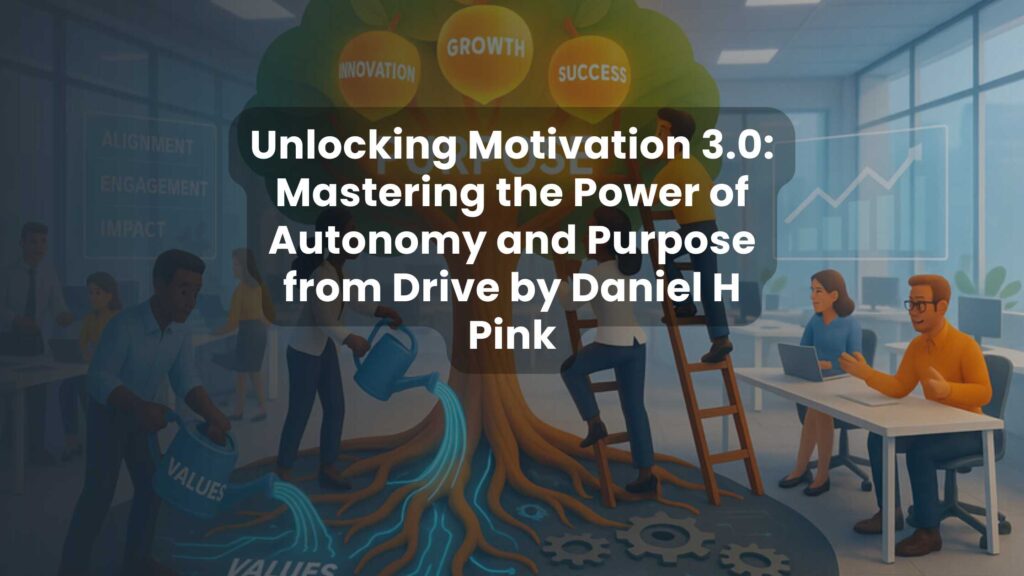
Unlocking Potential: The Secrets of Motivation with Drive by Daniel H. Pink


Motivation is often seen as the fuel that powers our productivity and success, but what if the key to unlocking our true potential lies not in external rewards, but within ourselves? The secret to sustained drive and fulfillment comes from understanding what genuinely inspires us from the inside out. When we tap into intrinsic motivation—the deep satisfaction found in the work itself—we open the door to creativity, commitment, and a more meaningful connection to our tasks.
Imagine a workplace where employees have the freedom to choose how they approach their projects, where the joy of mastering new skills propels continuous growth, and where every task is tied to a purpose greater than just a paycheck. This is not a distant ideal but a proven path to engagement and innovation embraced by some of the world’s most successful organizations. Shifting toward this mindset can be challenging, requiring thoughtful changes in leadership and culture, yet the rewards are transformative.
By exploring the principles of autonomy, mastery, and purpose, we can begin to reimagine how motivation works and how it can empower individuals and teams alike. This journey toward intrinsic motivation holds the promise of unlocking untapped potential and shaping the future of work in profound ways. Dive deeper into these concepts and discover how fostering internal drive can elevate your business and ignite your team’s passion.
Understanding Intrinsic Motivation: Key to Lasting Engagement
Intrinsic motivation is the inner drive that pushes individuals to engage in activities for the pure joy and satisfaction those tasks bring, rather than for external rewards like money or recognition. This internal spark fosters deeper engagement, creativity, and resilience, making it a powerful force in both personal and professional settings. For example, employees motivated by intrinsic factors often show higher commitment to their roles, as their work aligns with personal values and interests. Understanding intrinsic motivation helps organizations create environments where people feel genuinely connected to their work, leading to more sustained and meaningful engagement.
A key element of intrinsic motivation is autonomy, which refers to the freedom to choose how to approach and complete tasks. When individuals are trusted to make decisions about their work, they feel a greater sense of ownership and responsibility. This empowerment not only sparks creativity but also encourages innovation by allowing people to explore new ideas without fear of micromanagement. Companies like Google have demonstrated how giving employees autonomy can lead to breakthrough projects, proving that fostering independence is essential for maintaining high motivation and job satisfaction.
Mastery, or the desire to improve one’s skills and knowledge, is another vital component of intrinsic motivation. People are naturally driven to overcome challenges and develop competence in areas that interest them. Providing opportunities for continuous learning, such as training programs or stretch assignments, keeps employees engaged and eager to grow. For instance, organizations that encourage skill development often see a more dynamic workforce that adapts quickly to change, resulting in better overall performance and innovation.
Purpose connects individual efforts to a larger mission, making work feel meaningful beyond daily tasks. When employees understand how their contributions impact the organization or society, their motivation deepens. Aligning personal values with company goals helps create this sense of purpose. A nonprofit focused on environmental sustainability, for example, might attract staff who are passionate about conservation, thus naturally boosting their intrinsic motivation. This alignment enhances engagement by making work feel significant and fulfilling.
Shifting to a culture centered on intrinsic motivation can be challenging, especially in workplaces accustomed to traditional reward systems. Resistance may arise if employees and managers are used to external incentives like bonuses or promotions. To overcome this, clear communication about the benefits of intrinsic motivation and gradual policy changes are crucial. Implementing recognition programs that highlight effort and growth rather than just outcomes can also help ease the transition and build a supportive environment.
Real-world examples illustrate the effectiveness of intrinsic motivation in driving success. Companies such as Apple invest heavily in cultivating a culture where creativity and autonomy thrive, leading to innovative products and loyal employees. These organizations show that prioritizing intrinsic motivation not only improves job satisfaction but also enhances overall business performance. Their stories provide practical insights for leaders looking to inspire and retain top talent.
To harness the power of intrinsic motivation, consider taking specific steps: encourage autonomy by allowing flexible work methods, invest in employee development to support mastery, and communicate a clear organizational purpose that resonates personally. By fostering these elements, businesses can create a workplace where motivation arises naturally, resulting in lasting engagement and improved outcomes.
The Role of Autonomy in Boosting Workplace Innovation
Autonomy plays a crucial role in boosting workplace innovation by giving employees the freedom to explore new ideas and approaches. When workers are trusted to decide how to tackle their tasks, they feel a sense of ownership and responsibility that naturally sparks creativity. This freedom allows them to experiment without fear of rigid oversight, leading to unique solutions and fresh perspectives. For example, companies like Google have implemented “20% time,” where employees spend a portion of their workweek on projects of their own choosing, resulting in innovative products such as Gmail. This demonstrates how autonomy can transform a traditional workplace into a hub of continuous innovation.
Understanding intrinsic motivation is essential to appreciating why autonomy matters so much for innovation. Intrinsic motivation comes from within—people find joy and satisfaction directly from the work itself rather than external rewards like bonuses or promotions. When employees have autonomy, they tap into this intrinsic motivation more deeply, because they can align their tasks with their personal interests and strengths. This internal drive not only boosts creativity but also increases commitment and job satisfaction. Studies show that workers who experience higher levels of autonomy are more engaged and motivated, which leads to better performance and more innovative outcomes.
Mastery, or the desire to improve skills and knowledge, is another key factor connected to autonomy in the workplace. When employees control how they work, they are more likely to seek challenges that help them grow and learn. This pursuit of mastery encourages continuous development and pushes employees to innovate as they strive to improve. Organizations that offer training programs and challenging projects alongside autonomy create a fertile environment for innovation. For instance, a tech company that supports its developers with both freedom and learning opportunities often sees breakthrough solutions emerge from motivated, skilled teams.
Purpose also strengthens the link between autonomy and innovation by connecting individual efforts to a larger mission. Employees who understand how their work contributes to meaningful goals are more engaged and willing to take initiative. Autonomy allows them to find unique ways to support these goals, fostering innovation that aligns with the company’s values. For example, a nonprofit focused on environmental sustainability might encourage employees to devise new methods for reducing waste, giving them freedom to experiment while reinforcing the organization’s purpose. This alignment enhances both intrinsic motivation and creative problem-solving.
Shifting a workplace culture toward autonomy and intrinsic motivation can be challenging, especially in organizations accustomed to strict control or external rewards. Overcoming this requires clear communication about the benefits of autonomy and gradual policy changes that encourage trust and experimentation. Leaders can start by setting broad goals but allowing teams to determine the best paths to achieve them. Additionally, recognizing creative efforts and learning from failures helps build confidence. By addressing these challenges thoughtfully, businesses can foster a culture where autonomy drives innovation and sustainable growth.
Real-life success stories highlight the powerful impact of autonomy on workplace innovation. Companies like Apple have long embraced autonomy by encouraging designers and engineers to take ownership of their projects and explore ideas freely. This approach has resulted in groundbreaking products that redefine industries. Similarly, Google’s flexible work environment supports individual creativity, leading to continuous innovation. These examples show that prioritizing autonomy not only enhances employee satisfaction but also delivers competitive advantages in the marketplace.
To leverage the role of autonomy in your workplace, consider these practical steps:
– Encourage employees to set their own goals within clear company objectives
– Provide opportunities for continuous learning and skill development
– Foster a culture that values experimentation and accepts failure as part of growth
– Communicate the organization’s purpose clearly to connect individual work to larger missions
– Gradually shift from micromanagement to trust-based leadership
Implementing these strategies empowers employees to innovate confidently and consistently, unlocking new levels of creativity and performance in your organization.
Mastery and Motivation: How Skill Growth Drives Success
Understanding intrinsic motivation is key to unlocking how skill growth drives success. When individuals engage in activities because they find them inherently enjoyable or satisfying, they tap into a powerful source of energy and focus. This internal drive encourages deeper learning, creativity, and resilience. For example, employees who feel intrinsically motivated often take initiative and seek out opportunities to improve their skills without needing external rewards. Research shows that workers motivated by personal growth report higher job satisfaction, which leads to better performance and retention. Recognizing and nurturing this motivation can transform how teams approach challenges and embrace new skills.
Autonomy plays a crucial role in fostering intrinsic motivation by giving people the freedom to choose how they accomplish their tasks. When employees can decide the methods and pace of their work, they often feel more responsible and invested in outcomes. This sense of control sparks innovation because individuals experiment with different approaches, leading to skill development and improved results. Consider how companies like Google empower their teams with autonomy, allowing them to work on passion projects that eventually turn into major innovations. By trusting employees to make decisions, organizations create an environment where mastery becomes a natural pursuit.
Mastery itself is a powerful motivator, as the joy of becoming better fuels continuous learning and personal growth. When people see tangible progress in their abilities, it boosts confidence and encourages them to take on more complex challenges. Providing ongoing training, mentoring, and opportunities to apply new skills supports this growth. For instance, a software engineer who is encouraged to learn new coding languages and work on diverse projects will develop expertise that opens doors to leadership roles. This cycle of skill improvement and motivation propels individuals and organizations forward.
Connecting work to a meaningful purpose enhances motivation by aligning tasks with a larger mission. When employees understand how their contributions impact the organization or society, they feel more engaged and committed. This sense of purpose deepens intrinsic motivation and drives individuals to stretch their skills to meet goals. Companies that clearly communicate their values and show how each role fits into the bigger picture often see stronger team cohesion and performance. For example, nonprofit organizations frequently inspire employees by highlighting the social impact of their work, encouraging mastery in areas that directly support their mission.
Shifting a workplace culture toward intrinsic motivation can be challenging, especially when traditional reward systems dominate. Overcoming resistance requires clear communication about the benefits of focusing on personal growth and autonomy. Leaders can introduce policies that emphasize learning and provide safe spaces for experimentation and failure. Implementing regular feedback sessions and recognizing effort rather than just outcomes helps reinforce mastery as a motivator. These steps create an environment where employees feel valued for their development, making intrinsic motivation a sustainable driver of success.
Real-life success stories highlight the transformative power of mastery and motivation in driving achievement. Tech giants like Apple and Google demonstrate how prioritizing intrinsic motivation leads to breakthrough innovations and market leadership. Their workplaces emphasize autonomy, mastery, and purpose, creating cultures where employees are inspired to grow constantly. These examples show that investing in skill development and fostering internal motivation not only benefits individuals but also propels entire organizations forward, setting a benchmark for others to follow.
To harness mastery and motivation effectively, individuals and organizations can take actionable steps. Encourage setting clear, achievable skill goals that align with personal interests to boost intrinsic motivation. Promote autonomy by allowing flexibility in how tasks are approached and completed. Invest in continuous learning opportunities such as workshops, coaching, or online courses to support mastery. Connect daily work to broader organizational values to deepen purpose. Finally, create a feedback-rich environment that recognizes effort and progress. These practical tips help unlock the full potential of skill growth as a pathway to sustained success.
Finding Purpose at Work: Aligning Values with Goals
Finding purpose at work begins with understanding intrinsic motivation—the internal drive that makes tasks feel meaningful beyond external rewards like paychecks or titles. When employees connect with their work on a deeper level, they experience greater satisfaction and creativity. For instance, a software developer who is passionate about solving complex problems often finds joy in the process itself, leading to higher engagement and better results. This connection between inner values and daily tasks transforms routine jobs into fulfilling careers, encouraging employees to invest more of themselves in their roles.
Autonomy plays a crucial role in fostering intrinsic motivation by giving employees control over how they approach their work. When individuals have the freedom to make decisions and choose methods that align with their strengths or interests, they feel trusted and empowered. This can lead to increased innovation and responsibility. Take, for example, a marketing team allowed to experiment with new campaign strategies without rigid oversight; such autonomy often results in creative breakthroughs and a stronger commitment to project success. Encouraging autonomy helps create a workplace where employees align their values with organizational goals naturally.
Mastery—the desire to improve and excel—fuels continuous personal and professional growth. Providing opportunities for skill development, such as workshops or challenging assignments, keeps employees motivated to push their boundaries. A graphic designer who receives regular training on new tools or techniques is more likely to stay engaged and deliver higher-quality work. Mastery also enhances confidence, making employees feel competent and valued. When businesses invest in mastery, they help align individual aspirations with company objectives, creating a win-win scenario for both parties.
Finding purpose means connecting individual work to a larger mission, making daily tasks feel significant in a broader context. When employees see how their efforts contribute to meaningful goals, such as improving community well-being or advancing technology, their engagement deepens. For example, healthcare professionals who understand that their work saves lives often report higher job satisfaction. Aligning personal values with organizational objectives not only boosts motivation but also increases loyalty and reduces turnover. This alignment is key to building a workforce committed to shared success.
Shifting to intrinsic motivation can present challenges, especially in environments accustomed to traditional reward systems based on bonuses or promotions. Overcoming resistance requires clear communication about the benefits of intrinsic motivation and gradual policy changes that support autonomy, mastery, and purpose. For example, a company might introduce flexible work options or personalized learning paths to encourage self-driven growth. By addressing concerns openly and providing support, organizations can foster a culture where intrinsic motivation thrives, helping employees align their values with goals more effectively.
Real-life examples show the power of intrinsic motivation in action. Companies like Google and Apple prioritize autonomy and creativity, creating environments where employees feel purpose-driven and free to innovate. Google’s famous “20% time” allows employees to work on passion projects, resulting in breakthroughs like Gmail. These success stories demonstrate how aligning employee values with company goals through intrinsic motivation leads to remarkable achievements. Businesses can learn from these models to create workplaces that inspire and retain top talent.
To embrace intrinsic motivation and align values with goals, start by encouraging employees to identify what drives them personally. Next, offer autonomy by allowing flexible approaches to task completion. Provide opportunities for mastery through ongoing education and challenging projects. Finally, communicate the company’s mission clearly, showing how each role contributes to the bigger picture. These practical steps empower individuals to find purpose at work, boosting both satisfaction and performance while strengthening organizational success.
Overcoming Challenges When Shifting to Intrinsic Motivation
Understanding intrinsic motivation is crucial for individuals and organizations aiming to enhance workplace satisfaction and productivity. This internal drive encourages people to pursue tasks for the joy and fulfillment they bring, rather than for external rewards such as bonuses or promotions. When employees are intrinsically motivated, they tend to show higher levels of creativity, commitment, and overall job satisfaction. For instance, a software developer who enjoys coding for the sake of problem-solving and creativity is likely to produce more innovative solutions than one who is solely focused on meeting deadlines for a bonus. Recognizing these intrinsic factors can help organizations create environments that nurture and sustain this motivation.
One of the key elements in fostering intrinsic motivation is autonomy. Providing employees with the freedom to choose how they complete their tasks not only inspires innovation but also enhances performance. When employees feel trusted to make decisions, they are more likely to take ownership of their work and tap into their creative potential. For example, a marketing team given the autonomy to develop their campaigns often produces more engaging content than a team that strictly follows top-down directives. By empowering employees to express their individuality and creativity, organizations can cultivate a culture rich in innovation and responsibility.
Another essential aspect of intrinsic motivation is the pursuit of mastery. Employees who continually seek to improve their skills and knowledge find joy in their personal growth. To harness this drive, organizations should provide opportunities for training and development, as well as assign challenging projects that push employees to excel. For instance, a company that offers workshops or mentorship programs not only boosts employees’ skill sets but also reinforces their commitment to the organization’s success. This ongoing pursuit of mastery creates a dynamic work environment where employees feel motivated to learn, adapt, and thrive.
Purpose also plays a vital role in enhancing intrinsic motivation. When employees can connect their work to a larger mission, they become more engaged and committed to their tasks. Aligning personal values with organizational goals fosters a sense of belonging and significance. For example, a company focused on sustainability can attract employees who are passionate about environmental issues, leading to increased motivation and job satisfaction. By clearly communicating the organization’s mission and values, leaders can inspire employees to see their roles as integral to achieving shared goals, thereby strengthening their intrinsic motivation.
Overcoming the challenges associated with shifting to intrinsic motivation requires a strategic approach. Traditional reward systems, which often prioritize extrinsic incentives, can hinder the transition. To address this, organizations must communicate the long-term benefits of fostering intrinsic motivation, such as increased employee retention and enhanced creativity. Implementing new policies that support autonomy, mastery, and purpose is essential for creating a culture that values intrinsic motivation. For example, a company that evaluates employee performance based on personal development and contribution to team goals, rather than just sales figures, can help shift the focus from external rewards to internal fulfillment.
Real-life success stories from companies like Google and Apple demonstrate the transformative power of intrinsic motivation in the workplace. These organizations prioritize autonomy and creativity, allowing employees to explore innovative ideas that drive their success. For instance, Google’s famous “20% time” policy encourages employees to spend a portion of their workweek on projects they are passionate about, leading to groundbreaking developments such as Gmail and Google Maps. Such examples illustrate how prioritizing intrinsic motivation can lead to not only employee satisfaction but also significant organizational achievements.
To effectively cultivate an environment of intrinsic motivation, organizations can implement several practical strategies. First, they should assess the existing reward systems and identify areas for improvement. Next, fostering open communication about the importance of autonomy, mastery, and purpose can help align employee goals with organizational objectives. Providing regular feedback and opportunities for professional development will also encourage employees to embrace learning and growth. Finally, recognizing and celebrating achievements that reflect intrinsic motivation—such as innovative solutions or teamwork—can reinforce a culture where internal drive thrives, ultimately unlocking the full potential of the workforce.
Real-Life Success Stories: Companies Thriving on Drive
Many companies have achieved remarkable growth by tapping into intrinsic motivation, demonstrating how drive rooted in internal satisfaction can transform workplaces. Google, for example, encourages employees to spend a portion of their time on personal projects, fostering autonomy and creativity. This freedom has led to the development of innovative products like Gmail and Google Maps, illustrating how autonomy fuels both engagement and groundbreaking ideas. Similarly, Apple’s emphasis on mastery through continuous learning and challenging projects pushes their teams to refine skills and deliver exceptional products, reinforcing the power of intrinsic motivation in driving excellence.
The connection between purpose and success is evident in companies like Patagonia, where commitment to environmental sustainability aligns with employees’ personal values. This sense of purpose strengthens job satisfaction and loyalty, proving that when work serves a greater mission, motivation naturally increases. By integrating meaningful goals into daily tasks, Patagonia motivates employees beyond monetary rewards, nurturing a culture where every contribution feels impactful. This approach highlights how linking individual values with organizational vision can inspire dedication and foster long-term success.
Shifting company culture from traditional reward systems to intrinsic motivation requires thoughtful strategies, as seen in the transformation at Atlassian. The software giant replaced rigid performance metrics with initiatives promoting mastery and autonomy, such as learning programs and flexible work structures. This shift involved clear communication about the benefits of intrinsic motivation and creating policies that support employee choice and growth. Atlassian’s experience shows how overcoming resistance and fostering trust can reshape workplace dynamics, leading to higher engagement and productivity.
For businesses aiming to thrive on intrinsic drive, practical steps can make a significant difference. Start by offering employees greater autonomy—allow them to decide how to approach their projects or solve problems. Invest in training and development opportunities that challenge workers and promote mastery. Connect daily tasks to a larger purpose by clearly articulating company values and encouraging employees to find personal meaning in their roles. These strategies help cultivate a motivated workforce that innovates and excels naturally, without relying solely on external rewards.
Understanding intrinsic motivation is crucial for companies seeking sustainable success. By learning from real-life examples where autonomy, mastery, and purpose are prioritized, organizations can build environments where employees feel inspired to give their best. This internal drive not only enhances creativity and commitment but also strengthens job satisfaction, leading to a resilient and innovative company culture. Embracing these principles allows businesses to unlock their team’s full potential and remain competitive in today’s evolving market.

Implementing Drive’s Principles for Enhanced Employee Performance
Understanding intrinsic motivation is the foundation for implementing Drive’s principles to enhance employee performance. When employees find joy and satisfaction in their work itself, rather than focusing solely on external rewards like bonuses or promotions, their creativity and commitment naturally increase. For example, a software developer who enjoys solving complex problems tends to produce higher-quality code and innovate more effectively than one motivated only by financial incentives. Recognizing this internal drive allows managers to foster an environment that encourages engagement and long-term dedication.
Central to intrinsic motivation is the role of autonomy, which gives employees the freedom to determine how they complete their tasks. When workers are trusted to make decisions about their work processes, they feel a stronger sense of ownership and responsibility. This empowerment sparks innovation and improves performance, as seen in companies like Google, where employees are encouraged to dedicate a portion of their time to personal projects. By implementing flexible work policies and reducing micromanagement, organizations can create a culture where autonomy thrives and employees are motivated from within.
Mastery, or the desire to become better at one’s craft, is another critical element that drives enhanced employee performance. Offering continuous learning opportunities, such as workshops, mentoring programs, or challenging assignments, supports employees in their professional growth. For instance, a marketing team member who receives training on the latest digital tools is more likely to develop creative campaigns that stand out. Promoting mastery not only improves individual skills but also benefits the entire organization by fostering a workforce that is adaptable and eager to excel.
Connecting work to a larger purpose deepens intrinsic motivation by aligning employees’ personal values with the company’s mission. When staff see how their efforts contribute to meaningful goals, they experience greater engagement and satisfaction. A healthcare organization that emphasizes patient care as its core purpose often finds that employees are more compassionate and committed. To implement this, leaders should clearly communicate the organization’s vision and encourage employees to reflect on how their roles make a difference beyond daily tasks.
Shifting from traditional reward systems to a focus on intrinsic motivation can present challenges such as employee skepticism or resistance to change. Overcoming these obstacles requires transparent communication about the long-term benefits of intrinsic motivation, along with gradual policy adjustments that support autonomy, mastery, and purpose. For example, replacing rigid performance metrics with regular feedback sessions can help employees feel more valued and motivated. By addressing concerns openly and modeling intrinsic motivation practices, organizations can successfully transition to a more fulfilling work culture.
Real-life success stories highlight the impact of implementing Drive’s principles on employee performance. Companies like Apple have demonstrated that when employees are given autonomy, encouraged to master their skills, and connected to a meaningful purpose, innovation flourishes. Apple’s design teams, empowered to experiment and refine their craft, consistently produce groundbreaking products. These examples provide valuable lessons for organizations aiming to boost motivation and performance by embracing intrinsic drivers rather than relying solely on external incentives.
To put these principles into action, managers can start by encouraging team members to set personal learning goals aligned with their roles. Offering choices in task management and fostering open dialogue about the company’s mission helps reinforce autonomy and purpose. Additionally, investing in skill development programs and recognizing progress toward mastery can sustain motivation over time. By taking these specific steps, organizations can create an environment where intrinsic motivation thrives, leading to enhanced employee performance and overall success.
The Future of Work: Embracing Intrinsic Motivation Strategies
Understanding intrinsic motivation is essential for shaping the future of work. Unlike external rewards such as bonuses or promotions, intrinsic motivation comes from within—people feel driven by genuine interest, enjoyment, or a sense of accomplishment in the tasks themselves. This internal drive fosters creativity and dedication, resulting in higher job satisfaction and better performance. For example, employees who are passionate about solving complex problems often produce innovative solutions without needing constant supervision or incentives. Recognizing and nurturing this natural motivation can transform workplaces into hubs of engagement and productivity.
Autonomy plays a pivotal role in enhancing intrinsic motivation at work. When employees have the freedom to decide how they approach their tasks, they feel trusted and empowered, leading to increased innovation and responsibility. For instance, companies that allow flexible work schedules or encourage independent project management often see employees taking more initiative and ownership of their work. This sense of control not only sparks creativity but also improves overall job satisfaction, as people feel their unique skills and judgment are valued rather than micromanaged.
The pursuit of mastery—continually improving skills and knowledge—is another powerful intrinsic motivator. People derive great satisfaction from becoming better at what they do, especially when supported by opportunities for growth. Organizations that invest in training programs, mentorship, and challenging assignments help employees stay engaged and motivated. Take, for example, a software company that encourages developers to learn new coding languages or tackle complex projects; this environment fosters enthusiasm and a strong commitment to personal and professional growth.
Purpose connects employees to something larger than themselves, making their work feel meaningful and impactful. When people see how their efforts contribute to broader organizational goals or societal benefits, their motivation deepens. Aligning personal values with company missions can transform routine tasks into fulfilling experiences. For example, a nonprofit organization dedicated to environmental conservation inspires its staff by emphasizing the positive change their work creates. This alignment strengthens dedication and loyalty, turning employees into passionate advocates for their company’s vision.
Shifting workplace culture to emphasize intrinsic motivation comes with challenges, especially when traditional reward systems are deeply ingrained. Employees and managers may resist changes that move away from familiar incentives like bonuses or strict performance targets. To overcome this, clear communication about the long-term benefits of intrinsic motivation is crucial. Implementing new policies gradually, such as incorporating regular feedback and recognizing effort rather than just outcomes, can help ease the transition. For example, a firm might start by encouraging team brainstorming sessions to foster creativity before adjusting its evaluation criteria.
Real-life success stories demonstrate the impact of embracing intrinsic motivation strategies. Companies like Google and Apple have built cultures that prioritize autonomy, mastery, and purpose, resulting in continuous innovation and market leadership. Google’s “20% time” policy allows employees to explore projects they are passionate about, often leading to breakthrough products like Gmail. Apple fosters a sense of purpose by connecting design and technology to customer experience, motivating employees to push boundaries. These examples show how intrinsic motivation can drive both employee fulfillment and business success.
To apply intrinsic motivation strategies effectively, start by fostering autonomy through flexible work options and trust-based management. Encourage mastery by offering learning opportunities and challenging projects that stretch employees’ skills. Connect work to a clear purpose by communicating how individual roles contribute to larger goals. Additionally, address resistance by openly discussing the benefits and gradually introducing changes to reward systems. By taking these steps, organizations can create a work environment where employees thrive because they find genuine joy and meaning in their work.
Conclusion
In Unlocking Potential: The Secrets of Motivation with Drive, Daniel H. Pink reveals that the key to truly inspiring individuals lies not in external rewards, but in nurturing intrinsic motivation. By understanding the power of autonomy, mastery, and purpose, organizations can create environments where employees feel empowered, challenged, and connected to meaningful work. This shift from traditional incentive systems to fostering internal drives leads to greater creativity, commitment, and overall satisfaction. Real-world examples from companies like Google and Apple demonstrate how embracing these principles can transform workplaces and drive innovation.
As the future of work continues to evolve, prioritizing intrinsic motivation will be essential for unlocking the full potential of any team or organization. Take the time to reflect on how autonomy, mastery, and purpose can be integrated into your own work environment. To truly unlock your team’s potential, start exploring these strategies today and share your experiences of creating a motivated, engaged, and thriving workplace.
FAQ
Frequently Asked Questions about Unlocking Potential: The Secrets of Motivation with Drive by Daniel H. Pink
What is intrinsic motivation and why is it important?
Intrinsic motivation refers to the internal drive that makes people find joy and satisfaction in the work itself, rather than being motivated by external rewards like money or praise. In the workplace, this form of motivation leads to greater creativity, stronger commitment, and higher job satisfaction, making it essential for sustained performance and innovation.
How does autonomy influence motivation at work?
Autonomy gives employees the freedom to decide how they complete their tasks. This sense of control inspires innovation and improves overall performance. When employees are trusted to make decisions, they often feel more responsible and creative, which further enhances their intrinsic motivation.
What role does mastery play in motivating employees?
Mastery is the deep desire to improve and excel at a skill or task. It fuels continuous learning and personal growth. Providing opportunities for training and challenging projects helps employees pursue mastery, which keeps them motivated to push their limits and achieve higher levels of competence.
Why is purpose important for employee motivation?
Purpose connects employees’ work to a larger mission or goal beyond just daily tasks. When people see how their work aligns with meaningful values and contributes to something greater, they become more engaged and committed. This alignment between personal values and organizational goals significantly boosts intrinsic motivation.
What challenges might organizations face when shifting toward intrinsic motivation?
Moving away from traditional reward systems towards intrinsic motivation can be difficult. Resistance may come from both management and employees accustomed to external rewards. Successfully communicating the long-term benefits and implementing supportive policies are key steps to creating a culture that values intrinsic motivation.
Can you provide examples of companies that use intrinsic motivation effectively?
Companies like Google and Apple are well-known for fostering environments where autonomy, mastery, and purpose thrive. Their cultures encourage freedom and creativity, which lead to continuous innovation and business success. These examples demonstrate how prioritizing intrinsic motivation can transform workplaces.
What does the future of work look like in terms of motivation?
As the nature of work continues to evolve, intrinsic motivation will become increasingly important for driving innovation and achieving success. Encouraging autonomy, mastery, and purpose helps align individual aspirations with organizational goals, unlocking the full potential of the workforce.
How can I start applying the principles of intrinsic motivation in my organization?
Begin by giving employees more autonomy in how they complete their work, supporting their continuous learning and development, and helping them connect their roles to a broader purpose. Communicate openly about the benefits of intrinsic motivation and gradually adjust policies to support this cultural shift. Over time, you will likely see increased engagement, creativity, and satisfaction among your team.
What should I do next after reading Unlocking Potential: The Secrets of Motivation with Drive?
Explore and implement strategies that foster intrinsic motivation within your team or organization. Share your experiences and successes in creating fulfilling work environments to inspire others. Unlocking intrinsic motivation is a journey that can lead to remarkable growth for both individuals and businesses.