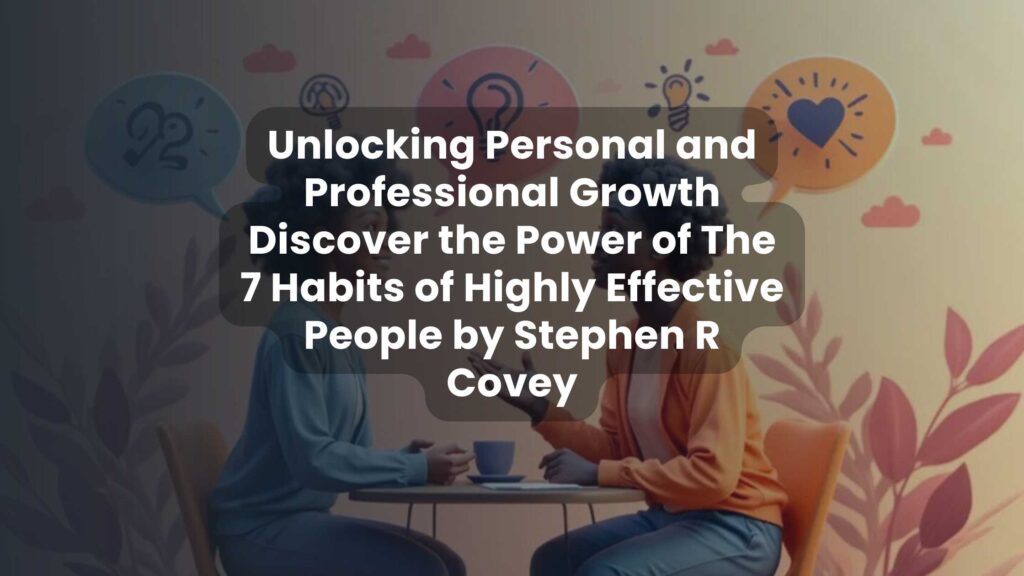
Master Your Life with the 7 Habits of Highly Effective People: A Comprehensive Guide to Personal Transformation


In a world filled with distractions and relentless demands on our time, the quest for personal effectiveness has never been more crucial. Stephen R. Covey’s groundbreaking work offers a roadmap to reclaiming control over our lives and achieving our deepest goals. Imagine awakening each day with a sense of purpose, equipped with the tools to navigate challenges and foster meaningful relationships. Covey’s insights delve into the principles that separate the truly effective individuals from the rest, emphasizing that success is not merely about productivity but about living in alignment with our values and aspirations. As we explore the seven transformative habits outlined in this influential book, we will uncover strategies that empower us to take charge of our journey, prioritize what truly matters, and cultivate an environment of collaboration and growth. Get ready to master your life, one habit at a time, and embark on a path that leads to lasting fulfillment and effectiveness.
Be Proactive: Taking Control of Your Destiny
Embrace responsibility for your actions and choices, allowing you to influence your life positively. Proactivity empowers you to focus on your responses rather than circumstances.
Key Takeaway:
Identify areas where you can take initiative and recognize the impact of your choices on your outcomes.
Identify areas where you can take initiative and recognize the impact of your choices on your outcomes. Embracing a proactive mindset allows you to take full responsibility for your life, transforming challenges into opportunities for growth. For instance, rather than lamenting a difficult work environment, a proactive individual might seek feedback, communicate needs, or pursue training to enhance their skills, leading to improved job satisfaction and performance. Research shows that people who adopt proactive behaviors are more likely to achieve their goals and experience higher levels of happiness. This approach not only empowers you to determine your responses but also encourages a habit of continuous improvement, ultimately steering your life in a positive direction. By consistently reflecting on how you can act rather than react, you create a foundation for success that resonates in both personal and professional realms, reinforcing the notion that your choices shape your destiny.
Begin with the End in Mind: Crafting Your Vision
Beginning with the end in mind is crucial for crafting a meaningful vision that guides your life’s journey. By clearly defining your goals, whether they pertain to your career, relationships, or personal aspirations, you create a roadmap that directs your actions and decisions. For instance, a study conducted by the Dominican University of California revealed that individuals who wrote down their goals were 42% more likely to achieve them compared to those who merely thought about their objectives. This statistic underscores the power of visualization and intentionality in achieving success. When you envision your ideal future, it becomes easier to identify the steps needed to get there, ensuring that your daily choices align with your long-term aspirations. By keeping this vision at the forefront of your mind, you empower yourself to navigate challenges with purpose and clarity, ultimately transforming your dreams into reality. Embrace this habit, and watch as it propels you toward a more fulfilled and effective life.
Put First Things First: Mastering Time Management
Putting first things first is essential for mastering time management and achieving personal effectiveness. This habit encourages individuals to focus on what is truly important rather than getting lost in the whirlwind of urgent tasks that often distract from long-term goals. For instance, using a priority matrix can help differentiate between tasks that are important—like strategic planning or personal development—and those that seem pressing, such as responding to emails or attending unnecessary meetings. Statistics show that individuals who prioritize effectively can increase their productivity by up to 25 percent, as they allocate their time to activities that align with their values and aspirations. By consciously choosing to work smarter, rather than harder, one can create a more fulfilling and balanced life. Ultimately, putting first things first transforms how we approach our responsibilities, leading to greater satisfaction and success in both personal and professional realms.
Think Win-Win: Building Collaborative Relationships
Thinking win-win is essential for building collaborative relationships that thrive on mutual benefit and trust. By adopting a win-win mindset, individuals can foster environments where all parties feel valued and empowered, leading to more productive interactions. For instance, in a workplace setting, when team members approach project negotiations with the intention of finding solutions that satisfy everyone’s needs, the outcome often results in increased morale and enhanced cooperation. Studies have shown that organizations that embrace collaborative practices see a 20% increase in employee satisfaction, highlighting the tangible benefits of this approach. Furthermore, in personal relationships, practicing win-win strategies can help resolve conflicts amicably, as it encourages open dialogue and understanding. Ultimately, cultivating a win-win perspective not only strengthens connections but also paves the way for innovative solutions that might not emerge in more competitive environments. Engaging in this collaborative mindset invites readers to reflect on their own interactions and consider how they can implement these principles to create more harmonious and effective relationships.
Seek First to Understand, Then to Be Understood: Effective Communication
Effective communication hinges on the principle of seeking first to understand, then to be understood. This approach emphasizes the importance of active listening and empathy in conversations, allowing individuals to fully grasp the perspectives and feelings of others before expressing their own views. For instance, in a workplace setting, a manager who takes the time to listen to an employee’s concerns about a project can foster a more collaborative and trusting environment, ultimately leading to increased productivity and morale. Research shows that organizations with strong communication practices enjoy 47 percent higher returns to shareholders, highlighting the tangible benefits of effective dialogue. By prioritizing understanding, individuals can break down barriers, reduce conflicts, and build deeper connections, paving the way for more meaningful interactions. This foundational habit not only enhances personal relationships but also cultivates a culture of respect and cooperation, encouraging everyone involved to contribute openly and authentically. Embracing this mindset can transform the way we communicate, making every conversation an opportunity for growth and connection.
Synergize: Harnessing Collective Strengths
Synergizing harnesses the collective strengths of individuals to create outcomes far exceeding what any one person could achieve alone. By fostering an environment of collaboration, teams can tap into diverse perspectives and expertise, leading to innovative solutions that address complex challenges. For instance, research has shown that organizations that embrace teamwork can see productivity increases of up to 25%. This is exemplified by companies like Google, which promotes collaboration through open workspaces and cross-functional teams, resulting in groundbreaking projects such as Gmail and Google Maps. Additionally, when team members actively communicate and share their unique skills, they not only enhance their problem-solving capabilities but also build trust and camaraderie, which are essential for long-term success. Thus, embracing synergy is not just about working together; it is about recognizing that the sum of our efforts can create extraordinary results.

Sharpen the Saw: Commitment to Self-Care
Sharpening the saw is crucial for maintaining a commitment to self-care and personal growth. This principle emphasizes the importance of regularly investing time and energy into rejuvenating our physical, mental, emotional, and spiritual health. For instance, studies show that individuals who engage in consistent self-care practices, such as exercise, meditation, and hobbies, report higher levels of happiness and productivity. By dedicating time to activities that nourish the body and mind—like taking a walk in nature, practicing yoga, or reading a good book—we enhance our overall well-being and resilience against stress. Furthermore, incorporating regular self-care routines can lead to better decision-making and improved relationships, as a well-cared-for individual is often more present and engaged with others. Therefore, prioritizing self-renewal not only benefits ourselves but also positively impacts those around us, creating a ripple effect of well-being and effectiveness in our personal and professional lives.
Sharpen the Saw: Commitment to Self-Care
Prioritizing self-renewal is essential for maintaining a balanced and effective life. Stephen R. Covey’s concept of “Sharpen the Saw” emphasizes the importance of investing in one’s physical, mental, emotional, and spiritual well-being. For instance, engaging in regular physical exercise not only strengthens the body but also boosts mood and cognitive function, with studies showing that just 30 minutes of daily activity can significantly reduce symptoms of anxiety and depression. Additionally, dedicating time to mindfulness practices, such as meditation or journaling, can enhance emotional resilience and clarity of thought. Statistics indicate that individuals who practice self-care regularly report higher levels of productivity and overall life satisfaction. By nurturing oneself, we cultivate the energy and focus necessary to tackle daily challenges and achieve our long-term goals. Therefore, integrating self-care routines into our lives is not just a luxury but a critical investment in our potential and effectiveness.
Conclusion
In conclusion, the teachings within “The 7 Habits of Highly Effective People” have the potential to transform not just your personal life, but also your professional journey. By adopting a proactive mindset, setting clear goals, and prioritizing tasks effectively, you can take control of your destiny. Embracing a win-win philosophy and practicing empathetic listening will enhance your relationships, fostering deeper connections and collaboration. Through teamwork and the celebration of diverse strengths, you will discover innovative solutions that you may not have achieved alone.
Moreover, the importance of self-renewal cannot be overstated. Just as Covey emphasizes the need to “sharpen the saw,” it is essential to regularly invest in your physical, mental, emotional, and spiritual well-being. This holistic approach to personal effectiveness ensures that you are not only achieving your goals but also enjoying the journey along the way.
As you reflect on these seven transformative habits, consider which one resonates with you the most. Take the first step towards mastering your life by implementing that habit today. Remember, the journey of a thousand miles begins with a single step. So, what will yours be? Let’s embark on this journey together and discuss how we can support each other in becoming highly effective individuals.
FAQ
FAQ Section for The 7 Habits of Highly Effective People
1. What are the 7 Habits of Highly Effective People?
The 7 Habits are a set of principles developed by Stephen R. Covey that guide individuals toward personal and professional effectiveness. They include being proactive, beginning with the end in mind, putting first things first, thinking win-win, seeking first to understand then to be understood, synergizing, and sharpening the saw.
2. How can I apply the 7 Habits in my daily life?
To apply the 7 Habits, start by incorporating one habit at a time into your routine. For example, practice being proactive by taking responsibility for your actions and decisions. Set clear goals to visualize success, prioritize your tasks, and engage in active listening. Over time, integrate all seven habits to create a balanced and effective lifestyle.
3. What does it mean to be proactive?
Being proactive means taking charge of your life and focusing on what you can control. It involves recognizing your ability to choose your response to different situations, rather than reacting impulsively or blaming external circumstances. This mindset empowers you to overcome challenges and seize opportunities.
4. How do I begin with the end in mind?
To begin with the end in mind, take time to reflect on your long-term goals and aspirations. Consider what success looks like for you in various areas of life, such as career, relationships, and personal growth. Create a vision statement or set specific, measurable goals to guide your decisions and actions toward that vision.
5. What is the importance of prioritizing tasks?
Prioritizing tasks is crucial for effective time management. By distinguishing between urgent and important tasks, you can focus on activities that align with your long-term goals. This approach helps reduce stress, increases productivity, and ensures that you are dedicating your time and energy to what truly matters.
6. How can I foster a win-win mindset in my relationships?
To foster a win-win mindset, approach interactions with the belief that there are solutions that can benefit all parties involved. Practice empathy by considering others’ perspectives and looking for collaborative solutions. This mindset encourages trust, strengthens relationships, and promotes a more positive environment.
7. What does it mean to seek first to understand, then to be understood?
This habit emphasizes the importance of active listening and empathy. It encourages you to prioritize understanding others’ viewpoints before expressing your own. By doing so, you build stronger connections, enhance communication, and foster an atmosphere of respect and collaboration.
8. How can I effectively synergize with others?
To synergize effectively, embrace teamwork and recognize the unique strengths of each member in a group. Foster open communication and create an environment where diverse ideas can flourish. By collaborating and combining talents, you can achieve results that exceed individual contributions.
9. Why is it important to sharpen the saw?
Sharpening the saw refers to the practice of self-renewal and continuous growth. Just as a saw loses its effectiveness when dull, individuals must invest in their physical, mental, emotional, and spiritual well-being to maintain effectiveness. Engaging in activities that nourish these aspects of life leads to greater overall success and fulfillment.
10. Where can I find more resources on the 7 Habits?
For more resources on the 7 Habits, consider reading Stephen R. Covey’s book, participating in workshops, or exploring online courses that delve deeper into each habit. Numerous websites, podcasts, and videos also provide insights and practical applications of the 7 Habits, allowing you to continue your journey toward effectiveness.