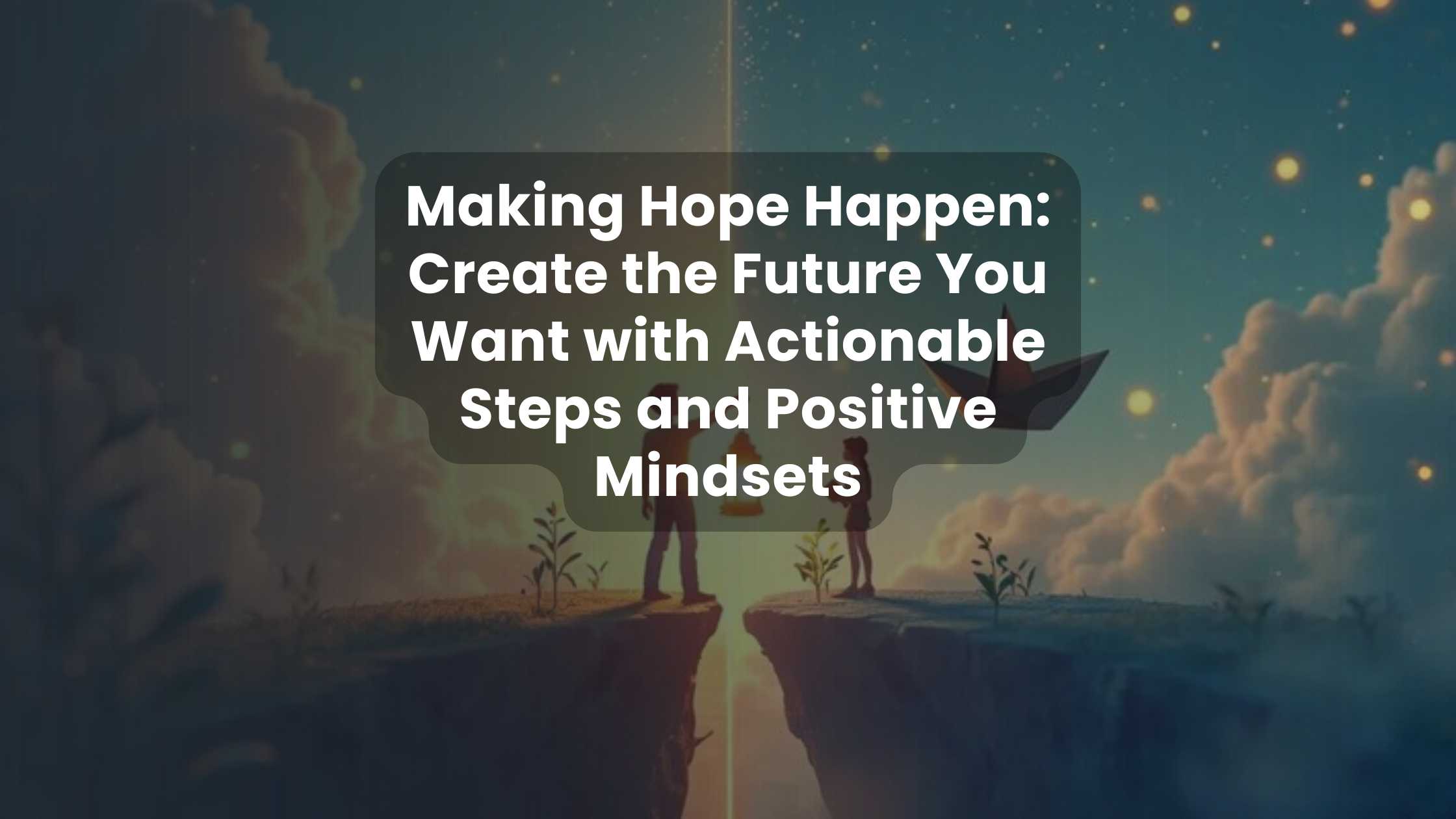
Making Hope Happen: Create the Future You Want with Actionable Steps and Positive Mindsets

Hope is more than just a fleeting feeling—it is a powerful mindset that can transform the way you approach life’s challenges and opportunities. When you shift your perspective from doubt to possibility, you open the door to new paths and potential outcomes that once seemed out of reach. This positive yet realistic outlook is the foundation for turning your dreams into tangible goals. Hope acts as a catalyst, fueling your resilience when setbacks arise and helping you see obstacles as temporary rather than permanent. By setting clear goals inspired by hope, you create a roadmap that keeps you motivated and moving forward. Developing hope is like strengthening a muscle; it requires intentional effort, small wins, and the right environment to flourish. Beyond the individual, hope has the power to unite communities, sparking collaboration and collective progress. Unlike wishful thinking, hope is grounded in reality with actionable steps and clear vision. Through daily practices such as reflecting on gratitude and visualizing success, hope becomes a steady companion that guides you toward the future you want. Embracing hope is embracing the possibility of a better tomorrow, fueled by your own actions today.
Embrace Hope as a Mindset Shift for Lasting Change
Shifting your mindset to embrace hope transforms the way you view challenges and opportunities. Instead of lingering in doubt or focusing on limitations, this mindset encourages you to see possibilities where others might see obstacles. For example, someone facing a career setback might initially feel defeated. However, by adopting hope as a mindset shift, they begin to explore new skills or industries, seeing the situation as a chance to grow rather than an endpoint. This positive yet realistic outlook helps turn dreams into achievable goals, making progress feel both meaningful and attainable.
Hope serves as a powerful catalyst for resilience, especially during tough times. When setbacks happen, hope enables you to reframe difficulties as temporary and manageable, rather than permanent failures. Consider athletes recovering from injuries—they often rely on hope to keep pushing forward, viewing rehabilitation not as a barrier but as a step toward returning stronger. This hopeful perspective encourages perseverance, turning failures into learning experiences and stepping stones toward future success.
Setting goals guided by hope provides a clear blueprint for success. Hope goes beyond wishful thinking by giving life and energy to your ambitions. Visualizing success helps you stay motivated, while breaking goals into actionable steps keeps progress measurable and steady. For instance, a student aiming to graduate with honors might use hope to maintain focus during challenging semesters, setting weekly study targets and celebrating small wins along the way. This approach transforms abstract desires into concrete achievements.
Developing hope is like strengthening a muscle—it requires consistent effort and practice. You can build hope by setting small, achievable goals, which create a sense of accomplishment and momentum. Surrounding yourself with positive influences, such as uplifting books or supportive friends, also fosters hope. For example, individuals recovering from addiction often benefit from hope-building exercises, like journaling progress or engaging in support groups, which nurture their resilience and commitment to change.
Hope doesn’t just benefit individuals; it creates a ripple effect within communities. When groups share a hopeful mindset, collaboration and innovation flourish. Communities united by hope tend to tackle problems creatively and collectively, boosting productivity and shared success. A neighborhood working together to improve local schools or parks demonstrates how hope can inspire joint efforts, turning shared visions into tangible improvements that enhance everyone’s quality of life.
It’s important to distinguish hope from wishful thinking to use it effectively. Hope is rooted in reality, involving clear goals and practical steps, whereas wishful thinking lacks direction and action. For example, someone hoping to start a business will develop a plan, research markets, and seek resources, while wishful thinking might stop at simply imagining success without any preparation. Understanding this difference ensures that hope remains a constructive and empowering force rather than a passive dream.
Integrating hope into your daily routine can strengthen this mindset over time. Simple practices such as reflecting on things you’re grateful for, visualizing your goals, and engaging with inspiring stories can nurture a hopeful outlook. Keeping a journal to track progress or starting each day by listing positive intentions helps turn hope from an abstract feeling into a steady companion. These habits make it easier to maintain motivation and optimism, even when facing challenges.
How Hope Fuels Resilience and Drives Goal-Setting for Lasting Change
Embracing hope as a mindset shift lays the foundation for lasting change. Instead of focusing on what could go wrong, hope encourages a focus on possibilities and opportunities. This shift allows you to move beyond doubt and negativity, creating a mental space where goals feel attainable. For example, individuals recovering from setbacks often find that by reframing their situation with hope, they can visualize a path forward. This mindset doesn’t ignore challenges but acknowledges them realistically while emphasizing potential growth. By adopting hope as a guiding perspective, you transform abstract dreams into clear, reachable objectives.
Hope acts as a powerful catalyst for resilience when facing obstacles. Rather than viewing failures as permanent defeats, hope helps you see them as temporary hurdles to overcome. Research shows that people who maintain hope during difficult times tend to bounce back faster and with greater determination. For instance, athletes recovering from injuries often credit their hopeful outlook for sustaining the motivation needed through grueling rehabilitation. This hopeful attitude fuels persistence and nurtures problem-solving, turning setbacks into valuable learning experiences. By harnessing hope, you build resilience that propels you through challenges toward continued progress.
When setting goals, hope breathes life into your vision, transforming plans into actionable steps. Visualizing success creates a mental roadmap that keeps motivation strong, especially during tough moments. Successful entrepreneurs often use hopeful goal-setting to maintain focus and momentum, breaking large ambitions into smaller, manageable tasks. This approach allows for steady progress and adjustment along the way. By integrating hope into goal-setting, you develop a clear blueprint that guides your efforts and sustains your energy. Hope ensures your objectives are not just wishful ideas but achievable targets backed by intention and action.
Developing hope is like training a muscle—it requires consistent practice and nurturing. Start by setting small, achievable goals that build confidence and highlight positive outcomes. Surround yourself with inspiring stories and supportive people who reinforce a hopeful outlook. For example, individuals who journal about daily successes report increased feelings of hope and motivation. Practicing gratitude and focusing on what you can control also strengthen this skill over time. By treating hope as a skill to develop, you create a resilient mindset capable of sustaining long-term change and growth.
Hope extends beyond the individual, creating a ripple effect within communities. When groups share a hopeful mindset, collaboration and innovation flourish. Communities facing economic or social challenges often find that hope unites members around common goals, boosting collective productivity. For instance, neighborhoods involved in community projects driven by hopeful visions tend to experience higher engagement and better results. This shared sense of possibility inspires collective action and reinforces individual resilience. Cultivating hope within communities not only drives individual success but also fosters a supportive environment for lasting change.
Addressing skepticism about hope is essential to harness its true power. Unlike wishful thinking, hope is grounded in reality and requires clear vision and concrete steps. Recognizing this difference helps prevent unrealistic expectations while maintaining motivation. For example, a student who hopes to improve grades combines optimism with study plans and time management rather than just hoping for better results. This practical approach ensures hope remains a tool for action rather than passive dreaming. Understanding hope’s grounded nature empowers you to use it effectively as a driving force toward your goals.
Incorporating hope into daily life turns it into a reliable companion on your journey to change. Simple practices like reflecting on gratitude, visualizing success, and engaging with inspiring stories nurture a hopeful mindset. For example, starting each day by listing three things you’re grateful for can shift your focus toward positivity and possibility. Setting daily or weekly goals keeps your hope active and directed. By integrating these habits, you cultivate resilience and maintain motivation, making hope an ongoing source of strength and guidance. This practical approach helps ensure hope fuels your efforts consistently, leading to meaningful and lasting change.
Developing Hope as a Powerful, Everyday Skill
Embracing hope as a mindset shift is the first step towards developing it as a powerful, everyday skill. Instead of dwelling on doubts and limitations, focus on possibilities and opportunities. This shift encourages a balanced optimism where dreams become realistic goals. For example, someone facing a career change might replace anxiety with curiosity, seeing new paths rather than obstacles. This mindset transforms how you approach challenges, making hope a guiding force rather than a fleeting feeling.
Hope acts as a catalyst for resilience, especially when setbacks occur. Viewing difficulties as temporary hurdles rather than permanent failures helps maintain motivation and perseverance. Consider athletes recovering from injuries who use hope to fuel their rehabilitation, imagining a full recovery and return to competition. This hopeful perspective allows them to push through pain and uncertainty, turning setbacks into stepping stones toward success.
Setting goals with hope creates a clear blueprint for achievement. Hope energizes your vision by making success feel attainable and relevant. When you visualize positive outcomes and break your goals into manageable steps, you stay motivated and focused. For instance, a student preparing for exams can use hopeful goal-setting to plan study sessions and celebrate small wins, boosting confidence and momentum throughout the process.
Developing hope as a skill requires intentional practice, much like exercising a muscle. Begin by setting small, achievable goals and concentrating on positive outcomes. Surround yourself with sources of inspiration, such as uplifting books, supportive friends, or motivational talks. Over time, these habits strengthen your ability to maintain hope, even in uncertain situations. Regularly reflecting on progress and celebrating victories reinforces this skill, making hopeful thinking a natural part of your daily routine.
Hope’s impact extends beyond the individual, creating a ripple effect within communities. When groups share a hopeful outlook, collaboration and innovation flourish. Community projects that focus on hopeful goals, such as neighborhood cleanups or local business initiatives, often see higher participation and better results. This collective hope builds stronger connections and drives shared achievements, demonstrating how hope can unite people around common purposes.
It is important to address skepticism by distinguishing hope from wishful thinking. Hope is grounded in reality, involving clear visions and actionable steps toward goals. Wishful thinking lacks this foundation and often leads to disappointment. By understanding this difference, you can harness hope effectively, using it as a practical tool rather than an empty hope. For example, a job seeker who combines hopeful optimism with targeted networking and skill-building is more likely to succeed than someone relying solely on luck.
Incorporating a daily dose of hope can transform your lifestyle. Simple practices like reflecting on things you are grateful for, visualizing success, and engaging with inspiring stories keep hope alive. Try starting each day by writing down one positive goal or reading a motivational quote. These small actions weave hope into your everyday life, making it a steady companion that propels you forward, even during tough times.
Developing Hope as a Powerful Everyday Skill
Embracing hope as a mindset shift is the first step in developing it as a powerful everyday skill. Instead of dwelling on doubts or limitations, focusing on possibilities opens the door to new opportunities. This shift encourages a positive yet realistic outlook, where challenges become manageable rather than overwhelming. For example, someone facing job uncertainty might choose to view the situation as a chance to explore new career paths instead of feeling defeated. By consciously adopting this perspective, hope transforms abstract wishes into achievable goals that guide daily actions.
Hope also serves as a catalyst for resilience, especially when life presents setbacks. Viewing obstacles as temporary hurdles rather than permanent barriers helps maintain motivation and emotional strength. Research shows that hopeful individuals recover faster from failure because they reframe difficulties as learning experiences. Consider athletes who, after an injury, use hope to visualize their comeback and follow rehab plans diligently. This resilient mindset, fueled by hope, turns disappointments into stepping stones toward future success.
Setting goals with hope provides a clear blueprint for success. Hope ignites enthusiasm and keeps you focused as you break down your ambitions into smaller, manageable steps. Visualizing positive outcomes not only boosts confidence but also creates momentum. For instance, a student aiming to improve grades might set daily study targets, imagining the satisfaction of achieving a high score. This approach transforms vague desires into structured plans, making progress tangible and motivation sustainable.
Developing hope as a skill requires regular practice, much like strengthening a muscle. Start by setting achievable goals and celebrating small victories to build confidence. Surrounding yourself with inspiring stories, whether through books, podcasts, or supportive communities, reinforces hopeful thinking. For example, reading about entrepreneurs who overcame hardships can motivate you to persist in your own challenges. By actively nurturing hope, you cultivate resilience that prepares you for life’s uncertainties.
The ripple effect of hope extends beyond individual growth and influences communities. When people share a hopeful vision, collaboration and innovation flourish. Community projects driven by hope often experience higher engagement and better results because members feel connected to a meaningful purpose. A neighborhood revitalization effort, for instance, can gain momentum as residents unite around a hopeful goal of improved living conditions. This collective hope enhances productivity and fosters a sense of shared achievement.
Addressing skepticism is crucial to distinguishing hope from wishful thinking. Hope is grounded in reality, involving clear visions and actionable steps, while wishful thinking lacks this foundation. Understanding this difference empowers you to harness hope effectively without falling into passive daydreaming. For example, a hopeful entrepreneur creates a detailed business plan and seeks feedback, whereas wishful thinking might simply involve hoping for success without preparation. This clarity ensures that hope remains a practical and motivating force.
Incorporating a daily dose of hope into your lifestyle strengthens its influence over time. Simple habits like reflecting on gratitude, visualizing success, and engaging with inspiring stories can reinforce hopeful thinking. Keeping a journal to track progress or setting reminders of your goals helps maintain focus. For instance, starting each day by listing three things you are hopeful about can shift your mindset and improve overall well-being. These practical steps turn hope into a steadfast companion that supports you through everyday challenges.
The Ripple Effect of Hope in Building Strong Communities
Hope is more than just a fleeting emotion; it is a mindset that can radically transform how individuals view their circumstances and potential. Embracing hope as a mindset shift means shifting your focus from doubt to possibility, allowing for a greater horizon of opportunities. When individuals adopt a positive yet realistic outlook, they stop seeing obstacles as insurmountable and start viewing them as challenges that can be overcome. This transformation is not merely inspirational; it sets the stage for tangible achievements. By believing in the possibility of success, individuals can turn their dreams into achievable goals, fostering a culture of optimism that can ripple through entire communities.
This ripple effect is profoundly impactful, particularly in building resilience. When setbacks occur—and they inevitably will—hope serves as a catalyst that reframes these challenges as temporary hurdles rather than permanent roadblocks. This perspective is crucial for personal and communal growth. For instance, communities that embrace hope often find innovative solutions to local problems, demonstrating resilience in the face of adversity. By cultivating a hopeful mindset, individuals and groups can better navigate failures, turning them into stepping stones towards success. This resilience not only strengthens individuals but also fortifies the community as a whole, leading to collective achievements that inspire further hope.
Setting goals infused with hope provides a blueprint for success, guiding individuals on their journey. Visualizing success is a powerful motivator—when people can see themselves achieving their goals, they are more inclined to take actionable steps to make those visions a reality. This process is supported by establishing small, achievable targets that create momentum. Each small success fuels a sense of hope, reinforcing the belief that larger dreams are attainable. Communities that encourage this goal-setting mentality often see increased collaboration, as individuals unite around shared aspirations and work together to reach them, enhancing overall productivity.
Developing hope is akin to building a muscle; it requires regular exercise and nurturing. By setting small goals and focusing on positive outcomes, individuals can strengthen their hopeful outlook. Surrounding oneself with inspiration—through books, podcasts, or community events—can further enhance this growth. For instance, attending local workshops that promote resilience and goal-setting can provide both knowledge and motivation. By making hope a daily practice, individuals can create a supportive environment that fosters collective growth and innovation within their communities.
Addressing skepticism is essential for harnessing the true power of hope. Understanding the difference between hope and wishful thinking is key; hope is rooted in reality and involves creating clear visions and actionable steps. This grounding allows individuals to navigate challenges with a realistic perspective, fostering a culture of accountability and determination. By promoting hope as a practical tool rather than a vague wish, communities can empower their members to take meaningful action and contribute positively to their environment.
To cultivate a hopeful lifestyle, individuals can take several practical steps. Reflecting on gratitude and setting daily intentions can help maintain a hopeful mindset. Visualizing success and engaging with inspiring stories, whether through literature or social media, can deepen one’s connection to hope. Furthermore, sharing these practices within a community can create a supportive network that uplifts everyone involved. By turning hope into a steadfast companion, communities can create an atmosphere rich in possibility and growth, inspiring each member to strive for their best selves and contribute to the collective good.
Hope vs. Wishful Thinking: Understanding the Critical Difference
Hope and wishful thinking often seem similar, but understanding their critical difference is essential for personal growth and success. Hope is an active mindset shift that moves you from doubt toward possibility. It encourages focusing on opportunities rather than limitations, transforming vague dreams into clear, achievable goals. Unlike wishful thinking, which relies on passive desire without a plan, hope grounds your aspirations in reality. For example, someone hoping to improve their career doesn’t just daydream about success; they identify skills to develop and steps to take, turning hope into a driving force.
Hope acts as a catalyst for resilience, especially when life presents setbacks. It helps reframe obstacles as temporary challenges instead of permanent failures. Imagine an entrepreneur facing a business setback; hope fuels their determination to adapt and try again rather than giving up. This perspective helps transform failures into stepping stones, fostering perseverance. Studies show that people with a hopeful mindset recover faster from adversity, highlighting hope’s powerful role in maintaining motivation during tough times.
Setting goals with hope provides a practical blueprint for success. Hope energizes your ambitions by allowing you to visualize positive outcomes and craft actionable steps. For instance, a student who hopes to excel in exams will create a study schedule and seek resources, blending optimism with clear planning. This approach keeps motivation high and progress measurable, making hope a tool for turning visions into reality rather than wishful fantasies. Breaking large goals into smaller, manageable tasks also strengthens your commitment and sense of achievement.
Developing hope as a skill requires regular practice, much like exercising a muscle. Small, consistent actions build resilience and optimism over time. Start by setting achievable short-term goals and focusing on positive results, which reinforce your hopeful outlook. Surrounding yourself with inspiring people, stories, or environments also nurtures hope. For example, joining a supportive group or reading success stories can replenish your motivation. This proactive cultivation distinguishes hope from wishful thinking, which lacks consistent effort and strategy.
Hope’s ripple effect extends beyond individuals, positively impacting communities and organizations. When groups embrace a hopeful mindset, they foster collaboration and spark innovation around shared objectives. This collective hope can elevate productivity and lead to meaningful achievements. Consider community projects or workplaces where hope encourages teamwork and creative problem-solving, resulting in enhanced outcomes. By promoting hope, leaders can unite people and inspire collective progress, contrasting with wishful thinking that often isolates and stalls action.
Addressing skepticism about hope is crucial to harnessing its power effectively. Unlike wishful thinking, hope is rooted in reality and involves clear vision and steps toward goals. Recognizing this difference helps prevent disillusionment and encourages practical optimism. For example, a hopeful individual acknowledges challenges but remains committed to finding solutions, whereas wishful thinking ignores difficulties and relies on luck. This awareness empowers you to apply hope constructively, making it a strategic asset rather than an empty wish.
Incorporating hope into your daily life creates a steady source of motivation and positivity. Simple practices like reflecting on things you are grateful for, visualizing success, and engaging with inspiring stories can cultivate a hopeful lifestyle. Keeping a journal of goals and progress, or starting the day with affirmations, reinforces this mindset. These steps turn hope from a fleeting feeling into a constant companion that guides your decisions and actions, making your aspirations tangible and within reach.
Practical Daily Habits to Cultivate a Hopeful Lifestyle
Embracing hope as a mindset shift is the foundation of cultivating a hopeful lifestyle. Instead of letting doubt cloud your vision, focus on possibilities and opportunities that surround you every day. This shift encourages a positive yet realistic outlook, where challenges become stepping stones rather than roadblocks. For example, someone facing career uncertainty might reframe the situation by exploring new skills or networking opportunities, turning anxiety into proactive growth. By consciously choosing to see potential rather than limitation, you transform vague dreams into clear, achievable goals that inspire consistent progress.
Hope acts as a catalyst for resilience, especially when life presents setbacks. Viewing difficulties as temporary hurdles rather than permanent failures helps maintain motivation during tough times. Studies have shown that individuals with a hopeful outlook recover faster from stress and adversity because they can reframe problems and explore alternative solutions. For instance, an athlete recovering from injury may focus on small daily improvements instead of dwelling on lost time, building mental strength through hope. This perspective empowers you to persevere and transform obstacles into valuable lessons, strengthening your confidence for future challenges.
Setting goals with hope provides a practical blueprint for success that keeps you focused and energized. Hopeful goal-setting involves visualizing the desired outcome and breaking it down into manageable steps, which makes the journey tangible and less overwhelming. Visual imagery techniques, such as mentally rehearsing success, have been shown to enhance motivation and performance. To implement this, try writing down your goals each morning and identifying one small action that moves you closer to them. This daily practice turns abstract aspirations into concrete achievements fueled by a hopeful mindset.
Developing hope as a skill requires regular practice, much like building physical strength. Start by setting small, achievable goals that promote a sense of accomplishment and encourage positive thinking. Surrounding yourself with inspiring people, books, or podcasts can also nurture hope by providing fresh perspectives and encouragement. For example, journaling about daily wins or moments of gratitude helps reinforce optimism, even during difficult times. Over time, these habits strengthen your ability to envision positive outcomes and adapt constructively to setbacks, making hope a reliable tool in your personal growth toolkit.
The ripple effect of hope extends beyond the individual, fostering stronger, more innovative communities. When groups share a hopeful vision, collaboration flourishes and collective goals become attainable. Research has found that workplaces emphasizing hope experience higher productivity and employee satisfaction because hope motivates creative problem-solving and mutual support. Communities that focus on shared hope often initiate projects that address local challenges, such as neighborhood cleanups or educational programs. By nurturing hope in your social circles, you contribute to a culture of possibility that inspires collective success and well-being.
Addressing skepticism about hope clarifies its unique role compared to wishful thinking. Hope is grounded in reality, involving clear goals and actionable steps, whereas wishful thinking relies on vague desires without a plan. Understanding this difference helps you harness hope effectively, preventing disappointment and fostering meaningful progress. For example, instead of wishing for a better job, a hopeful approach includes updating your resume, applying to positions, and networking. This realistic foundation makes hope a practical force that drives tangible results, distinguishing it from mere daydreaming.
Your daily dose of hope can be cultivated through simple, practical steps that integrate optimism into everyday life. Begin by reflecting on things you are grateful for each morning to set a positive tone. Visualize your goals as already accomplished, which primes your brain for success. Engage with inspiring stories or connect with hopeful individuals who uplift your spirit. Turning these habits into a routine helps hope become a steadfast companion that supports your mental well-being and motivation. Try setting a daily reminder to pause, breathe, and reaffirm your belief in positive outcomes, strengthening hope one moment at a time.
Harnessing Hope to Transform Your Future Starting Today
Embracing hope as a mindset shift is the first step toward transforming your future starting today. Instead of dwelling on doubts or obstacles, focus on the possibilities that lie ahead. This shift encourages you to see opportunities where others see limitations. For example, someone facing career uncertainty might change their outlook by viewing challenges as chances to learn new skills rather than insurmountable barriers. This positive yet realistic perspective turns vague dreams into clear, achievable goals, setting the foundation for meaningful progress.
Hope acts as a powerful catalyst for resilience, especially during difficult times. When setbacks occur, hope helps reframe these moments as temporary hurdles rather than permanent failures. Consider an entrepreneur who experiences a business setback but uses hope to maintain motivation and find alternative solutions. This resilience allows individuals to persist, turning what initially feels like defeat into valuable stepping stones toward success. By adopting this hopeful outlook, challenges become manageable and growth-oriented.
Setting goals with hope creates a blueprint for success that brings your ambitions to life. Hope energizes your plans by encouraging you to visualize outcomes and break down objectives into actionable steps. For instance, an aspiring writer might set daily word count goals fueled by hope for eventual publication. This structured approach maintains momentum and keeps motivation high, making large aspirations feel attainable. Hope, therefore, transforms abstract desires into concrete achievements through focused planning.
Developing hope is like building a skill that strengthens with regular practice. Just as muscles grow stronger with exercise, hope flourishes when you consistently set small goals and focus on positive results. Surrounding yourself with inspiring people and stories also reinforces this growth. For example, joining a supportive community or reading about others’ successes can ignite hope during challenging times. By nurturing this skill daily, you build resilience that sustains you through life’s ups and downs.
The ripple effect of hope extends beyond individuals to communities, fostering collaboration and innovation. When groups share a hopeful vision, they unite around common goals, boosting productivity and creativity. A neighborhood revitalization project powered by collective hope can bring neighbors together to improve their environment, demonstrating how hope fuels collective achievements. This shared mindset not only strengthens bonds but also generates momentum for lasting positive change.
Addressing skepticism is crucial to harnessing hope effectively, distinguishing it from wishful thinking. Hope is grounded in reality, involving clear visions and practical steps rather than mere fantasies. Understanding this difference enables you to channel hope productively. For example, a student hoping to improve grades pairs that hope with a study schedule and resources, making success likely rather than just wished for. This clarity ensures hope remains a dynamic and actionable force.
Incorporating a daily dose of hope into your routine can cultivate a hopeful lifestyle that supports long-term transformation. Simple practices like reflecting on gratitude, visualizing success, and engaging with inspiring stories keep hope alive. For instance, starting your day by listing things you appreciate or setting intentions can strengthen your hopeful mindset. These small but consistent actions turn hope into a steadfast companion, empowering you to face each day with optimism and purpose.
Conclusion
In summary, making hope happen begins with embracing it as a powerful mindset shift—from doubt to possibility—that opens the door to new opportunities. Hope acts as a catalyst for resilience, helping you navigate setbacks and view challenges as temporary obstacles rather than permanent barriers. By setting clear, hopeful goals and treating hope as a skill to develop through consistent practice, you create a solid blueprint for success. Beyond the individual, hope fosters a ripple effect within communities, inspiring collaboration and collective growth. Understanding the difference between hope and wishful thinking ensures your optimism remains grounded and actionable. Finally, incorporating daily habits that nurture hope—such as gratitude, visualization, and engaging with uplifting stories—turns it into a constant source of motivation and strength.
Are you ready to cultivate hope as your guiding force and create the future you truly want? Begin today by reflecting on the steps you can take to shift your mindset and set hopeful goals. Your journey toward a more resilient, empowered life starts now. For more insights and strategies on living with purpose and positivity, keep exploring and stay inspired.
FAQ
Frequently Asked Questions about Making Hope Happen: Create the Future You Want with Actionable Steps and Positive Mindsets
What does it mean to embrace hope as a mindset shift?
Embracing hope as a mindset shift means changing your perspective from one of doubt and limitation to one focused on possibility and opportunity. By adopting a positive yet realistic outlook, you transform your dreams into achievable goals, opening the door to meaningful progress.
How does hope contribute to resilience during setbacks?
Hope acts as a catalyst for resilience by helping you see challenges as temporary obstacles rather than permanent failures. This shift in thinking encourages perseverance, allowing you to use setbacks as stepping stones on your path to success.
In what ways does hope influence goal setting?
Hope breathes life into your goals by providing motivation and clarity. Visualizing your success and breaking your goals into actionable steps keeps you focused and energized throughout your journey, making it easier to turn plans into accomplishments.
Can hope be developed like a skill?
Yes, hope can be cultivated and strengthened like a muscle. Regularly setting small goals, concentrating on positive outcomes, and surrounding yourself with inspiring influences help build your capacity for hope and resilience over time.
How does hope impact communities?
Hope creates a ripple effect by fostering collaboration and innovation within communities. When people share a hopeful mindset, they unite around common goals, enhancing productivity and enabling collective achievements that benefit everyone involved.
What is the difference between hope and wishful thinking?
Hope is grounded in reality and involves having a clear vision along with actionable steps to achieve it. Wishful thinking, on the other hand, lacks this foundation and often ignores the practical efforts needed. Understanding this difference allows you to use hope effectively as a powerful tool for change.
What are practical ways to incorporate hope into daily life?
To cultivate a hopeful lifestyle, regularly reflect on what you are grateful for and revisit your goals. Visualizing success, engaging with inspiring stories, and consistently reminding yourself of positive possibilities turns hope into a steady companion that supports you every day.
Why is cultivating hope important for success and happiness?
Cultivating hope transforms your approach to challenges and opportunities, empowering you to create the future you desire. It fuels motivation, resilience, and collaboration, all of which are essential ingredients for achieving lasting success and genuine happiness.
Are you ready to harness the power of hope and transform your life? Begin by shifting your mindset today and taking actionable steps toward the future you want.