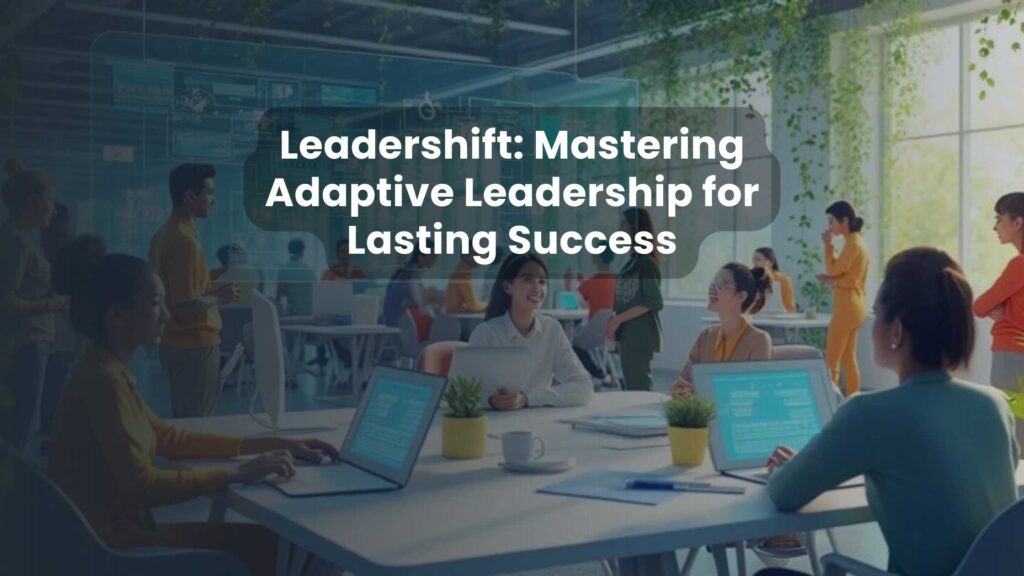
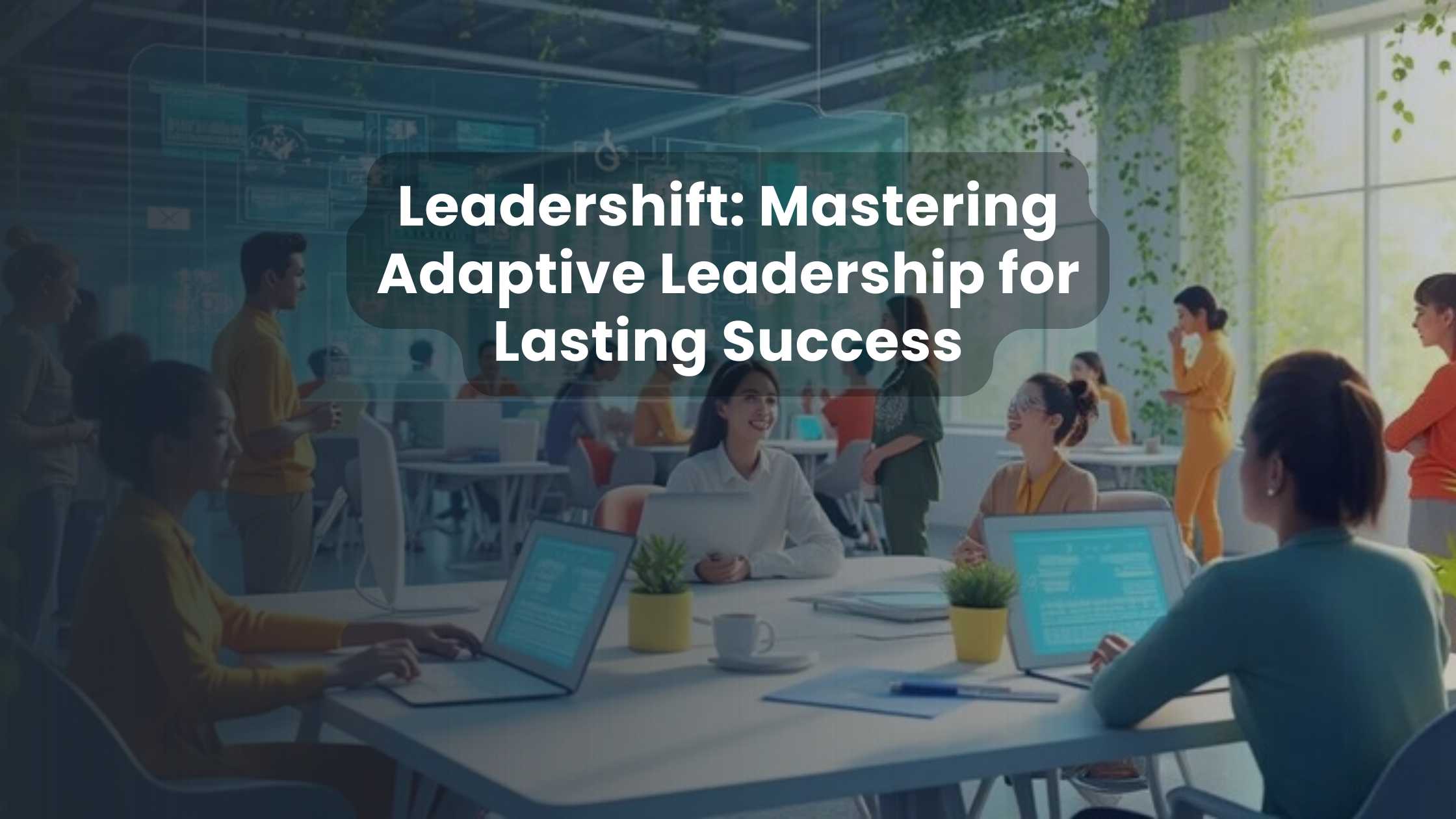
Leadershift: Mastering Adaptive Leadership for Lasting Success

In today’s fast-paced and ever-evolving world, the ability to lead with agility and resilience has never been more critical. The landscape of business is continuously reshaped by technological breakthroughs, shifting market demands, and unforeseen challenges. In this environment, traditional leadership models often fall short, unable to keep pace with the speed and complexity of change. This is where adaptive leadership steps in—offering a dynamic approach that empowers leaders to not just respond to change, but to harness it as a driving force for growth and innovation. By cultivating flexibility, fostering open-mindedness, and embracing continuous learning, adaptive leaders position their organizations to thrive amid uncertainty. Through real-world examples and proven strategies, this exploration will guide you toward mastering the art of adaptive leadership, equipping you to steer your team confidently through the storms of disruption and into a future defined by lasting success.
Why Adaptive Leadership Matters in Today’s Rapidly Changing World
In today’s rapidly changing world, adaptive leadership matters more than ever because it equips leaders to navigate uncertainty with confidence. Unlike traditional leadership styles that rely on rigid plans, adaptive leadership thrives on flexibility and responsiveness. This approach allows leaders to adjust strategies quickly in response to evolving market trends, technological disruptions, or unexpected crises. For example, during the COVID-19 pandemic, companies led by adaptive leaders were able to pivot operations swiftly—shifting to remote work and reimagining product delivery—demonstrating how adaptability can safeguard business continuity and growth.
Adaptive leadership also fosters a culture of continuous learning and innovation, which is crucial as industries evolve at an unprecedented pace. Leaders who embrace adaptability encourage their teams to view change not as a threat, but as an opportunity for improvement. This mindset inspires creativity and resilience, helping organizations stay competitive. A notable instance is Satya Nadella’s leadership at Microsoft, where embracing adaptability led to a successful transformation into a cloud computing powerhouse. This example shows how adaptive leadership can drive sustainable success by aligning people and processes with shifting external demands.
Moreover, the rapidly changing landscape demands leaders who can make swift, informed decisions while engaging diverse perspectives. Adaptive leadership promotes active listening and collaboration, ensuring that solutions are both innovative and inclusive. Leaders who cultivate these skills create environments where employees feel empowered to contribute ideas and adapt alongside the organization. This openness often results in more effective problem-solving and a stronger commitment to shared goals, essential traits in a world where challenges can emerge suddenly and without warning.
To develop adaptive leadership skills, it is important to focus on several key strategies. Leaders should commit to ongoing learning, seek regular feedback, and practice agility in decision-making. Implementing these strategies can be as straightforward as setting aside time for reflection after major projects, encouraging open dialogue within teams, or experimenting with new approaches without fear of failure. By integrating these habits, leaders build the capacity to respond constructively to change and guide their organizations through complex environments successfully.
Finally, embracing adaptive leadership offers a competitive advantage that can differentiate organizations in fast-moving markets. Companies led by adaptive leaders are more likely to seize new opportunities and mitigate risks effectively. To cultivate this advantage, leaders should prioritize building a culture that supports experimentation and learning from mistakes. This can be achieved by recognizing team efforts in innovation, creating safe spaces for trial and error, and celebrating small wins that reinforce adaptability. These practical steps empower organizations to stay resilient and thrive amid the constant flux of today’s business world.
Key Strategies for Developing Powerful Adaptive Leadership Skills
Developing powerful adaptive leadership skills begins with cultivating a mindset that embraces change as an essential part of growth. Adaptive leaders understand that the business landscape is constantly shifting due to technological advances and market dynamics. Rather than resisting these changes, they view them as opportunities to innovate and improve. For example, when Satya Nadella took the helm at Microsoft, he shifted the company’s focus toward cloud computing by fostering a culture of empathy and collaboration. This strategic pivot not only revived Microsoft’s relevance but also showcased how adaptive leadership can drive organizational success. To develop similar skills, leaders should practice reframing challenges as possibilities, helping their teams build resilience and enthusiasm for continuous improvement.
Another critical strategy involves enhancing decision-making speed without sacrificing thoughtful analysis. In uncertain environments, leaders must balance quick judgment with openness to new information and feedback. Listening actively to team members and stakeholders allows leaders to gather diverse perspectives, which leads to more informed choices. For instance, leaders can implement regular feedback loops, such as weekly check-ins or anonymous surveys, to stay attuned to evolving challenges and opportunities. This approach ensures decisions are adaptive and grounded in real-time insights. Practicing this skill sharpens a leader’s ability to pivot strategies swiftly, a vital quality in today’s fast-paced markets.
Fostering a flexible leadership style is also essential for building adaptive capabilities. Leaders who encourage team autonomy and collaboration create a dynamic environment where innovation thrives. This flexibility mirrors a river’s flow—moving gracefully around obstacles rather than pushing against them. Practical ways to cultivate this include delegating decision-making power and promoting cross-functional teamwork. By empowering employees to contribute ideas and take ownership, leaders nurture agility and responsiveness. For instance, companies that implement agile project management methods often see increased creativity and faster problem resolution, highlighting the benefits of a flexible leadership approach.
Building a culture that supports adaptability is equally important. Successful adaptive leaders create environments where experimentation is encouraged, and mistakes are viewed as learning opportunities. This mindset reduces fear of failure and stimulates continuous development. Organizations like Google exemplify this by allowing employees to dedicate time to innovative projects outside their core responsibilities. Such practices foster resilience and keep teams motivated to explore new solutions. Leaders can adopt this strategy by recognizing and rewarding efforts to innovate and by maintaining open communication channels that invite candid discussions about challenges and lessons learned.
Lastly, investing in leadership development focused on adaptive skills equips leaders to navigate uncertainty with confidence. Training programs that emphasize learning agility, emotional intelligence, and strategic thinking prepare leaders to handle complex scenarios effectively. For example, workshops on scenario planning and crisis management help leaders anticipate change and respond proactively. Encouraging ongoing education and mentorship also builds a foundation for continuous growth. By prioritizing these development opportunities, organizations ensure their leaders remain agile and capable of steering teams successfully through evolving landscapes. Practical steps include enrolling in adaptive leadership courses and seeking feedback from peers to refine leadership approaches continually.
How to Cultivate a Flexible and Responsive Leadership Style
Cultivating a flexible and responsive leadership style begins with embracing the reality that change is constant. Adaptive leadership matters more than ever in today’s fast-paced world, where technological advancements and shifting markets demand leaders who can pivot quickly and confidently. Leaders who develop a mindset open to learning and continuous feedback position themselves to navigate uncertainty effectively. For instance, companies like Netflix thrived by shifting their business models in response to emerging trends, illustrating how adaptable leadership can drive long-term success.
To develop adaptive leadership skills, leaders should focus on several key strategies. First, practicing active listening enables them to understand diverse viewpoints within their teams, fostering collaboration and innovation. Second, embracing swift, well-informed decision-making keeps organizations agile during crises or unexpected changes. Finally, encouraging ongoing learning—through workshops, mentorship, or reflection—builds resilience and sharpens problem-solving abilities. Leaders who integrate these approaches can create environments where flexibility becomes a natural part of daily operations, much like a river adjusting its course without losing momentum.
Embracing change is the backbone of cultivating a flexible leadership style. Leaders who view change as an opportunity, not a threat, inspire their teams to shift perspectives and engage proactively. For example, Satya Nadella’s leadership at Microsoft demonstrated this principle by transforming the company’s culture to emphasize empathy, collaboration, and innovation. By highlighting the benefits of change and crafting clear strategic plans, adaptive leaders turn potential resistance into enthusiasm, motivating teams to explore new ideas and embrace challenges confidently.
Practicing specific behaviors can further enhance a leader’s flexibility and responsiveness. These include valuing diverse perspectives by inviting input from all levels of an organization and empowering team members to make decisions when appropriate. Such actions create a dynamic workplace where adaptability flourishes naturally. Additionally, fostering a culture that encourages experimentation and learning from mistakes ensures that innovation remains at the forefront. This mindset not only strengthens resilience but also promotes a proactive approach to unforeseen challenges, giving organizations a critical edge in today’s competitive landscape.
Leaders looking to cultivate a flexible leadership style can take practical steps to embed adaptability into their daily routines. Start by setting aside time for reflection after key decisions, asking questions like “What did we learn?” and “How can we improve next time?” Encourage open dialogue during team meetings to surface fresh ideas and alternative solutions. Finally, invest in leadership development programs focused on emotional intelligence and change management, which equip leaders with tools to stay responsive and agile. By implementing these strategies, leaders empower themselves and their teams to navigate change with confidence and creativity.
How to Cultivate a Flexible and Responsive Leadership Style
Cultivating a flexible and responsive leadership style begins with embracing the reality that change is inevitable. Adaptive leadership matters in today’s world because it equips leaders to navigate uncertainty and rapid shifts with confidence. Organizations face constant technological advancements and evolving market demands, and leaders who remain rigid often struggle to keep pace. By recognizing change as a natural and valuable part of growth, leaders can position their teams to thrive rather than merely survive. For example, companies that quickly pivoted to remote work during the pandemic demonstrated how adaptive leadership fosters resilience in crisis.
One of the key strategies for developing adaptive leadership skills is fostering openness to learning. Leaders must actively seek feedback from diverse sources and be willing to adjust their approach based on new information. Swift decision-making, combined with thoughtful reflection, helps maintain momentum without sacrificing quality. Training programs that emphasize emotional intelligence and situational awareness can be particularly effective in building these skills. Take the example of Satya Nadella at Microsoft, who transformed the company by encouraging collaboration and empathy, ultimately driving innovation and growth through a flexible leadership mindset.
Embracing change is central to cultivating a flexible leadership style. Instead of viewing change as a threat, adaptive leaders see it as an opportunity to innovate and improve. This mindset shift inspires teams to become more engaged and proactive, reducing resistance and fostering enthusiasm for new initiatives. Leaders can encourage this by clearly communicating the benefits of change and involving their teams in strategic planning. Practices such as regular brainstorming sessions and open forums for idea-sharing create a dynamic atmosphere where adaptability thrives, much like a river gracefully flowing around obstacles.
To foster a flexible and responsive environment, leaders should practice active listening and value diverse perspectives. This means genuinely considering input from all team members and empowering them to participate in decision-making. When people feel heard and involved, they are more likely to contribute creatively and stay committed to organizational goals. Creating such a culture involves encouraging experimentation and learning from mistakes without fear of harsh penalties. Organizations that promote this mindset often see increased innovation and resilience, essential qualities in today’s competitive landscape.
Building a culture of adaptability requires intentional leadership actions that support continuous learning and agility. Leaders can implement practical steps such as setting up cross-functional teams, encouraging knowledge sharing, and recognizing efforts to embrace change. By rewarding flexibility and responsiveness, organizations reinforce these behaviors as core values. For instance, some companies use “fail fast” initiatives to accelerate learning cycles, allowing teams to test ideas quickly and iterate based on feedback. This approach not only enhances problem-solving but also prepares the organization to respond swiftly to future challenges.
Practical tips for cultivating a flexible and responsive leadership style include:
– Regularly soliciting and acting on team feedback to stay attuned to changing needs.
– Encouraging a growth mindset by modeling openness to new ideas and challenges.
– Investing in leadership development focused on emotional intelligence and adaptive decision-making.
– Facilitating transparent communication to build trust and reduce resistance to change.
– Empowering employees with autonomy to make decisions and contribute to solutions.
By integrating these steps, leaders can create an environment where adaptability becomes a natural, ongoing process, positioning their teams and organizations for long-term success amid evolving conditions.
Success Stories of Leaders Who Exemplify Mastering Adaptability
In today’s fast-paced world, the importance of adaptive leadership cannot be overstated. Leaders who exemplify mastery in adaptability are not just reacting to change; they are actively shaping their organization’s response to it. For example, Satya Nadella, the CEO of Microsoft, has redefined the company’s culture by embracing empathy and collaboration. Under his guidance, Microsoft shifted its focus to cloud computing, allowing it to thrive amidst rapid technological advancements. This transformation demonstrates that adaptive leadership is not just a reactionary measure but a proactive strategy that enables organizations to not only survive but excel in challenging environments.
Developing adaptive leadership skills involves a commitment to continuous learning and feedback. Leaders must cultivate an openness to new ideas, which can be achieved through regular training sessions and mentorship programs. Encouraging leaders to seek out diverse perspectives enhances decision-making. For instance, organizations can implement feedback loops where employees at all levels can voice their thoughts on leadership decisions. This practice not only strengthens relationships but also equips leaders with the insights necessary to navigate uncertainty more effectively.
Embracing change is at the heart of adaptive leadership. Effective leaders recognize that change can be a catalyst for growth rather than a setback. They inspire their teams by focusing on the positive aspects of change, thereby transforming resistance into enthusiasm. By articulating a clear vision and outlining strategic plans, leaders can motivate their teams to embrace new challenges. This mindset shift fosters a culture where innovation is celebrated, leading to increased engagement and productivity within the organization.
To cultivate a flexible leadership style, leaders should practice active listening and empower their teams to share in decision-making processes. By valuing diverse opinions and encouraging open dialogue, leaders create an environment that adapts fluidly to challenges, much like a river navigating around rocks. Practical steps include hosting regular team meetings to discuss ongoing projects and solicit feedback, ensuring that everyone feels heard and valued. This approach not only boosts morale but also enhances the organization’s ability to pivot when necessary.
Success stories of adaptive leaders are abundant, showcasing their impact on organizational resilience. For example, IBM’s transformation under Ginni Rometty involved shifting from hardware to cloud-based solutions and artificial intelligence. Rometty’s commitment to fostering a culture of experimentation allowed IBM to innovate continuously, ensuring it remained relevant in a rapidly evolving tech landscape. Such examples underline the significant role that adaptive leadership plays in driving sustainable success.
Creating a culture of adaptability within an organization starts with leadership’s commitment to encouraging experimentation. By establishing safe spaces for teams to test new ideas without the fear of failure, leaders foster an atmosphere ripe for innovation. This can be supported through workshops and brainstorming sessions that prioritize creative thinking. When employees feel empowered to explore and learn from their mistakes, the organization becomes more resilient, better equipped to face challenges head-on.
As the future unfolds, adaptability will serve as a competitive advantage for organizations. Those led by adaptive leaders can navigate complexities and seize opportunities with agility. Companies that prioritize adaptive leadership are likely to thrive, as they can quickly adjust to market shifts and emerging trends. By investing in leadership development focused on adaptability, organizations ensure they remain ahead of the curve, ready to tackle whatever challenges come their way.
Engaging in the journey toward adaptive leadership enables leaders to transform their approach, guiding their teams through change while unlocking remarkable potential. By focusing on building adaptability, leaders not only enhance their efficacy but also elevate their organization’s capacity to innovate and succeed in an ever-evolving world.
Building a Resilient Culture That Thrives on Adaptability
In today’s fast-paced world, building a resilient culture that thrives on adaptability is essential for organizational success. Adaptive leadership plays a pivotal role in this transformation by guiding teams through uncertainty with agility and confidence. Unlike traditional leadership, adaptive leaders embrace change as an opportunity rather than a threat. This mindset encourages employees to see challenges as chances to innovate and improve. For example, during rapid technological shifts, companies that foster adaptive leadership are better equipped to pivot strategies and maintain a competitive edge, much like how Satya Nadella revitalized Microsoft by shifting its focus to cloud computing and collaboration.
Developing adaptive leadership skills involves cultivating openness to continuous learning and encouraging swift, informed decisions. Leaders who actively seek feedback and remain curious about new trends create a culture where experimentation is welcomed rather than feared. This approach reduces resistance and builds trust within teams, turning potential setbacks into growth opportunities. Practical steps include regular training sessions on critical thinking, promoting cross-functional collaboration, and using real-time data to guide choices. Organizations that implement these strategies often see increased employee engagement and faster problem-solving, key indicators of a resilient culture.
A flexible leadership style is the backbone of adaptability. Leaders who practice active listening and value diverse perspectives foster an inclusive environment where creativity flourishes. Empowering teams to make decisions independently not only builds confidence but also speeds up responses to changing conditions. Imagine a river flowing smoothly around rocks in its path—this natural flexibility ensures continuous progress despite obstacles. Companies like Netflix exemplify this principle by encouraging autonomy and innovation, which has allowed them to stay ahead in the evolving media landscape. To cultivate similar flexibility, leaders can hold regular brainstorming sessions, encourage open dialogue, and reward calculated risk-taking.
Creating a culture that embraces adaptability means encouraging experimentation and learning from failure without fear. Businesses that normalize trial and error develop resilience by viewing mistakes as valuable insights rather than setbacks. This mindset fuels innovation and keeps organizations prepared for unexpected shifts. For instance, Amazon’s “Day 1” philosophy emphasizes starting fresh every day with a focus on innovation and customer obsession, fostering a resilient and adaptable workforce. Practical tips to build this culture include setting up innovation labs, celebrating lessons learned from unsuccessful projects, and maintaining transparent communication channels that support honest feedback.
The future of leadership lies in adaptability as a competitive advantage. As markets and technologies evolve rapidly, organizations anchored in adaptive cultures will be better positioned to seize new opportunities and navigate challenges. This shift requires leaders to continuously refine their skills and embed adaptability into their core values. By prioritizing adaptive leadership development, companies ensure sustained success and resilience in an ever-changing landscape. To start this journey, leaders can focus on developing emotional intelligence, encouraging collaborative problem-solving, and aligning team goals with flexible strategies that anticipate change rather than react to it.
Future-Proofing Your Organization Through Adaptive Leadership
In today’s fast-paced and unpredictable business environment, future-proofing your organization through adaptive leadership is essential. Adaptive leadership matters because it equips companies to navigate constant changes—from technological breakthroughs to shifting market trends—without losing momentum. Leaders who embrace this approach act like skilled captains steering their vessels through turbulent waters, ensuring their organizations not only survive disruptions but also uncover new opportunities for growth. For example, companies that quickly adapted to remote work during global crises managed to maintain productivity and even expand their reach, highlighting the practical importance of flexibility in leadership.
Developing adaptive leadership skills involves more than just reacting to change; it requires a proactive mindset focused on continuous learning and rapid decision-making. Investing in leadership training that emphasizes openness to feedback and agility helps leaders respond effectively to unexpected challenges. Leaders can cultivate this skill set by regularly seeking diverse viewpoints and encouraging their teams to experiment with new ideas. By doing so, they create a culture where innovation thrives, and setbacks become valuable lessons rather than obstacles. An example of this is how agile tech startups often outpace larger competitors by quickly iterating products based on customer feedback.
At the heart of adaptive leadership is the ability to embrace change as a catalyst for improvement rather than a threat. Adaptive leaders inspire their teams by framing change as an exciting journey toward better outcomes, rather than a source of fear or resistance. This positive outlook transforms organizational culture and motivates employees to engage with new strategies enthusiastically. Practical steps leaders can take include transparent communication about changes and involving team members in crafting solutions, which fosters ownership and reduces pushback. Satya Nadella’s leadership at Microsoft exemplifies this approach, where empathy and collaboration spurred a company-wide shift toward cloud computing, ultimately revitalizing the business.
Flexibility in leadership style is crucial for building an adaptable organization. Effective adaptive leaders practice active listening and value diverse perspectives to navigate complex situations with finesse. Empowering team members to participate in decision-making not only builds trust but also leverages collective intelligence, leading to more innovative outcomes. This approach mirrors how a river flows around obstacles smoothly, adjusting its course without losing direction. Leaders can enhance flexibility by creating regular opportunities for open dialogue and encouraging cross-functional collaboration, which helps break down silos and accelerates problem-solving.
Building a culture of adaptability requires more than individual leadership skills; it demands an organizational commitment to learning and experimentation. Encouraging employees to take calculated risks and learn from failures fosters resilience and accelerates innovation. Companies like Netflix have thrived by promoting a culture where bold ideas are welcomed and mistakes are viewed as steps toward progress. To replicate this environment, leaders should implement policies that reward creativity and provide safe spaces for trial and error, ensuring the organization remains nimble and ready to pivot as needed.
Adaptive leadership is increasingly recognized as a key competitive advantage in the evolving business world. Organizations led by adaptable leaders are better positioned to handle disruptions and capitalize on emerging trends, securing long-term success. As industries continue to transform rapidly, adaptability moves from a beneficial trait to an essential capability. To embed this advantage, leaders should regularly assess their organization’s readiness for change and invest in tools and training that promote agility. By doing so, they create a powerful foundation that not only withstands uncertainty but also fuels sustained growth and innovation.
Adaptive Leadership: Unlocking Lasting Success and Competitive Advantage
In a world where change is constant and unpredictable, adaptive leadership holds the key to lasting success and a competitive edge. Organizations face rapid technological advancements, shifting market demands, and unexpected disruptions that require leaders to be agile and responsive. Adaptive leadership acts as a flexible vessel, enabling businesses to navigate these challenges with confidence. Rather than clinging to rigid plans, adaptive leaders embrace uncertainty, turning obstacles into opportunities for growth. This ability to pivot quickly and thoughtfully ensures that organizations not only survive but thrive in an ever-changing landscape.
Developing adaptive leadership skills involves more than just reacting to change; it requires a proactive and intentional approach. Key strategies include fostering openness to continuous learning, encouraging feedback from all levels, and honing swift decision-making capabilities. Leaders who invest time in these areas equip themselves with the tools needed to steer their organizations through complex situations. For instance, companies that implement regular feedback loops and cultivate a learning mindset often see higher employee engagement and improved problem-solving. These skills help leaders maintain clarity and direction even when the path forward is uncertain.
At the heart of adaptive leadership lies the ability to embrace change with a positive mindset. Rather than viewing change as a threat, adaptive leaders see it as a powerful driver of innovation and progress. By communicating the benefits and strategic vision behind change initiatives, they inspire their teams to move past resistance and engage enthusiastically. This approach transforms potential setbacks into momentum for success. For example, during digital transformation projects, adaptive leaders highlight new opportunities for skill development and market expansion, motivating employees to become active participants in the journey.
Cultivating a flexible leadership style is essential for sustaining adaptability in any organization. Leaders who practice active listening create an environment where diverse perspectives are valued and considered. Empowering teams to participate in decision-making not only builds trust but also fosters creativity and resilience. This dynamic approach is much like a river flowing gracefully around obstacles, adjusting its course while maintaining forward movement. Organizations that nurture such flexibility can respond to challenges quickly and capitalize on emerging opportunities with ease.
Real-world success stories demonstrate the transformative power of adaptive leadership. Take Satya Nadella’s leadership at Microsoft, for example. By emphasizing empathy, collaboration, and innovation, Nadella shifted the company’s focus toward cloud computing, revitalizing its market position. This shift required breaking old habits and embracing new ways of thinking, showcasing how adaptive leadership drives sustainable growth. Leaders who study such examples can learn valuable lessons about the mindset and behaviors needed to unlock competitive advantage.
Building a culture of adaptability extends beyond individual leaders to the entire organization. Encouraging experimentation and viewing mistakes as learning opportunities fosters an innovative and resilient work environment. Companies that promote psychological safety and reward creative problem-solving are better equipped to navigate uncertainty and change. This culture of adaptability becomes a strategic asset, enabling organizations to respond swiftly to disruptions without losing momentum or morale.
As industries continue to evolve at an unprecedented pace, adaptive leadership is emerging as a critical factor for long-term success and competitive advantage. Organizations led by adaptable leaders can anticipate shifts, adjust strategies proactively, and seize new market opportunities with agility. This future-focused approach positions companies to not only meet today’s challenges but also to build resilience for tomorrow’s uncertainties. Embracing adaptive leadership unlocks the potential for remarkable success in an ever-evolving business world.
Practical steps for cultivating adaptive leadership include:
– Prioritize ongoing learning through training and real-time feedback.
– Encourage transparent communication to surface challenges early.
– Foster diverse teams to bring multiple viewpoints into decision-making.
– Model flexibility by openly discussing failures and lessons learned.
– Create safe spaces for experimentation without fear of punishment.
By implementing these strategies, leaders can develop the mindset and skills necessary to lead their organizations effectively through change, securing lasting success and a strong competitive advantage.
Conclusion
In today’s rapidly changing world, mastering adaptive leadership is no longer optional—it’s essential for lasting success. By embracing change as an opportunity, cultivating flexibility, and fostering a culture that values continuous learning and innovation, leaders can navigate uncertainty with confidence and inspire their teams to thrive. From developing critical skills like active listening and swift decision-making to learning from transformative leaders such as Satya Nadella, the path to adaptive leadership is both challenging and rewarding. As industries evolve, those who lead with adaptability will not only survive but gain a competitive edge in an unpredictable landscape.
Now is the time to reflect on your own leadership approach. How can you become more open to change, encourage diverse perspectives, and build resilience within your team? Dive deeper into the principles of adaptive leadership and start applying these strategies today to unlock your full potential and drive lasting success. Your journey toward mastering adaptive leadership begins with a single step—take it now.
FAQ
FAQ Section for Leadershift: Mastering Adaptive Leadership for Lasting Success
What is adaptive leadership and why does it matter today?
Adaptive leadership is a flexible and responsive approach to leading organizations through constant change. In today’s fast-paced world, where technological advancements and market shifts are the norm, adaptive leadership enables businesses to not only survive challenges but also thrive by embracing and managing change effectively.
How can I develop adaptive leadership skills?
Developing adaptive leadership skills involves cultivating openness to continuous learning, seeking and applying feedback, and making swift yet thoughtful decisions. Investing time in leadership development programs that focus on these areas equips leaders with the necessary tools to navigate uncertainty and complexity with confidence.
Why is embracing change important for adaptive leaders?
Adaptive leaders view change as a valuable opportunity for growth rather than a threat. By focusing on the benefits and strategic possibilities that change brings, they inspire their teams to move past resistance and adopt a positive, forward-thinking mindset that drives innovation and progress.
What does a flexible leadership style look like?
A flexible leadership style is characterized by active listening, valuing diverse perspectives, and empowering team members to participate in decision-making. Such a leadership approach creates a dynamic work environment that adapts fluidly to challenges, much like a river flowing around obstacles rather than against them.
Can you share examples of leaders who mastered adaptability?
One notable example is Satya Nadella, who transformed Microsoft into a leading cloud-based company. Through empathy, collaboration, and a focus on innovation, Nadella exemplified adaptive leadership by steering the organization through significant change and achieving lasting success.
How do I build a culture of adaptability within my organization?
Building a culture of adaptability involves encouraging experimentation, accepting and learning from mistakes, and fostering an environment where innovation and resilience are celebrated. This supportive atmosphere empowers teams to respond effectively to change and seize new opportunities.
What role does adaptability play in the future of leadership?
As industries continue to evolve rapidly, adaptability will be a key competitive advantage. Organizations led by adaptive leaders are better positioned to handle unforeseen challenges and capitalize on emerging trends, ensuring sustained success in a constantly shifting business landscape.
How can I start my journey toward mastering adaptive leadership?
Begin by embracing a mindset open to change, investing in continuous learning, and fostering collaboration within your team. By transforming your leadership approach to be more flexible and responsive, you can guide your organization through uncertainty and unlock new levels of growth and achievement.