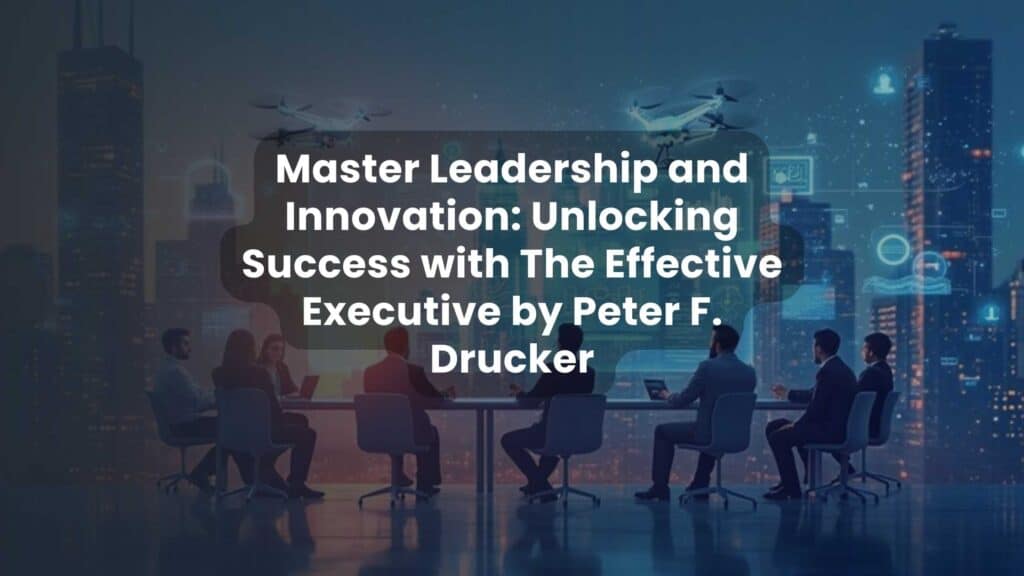
Master Leadership and Innovation: Unlocking Success with The Effective Executive by Peter F. Drucker

In a world where the pace of change is relentless and the demands on leaders are ever-evolving, the wisdom of Peter F. Drucker remains a beacon for those striving to navigate the complexities of modern management. “The Effective Executive” stands as a cornerstone of leadership literature, offering profound insights that transcend time and industry. As the father of modern management, Drucker distills the essence of effectiveness into principles that empower leaders to prioritize meaningful outcomes over mere activity. This blog post delves into the key insights from Drucker’s seminal work, providing a roadmap for executives eager to unlock their potential and drive success through masterful leadership and innovation. By embracing these teachings, you can transform not only your approach to leadership but also the culture of your organization, fostering an environment where creativity thrives and results speak volumes. Join us as we explore the fundamental strategies that can elevate your effectiveness and set you on a path toward sustained excellence.
The Foundation of Executive Effectiveness: Core Principles for Leaders
The foundation of executive effectiveness lies in understanding and applying core principles that prioritize results over mere activities. By adopting a results-oriented mindset, leaders can ensure that their efforts contribute meaningfully to organizational goals rather than getting lost in a flurry of busywork. For instance, a study showed that organizations with leaders who focus on outcomes see a 30% increase in productivity compared to those that do not. Informed decision-making is another crucial element; utilizing data to guide choices helps align strategies with the broader vision of the company. Additionally, Drucker emphasizes the importance of contributions over activity, encouraging leaders to focus on delivering value rather than just keeping busy. This approach not only enhances individual effectiveness but also fosters a culture of accountability and innovation within teams. By mastering these principles, executives can significantly elevate their performance and drive their organizations toward sustainable success.
Time Management Mastery: Essential Techniques for Executives
Mastering time management is crucial for executives aiming to enhance their effectiveness and productivity. By implementing essential techniques such as time tracking and prioritizing tasks using the Eisenhower Matrix, executives can identify time-wasting habits and focus on what truly matters. For instance, a study found that leaders who dedicate at least 30% of their time to strategic planning see a significant boost in overall team performance. Setting boundaries, such as creating designated time blocks for uninterrupted work, not only increases focus but also fosters an environment where innovative ideas can flourish. Additionally, fostering self-discipline through established routines and accountability can solidify these practices, ensuring that goals are met consistently. Ultimately, embracing these time management strategies, as highlighted by Peter Drucker, empowers executives to make informed decisions and lead their teams more effectively, paving the way for long-term success and adaptability in a rapidly changing business landscape.
Cultivating Self-Discipline: The Key to Consistent Execution
Cultivating self-discipline is the key to consistent execution, serving as the backbone of successful goal achievement and effective leadership. Without self-discipline, even the most well-laid plans can falter, as the ability to adhere to routines and prioritize tasks becomes compromised. For instance, a study by the American Psychological Association found that individuals with higher self-discipline scores are more likely to achieve academic and professional success, highlighting its significant impact on outcomes. Establishing daily routines and setting clear, SMART goals can help individuals maintain focus and accountability, ensuring that distractions are minimized. Moreover, sharing goals with peers can create a supportive environment that fosters motivation and commitment. In the context of Peter Drucker’s principles, self-discipline not only reinforces a results-oriented mindset but also enhances informed decision-making and prioritization. By strengthening self-discipline, leaders can consistently execute strategies that drive their organizations forward, ultimately unlocking greater success and effectiveness.
Prioritization Strategies: Mobilizing Strengths for Maximum Impact
Prioritization strategies are essential for mobilizing strengths to achieve maximum impact in any organization. By understanding and leveraging both individual and team strengths, leaders can focus on high-impact activities that drive significant results. For instance, utilizing the Eisenhower Matrix allows executives to differentiate between urgent and important tasks, ensuring that time and resources are allocated effectively. This approach not only enhances productivity but also fosters a results-oriented mindset, as emphasized by Peter F. Drucker in “The Effective Executive.” Drucker’s insights advocate for informed decision-making based on data and prioritizing contributions over mere activity, which ultimately leads to a more engaged and efficient workforce. Additionally, delegating tasks that align with team members’ strengths can further amplify organizational effectiveness, demonstrating the power of strategic prioritization in cultivating a thriving work environment. By adopting these techniques, leaders can transform their approach, ensuring that every action taken is aligned with overarching goals and objectives.
Transform Your Leadership Style: Integrating Drucker’s Insights
Integrating Drucker’s insights can fundamentally transform your leadership style. By emphasizing a results-oriented mindset, leaders can prioritize meaningful outcomes over simple activity, which is crucial in today’s fast-paced business environment. For instance, organizations that adopt a data-driven decision-making approach see a 5-6% increase in productivity, demonstrating the tangible benefits of informed choices. Furthermore, Drucker highlights the importance of time management, suggesting that executives track their time to identify inefficiencies, enabling them to focus on high-impact tasks. This strategy, combined with self-discipline—through the establishment of daily routines and accountability—can increase effectiveness significantly. Moreover, leveraging team strengths through wise delegation and fostering a culture of continuous learning not only enhances individual performance but also promotes a collaborative atmosphere. Ultimately, embracing innovation as a core leadership principle allows organizations to adapt and thrive amidst change, ensuring long-term success. By implementing these strategies from Drucker’s teachings, leaders can create a more productive and engaged work environment, paving the way for sustained growth and excellence.
Innovation as a Leadership Imperative: Staying Ahead in Business
Innovation is a critical leadership imperative that enables businesses to stay ahead in an ever-evolving marketplace. In today’s fast-paced environment, organizations that prioritize innovation are significantly more likely to achieve sustainable growth and maintain a competitive edge. For example, a study by McKinsey found that companies that embraced innovative practices saw revenue growth rates nearly 30% higher than their less innovative counterparts. Leaders must cultivate a culture that encourages creative thinking and experimentation, allowing team members to propose and develop new ideas without fear of failure. Investing in professional development and staying attuned to industry trends further empowers organizations to adapt swiftly to market changes. By fostering an innovative mindset, leaders not only enhance their decision-making capabilities but also inspire their teams to contribute to a forward-thinking vision, ultimately unlocking new pathways to success.
The Path to Sustainable Success: Embracing Continuous Learning
Embracing continuous learning is essential for achieving sustainable success in today’s fast-paced business environment. As industries evolve rapidly, leaders who commit to lifelong education not only stay relevant but also inspire their teams to innovate and adapt. For instance, a 2022 LinkedIn report highlighted that companies prioritizing employee development saw a 24% increase in employee retention, showcasing the direct correlation between learning initiatives and organizational performance. Peter F. Drucker emphasized the importance of effective decision-making rooted in informed insights; this can only be achieved through continuous learning and adaptation to new information. By fostering a culture of learning, leaders can equip their teams with the skills necessary to tackle emerging challenges, ultimately driving better results and maintaining a competitive edge. As organizations navigate the complexities of modern business, the commitment to ongoing education becomes a fundamental pillar for long-term growth and resilience.
Conclusion: Implementing Drucker’s Teachings for Lasting Impact
Implementing Drucker’s teachings can create a lasting impact on leadership effectiveness and organizational success. By adopting a results-oriented mindset, leaders can shift their focus from merely completing tasks to achieving meaningful outcomes that drive progress. For instance, organizations that prioritize informed decision-making, leveraging data to align with strategic goals, experience up to 30% higher productivity, according to industry studies. Furthermore, employing time management techniques, such as the Eisenhower Matrix, empowers executives to distinguish between urgent and important tasks, leading to more efficient workflows. Cultivating self-discipline through routine and accountability not only enhances personal effectiveness but also fosters a culture of responsibility within teams. By recognizing and mobilizing individual strengths, leaders can delegate tasks more effectively, which boosts overall performance. Ultimately, embracing Drucker’s insights on innovation and adaptability prepares executives to navigate the complexities of today’s dynamic business landscape, ensuring their organizations remain competitive and thrive long-term. By committing to these principles, executives can embark on a transformative journey that elevates both their leadership style and their organizations.
Conclusion
In conclusion, Peter F. Drucker’s “The Effective Executive” serves as a cornerstone for those aspiring to lead with purpose and impact. The insights shared within the book are not just theoretical concepts; they are practical tools that can transform your approach to leadership and innovation. By focusing on effectiveness over mere activity, you empower yourself to concentrate on what truly matters—achieving meaningful results.
The principles of time management and self-discipline emphasized by Drucker are invaluable in today’s fast-paced world. By mastering these skills, executives can overcome distractions and optimize their productivity, paving the way for informed decision-making and strategic prioritization. Understanding your strengths and those of your team allows for a more dynamic and effective work environment where everyone can contribute to their fullest potential.
Moreover, Drucker’s insistence on fostering a culture of innovation cannot be overstated. In a landscape that is constantly evolving, the ability to adapt and encourage creative thinking is essential for long-term success. As leaders, it is our responsibility to stay informed, embrace change, and invest in the growth of our teams.
Ultimately, the journey toward becoming an effective executive is not a destination but a continuous process of learning and adaptation. By embracing Drucker’s teachings, you can reshape your leadership style, enhance your influence, and create a work environment that thrives on accountability, collaboration, and innovation. As you embark on this path, remember that each step you take not only elevates your performance but also inspires those around you to strive for excellence.
FAQ
FAQ Section for Master Leadership and Innovation: Unlocking Success with The Effective Executive by Peter F. Drucker
What is “The Effective Executive” by Peter F. Drucker about?
“The Effective Executive” is a seminal work by Peter F. Drucker that focuses on the principles and practices essential for effective leadership and management. Drucker emphasizes the importance of results-oriented decision-making, time management, self-discipline, and innovation, providing executives with practical insights to improve their effectiveness and organizational impact.
How can I apply Drucker’s principles to my leadership style?
You can apply Drucker’s principles by adopting a results-oriented mindset, prioritizing activities that yield significant outcomes. Focus on enhancing your time management skills through effective prioritization and self-discipline. Additionally, encourage accountability, continuous learning, and adaptability within your team to foster a more effective leadership approach.
What are some effective time management techniques mentioned in the book?
Drucker suggests several time management techniques, including tracking how you spend your time to identify areas of improvement, prioritizing tasks using methods like the Eisenhower Matrix to distinguish between urgent and important activities, and setting boundaries by creating time blocks specifically for focused work. These techniques can lead to improved productivity and decision-making.
Why is self-discipline important for executives?
Self-discipline is crucial for executives as it enables them to stay committed to their goals and plans. By establishing daily routines, sharing goals for accountability, and setting clear and measurable objectives using the SMART criteria, leaders can minimize distractions and enhance their focus, ultimately executing strategies more consistently.
How can I prioritize tasks and mobilize my team’s strengths effectively?
To prioritize tasks and leverage your team’s strengths, start by identifying your own strengths as well as those of your team members. Delegate tasks according to these strengths to enhance performance, and focus on high-impact activities that drive significant results. This approach ensures that both personal and team capabilities are harnessed effectively.
How does innovation play a role in effective leadership?
Innovation is vital for effective executives, especially in a rapidly changing business environment. Drucker encourages leaders to foster a culture of creativity by creating a supportive space for idea generation, investing in training and development to inspire innovative thinking, and staying informed about industry trends. Emphasizing innovation helps organizations adapt and thrive in competitive landscapes.
What are some key takeaways from “The Effective Executive”?
Key takeaways from “The Effective Executive” include the importance of a results-oriented mindset, the necessity of mastering time management, the role of self-discipline in achieving effectiveness, the significance of task prioritization, and the need for fostering innovation. By integrating these insights into your leadership practice, you can enhance both personal and organizational performance.
How can I continue to develop my leadership skills after reading the book?
Continuous development of leadership skills can be achieved through ongoing education, such as attending workshops, participating in leadership training programs, and seeking mentorship. Additionally, regularly reflecting on and applying Drucker’s principles in your daily practice, as well as soliciting feedback from peers and team members, can further enhance your effectiveness as a leader.